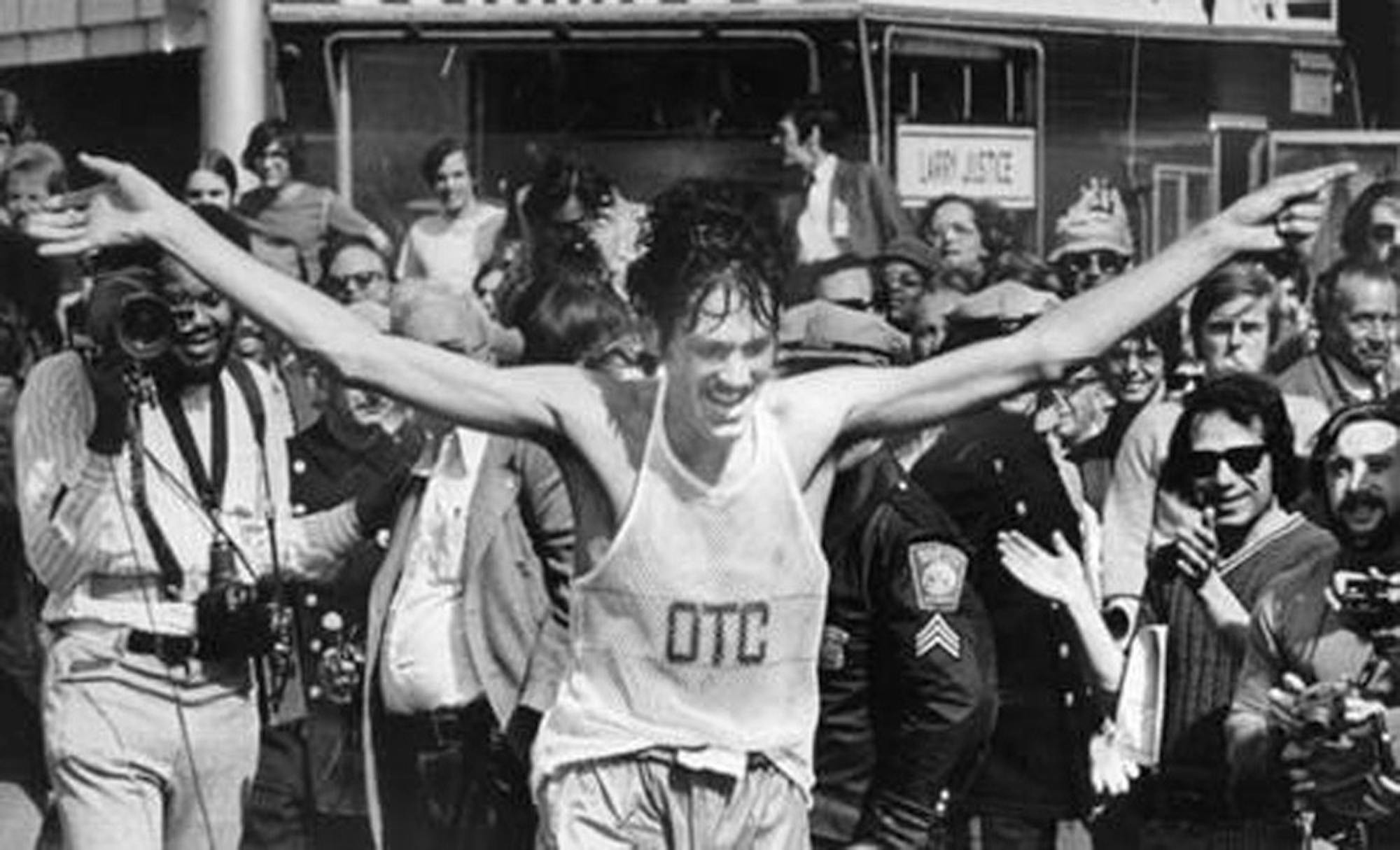
On the hottest day of the year, in the center of the track and field universe, Jon Anderson ’71 had just about lost hope. He was approaching the final lap of the US Olympic trials for the 10,000 meter. Held in Eugene, Oregon, Anderson’s hometown, the time trials would determine who would make up the United States’ Olympic delegation in Munich. Anderson, in fourth, saw his chances at being an Olympian slipping away. The top-three finishers would qualify outright to the 1972 games, while fourth earned a place as the alternate runner. “I’m in fourth and I’m thinking ‘This is worthless. This is the worst spot to be in,’” Anderson said. He knew, as a reserve, it would be incredibly unlikely that he'd get to represent his country at the games. Fourth place would mean sitting on the couch, hoping that one of the qualifiers would get a stress fracture. Fourth place would mean being so close to earning the vaunted status of Olympian, but not actually attaining the honor. “I just started running as hard as I could,” he said. And so, revered as if he wore Oregon green, Anderson was cheered on by the thousands of spectators in the stadium. As he made his way around the track, the noise followed him, almost pushing him forward towards the finish line and towards Munich. “All of a sudden, with about 200 meters to go, I can remember feeling that the noise got even louder,” Anderson said. “It was like I got swept in.” Anderson made up eight seconds on the final lap, sprinting to pass an exhausted Jack Bacheler with just 50 meters to go. He improbably took third in the race, sealing his spot to the upcoming Munich Olympics. “In hindsight, I could not have done that anywhere else,” Anderson said, of winning in front of the hometown crowd.
Growing Up in the Track Capital
Before Michael flew and LeBron amazed, before Tiger roared and Serena dominated, there was Jon Anderson and a pair of hastily assembled Nike shoes. Since Anderson laced up those classic white sneakers with the now-ubiquitous swoosh, Nike has sold hundreds of millions of shoes and has become a cultural and style icon. Born and raised in Eugene, Oregon, the unofficial capital of track and field and the birthplace of Nike, Anderson — an Olympian in 1972 and the winner of the 1973 Boston Marathon — was the first athlete ever to win a sporting event in a pair of Nikes. Anderson grew up in a skiing family. With the help of his dad — the former mayor of Eugene — and a few other parents, Anderson and his brother started a competitive ski team in high school. Anderson got his start in track and field while training for the ski season during the offseason.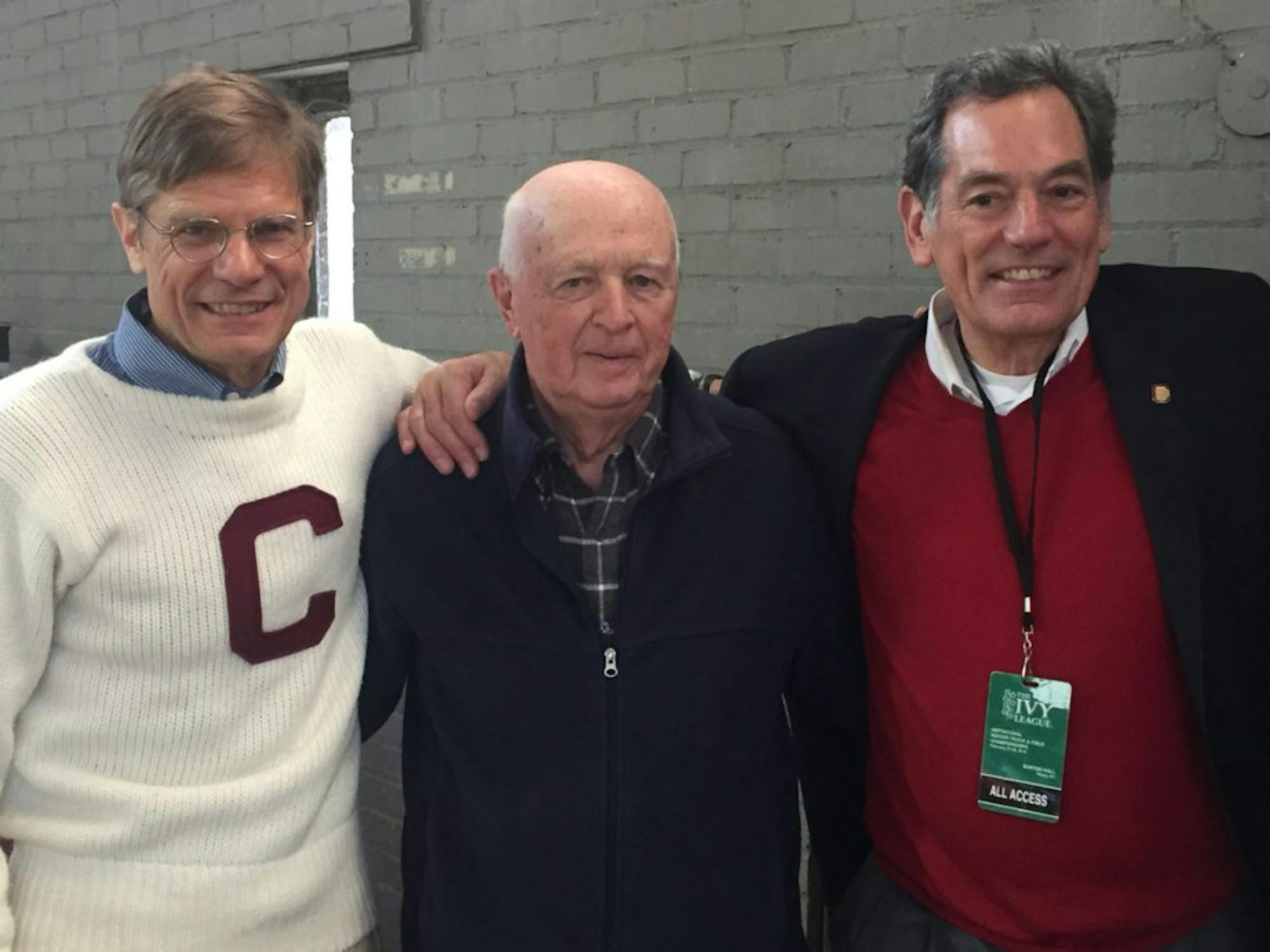
'What else am I going to do? I’m going to run.'
Anderson enrolled in Cornell in the fall of 1968 and immediately joined the track and field team. According to Anderson, the squad had fallen on “some hard times” in the years prior to his joining the program. He credits long-time coach of the program Jack Warner for reinvigorating the team and bringing it back to prominence. Warner began his 25-year career with the Red around the same time that Anderson entered Cornell as a freshman. “Jack Warner knew how to build a team,” Anderson said. “Even though a lot of people think that track is individual, there is a team aspect to it. We had a team attitude and in my four years, you could see it develop.” After struggling to adjust to all the challenges that come with being a freshman in college, Anderson really got involved with the team sophomore year, spending time with the guys both in and out of practice. After a successful junior season that included a third place finish in the NCAA in the six-mile, Anderson went to a training camp held by the US Olympic committee back home in Eugene. Spending time with other runners, many of whom were several years out of college, Anderson realized that running could be something to pursue after graduation. Late in his senior year, Anderson’s season was truncated when he suffered a broken foot at the Ivy championships, ending his collegiate running career. After graduating, Anderson drew a low number in the Vietnam War draft and moved to California.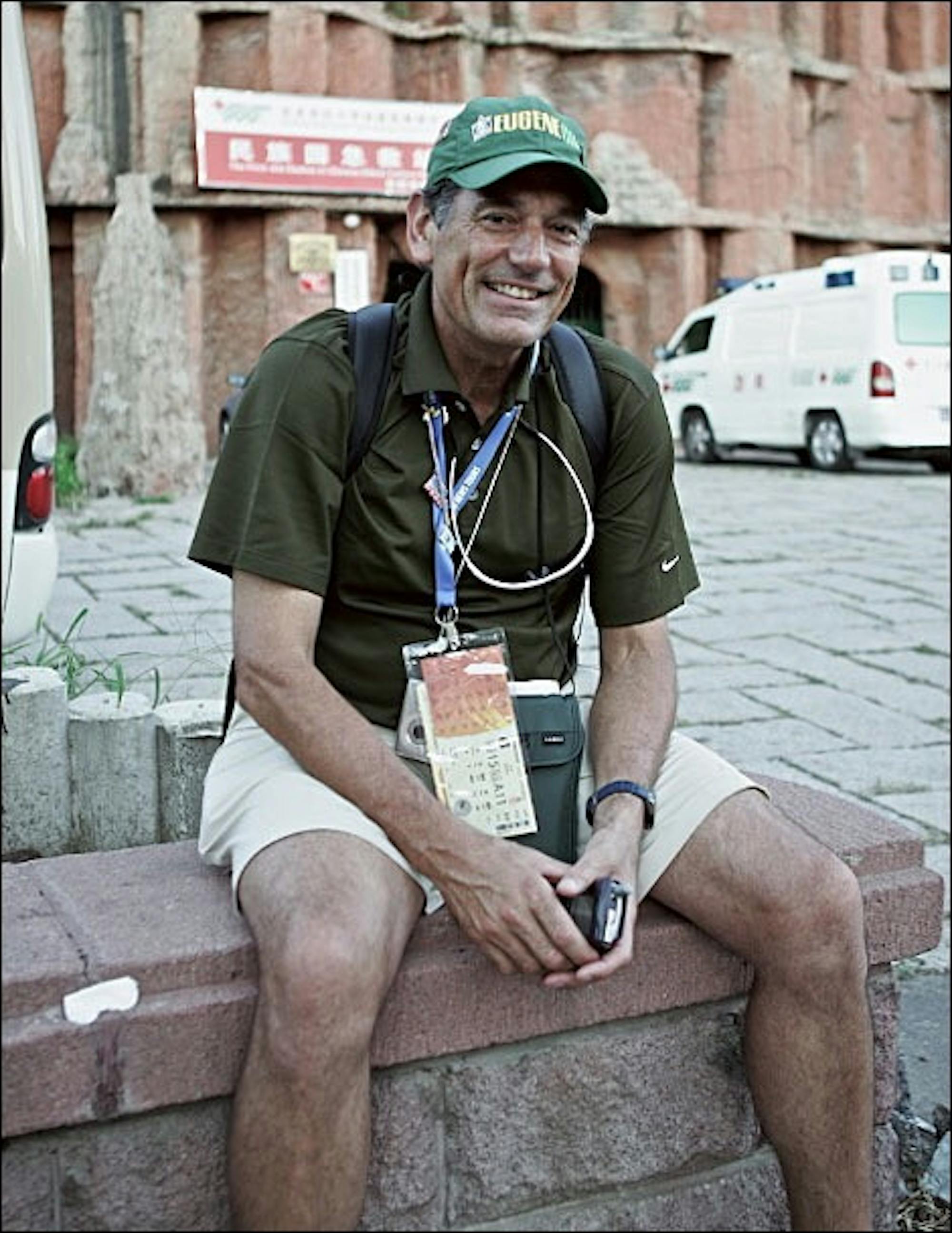
On the World’s Biggest Stage
After months of working in the kitchen, Anderson was granted some leave time from his job in order to compete in the Olympic Trials back in Eugene. He had originally planned to only compete in the marathon, but a conversation with a fellow runner named Bill Clarke helped change Anderson’s mind. “The gist of the conversation from Bill and my thoughts was kind of ‘why not run the 10K?’” Anderson recalled. The initial trials and the finals for the 10,000 meter were held early in the 10-day meet, and then Anderson planned on having about a week to rest for the marathon, the event he was most focused on. Despite his status as a “hometown boy,” Anderson admits that many of the local track fans were surprised he even made the finals for the 10,000 meter yet there he was, on a sweltering 95-degree day in Eugene, ready to race some of the most talented runners in the nation. After the gun, the heat caused the pack to string out pretty quickly. Anderson had laid back, allowing some of the other runners to burn out. After keeping a slow pace for much of the race, he worked his way back into the fray, moving into fourth place with about a lap to go. His remarkable comeback, passing Jack Bacheler on the final sprint, earned him a spot on the 1972 Olympic team. With his ticket to Munich booked, Anderson opted not to run the marathon in the trials. While he didn’t find the same magic at the Olympics that he found at the trials, Anderson still considers competing at the games one of the highlights of his track career. Walking into the Olympic stadium with the rest of Team USA was like nothing the then 23-year-old had ever experienced. “There was just this huge rush,” Anderson said. “Because we were the U.S. team, the whole place went crazy when we came in. Probably only the German team got a bigger welcome.” After Anderson was done competing, he took some time to enjoy the city, running the Olympic marathon route with some of his friends, just for fun. “We set the course record,” he recounted casually. The Olympics were overshadowed by a terrorist attack on Israeli athletes and Anderson watched the events unfold from the edges of the athlete's village. A darkness hung over the games following the attacks and Anderson actually left early, skipping the closing ceremonies all together. Throughout college, Anderson never made competing in the Olympics his target destination. Instead of having these “dreamy” goals of representing his country, Anderson focused on what was in reach at the moment, then set about accomplishing that. “First of all you have to have a goal, then you have to have a plan to get to that goal, Bowerman taught me that” Anderson said. “Lay out that plan and review it with some regularity and adjust it if you have to, because things happen.”‘It was definitely worth it’
Back in the U.S., Anderson returned to his regiment of training, working and occasionally competing. After racing in a few marathons, he set his sights on the Boston Marathon, one of the world’s most popular track events. Like the 10,000-meter Olympic trial held nearly a year before, the day of the race was another hot day. Again, the heat strung out the runners and Anderson hung back, keeping pace with some of his friends. At about the halfway point, Anderson had positioned himself just inside the top 10. As the temperatures pushed past 80 and the sun continued to beat down hard, he began to make his move. One-by-one, Anderson passed his competitors, moving closer towards etching his name in the history of the famed marathon. Finally, all that lay ahead of him was Olavi Suomalainen, six miles and the incline nickname “Heartbreak Hill.” Suomalainen, a 26-year-old from Finland, was the defending champion and the favorite entering the race. There was a large contingent of Finnish supporters in Boston and they had let everyone know they believed Suomalainen would be the one winning the race by painting an extra ‘N’ on the Finish Line sign on the asphalt at the end of the race. At the start of Heartbreak Hill, Anderson inched past Suomalainen, taking the lead, a position he would retain for the rest of the race.
“Once I realized I was in the lead, I never ran so hard,” Anderson said. “It was all downhill after Heartbreak Hill and it was painful, but I obviously was motivated. When your legs are tired, the beating they take is something else on a downhill.”
After crossing the finish line, Anderson jogged back the way he came, soaking in the victory. To cool off, he jumped in a fountain and let the water wash over him.
“The next day walking down the steps was difficult,” Anderson said with a laugh. “It was definitely worth it.”
At the start of Heartbreak Hill, Anderson inched past Suomalainen, taking the lead, a position he would retain for the rest of the race.
“Once I realized I was in the lead, I never ran so hard,” Anderson said. “It was all downhill after Heartbreak Hill and it was painful, but I obviously was motivated. When your legs are tired, the beating they take is something else on a downhill.”
After crossing the finish line, Anderson jogged back the way he came, soaking in the victory. To cool off, he jumped in a fountain and let the water wash over him.
“The next day walking down the steps was difficult,” Anderson said with a laugh. “It was definitely worth it.”