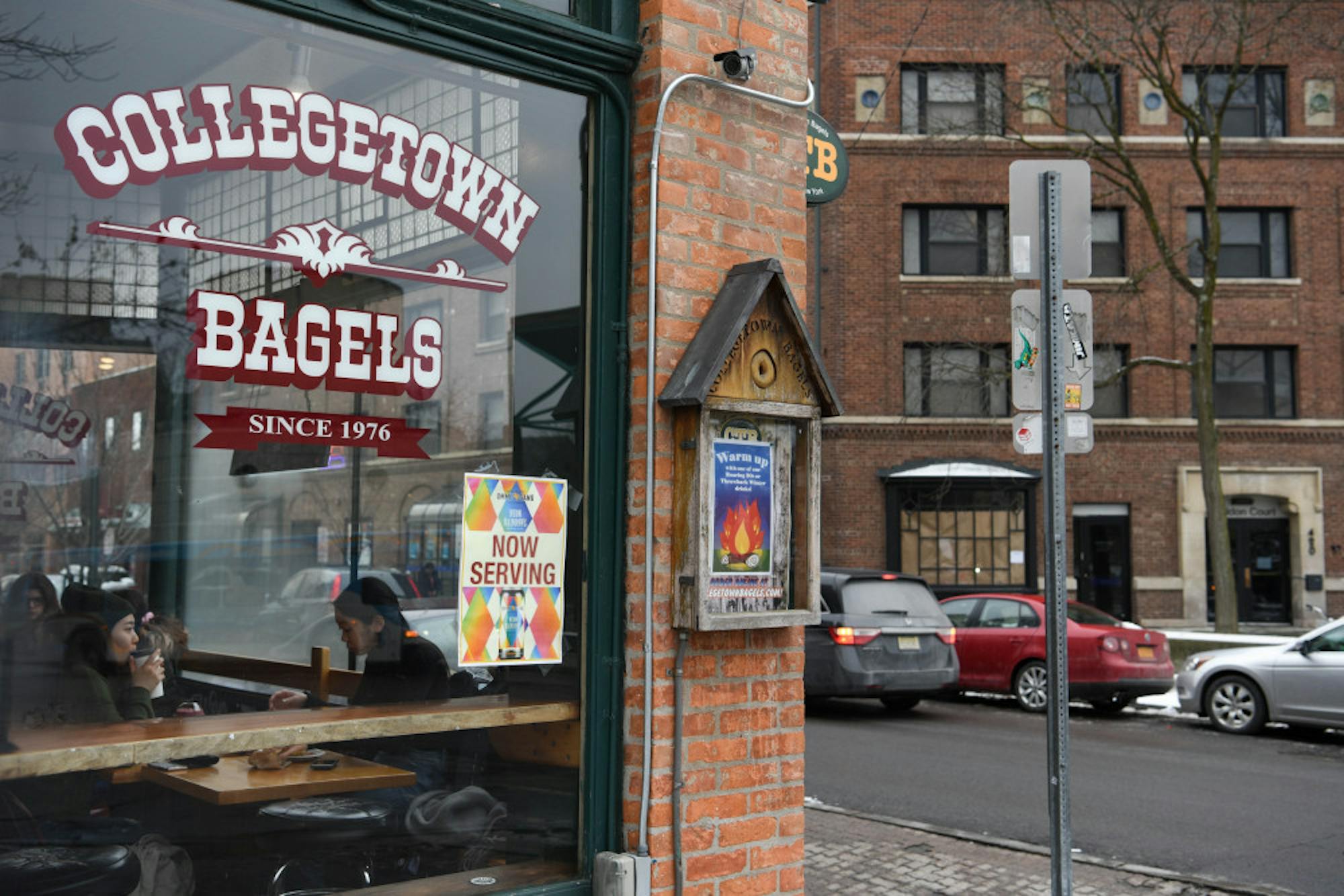
As customers enjoyed Neopolitan pizza at Thompson and Bleecker early Wednesday evening, George Papachryssanthou sat in his downtown restaurant hoping that things would be OK — but he knew that the next few months would be tough for business as many students desert campus during Cornell’s move to online classes. “The next two months are two of the busiest months in Ithaca. There’s no way to sugarcoat it,” Papachryssanthou said, later adding: “It’s gonna hurt.” Gregor Brous, who owns student staples Collegetown Bagels and Rulloff’s in Collegetown along with Ithaca Bakery and Agava, said the uncertainty will have a dramatic effect on local business. “Here in Collegetown, we call our season Cornell. That’s it, when Cornell leaves, our business goes away,” Brous said, adding that increased development and the lack of parking means locals aren’t attracted to places like the College Avenue CTB. “We used to have a nine-month business and [because of changes in Collegetown] we’re down to seven,” Brous said. “So if we lose April and May then we’re down to five this year.” “What we hope is that we will be able to stay in business,” said Brous, whose eateries are already in a period of intense transition due to the upcoming demolition of the building that houses CTB and Rulloff’s Restaurant that will force CTB across the street. “[The College Ave. CTB] is our busiest location,” Brous said. “So it will have a dramatic effect on our entire business.”
The spring months are the busiest time of the year for Ithaca restaurants and other local businesses as students enjoy the warm weather, families come for campus visits and thousands descend upon the city for commencement. Cornell’s decision to shift to online classes — and the fact that many students will leave Ithaca for spring break and not return — is leaving business owners wondering how the changes will impact their employees and ability to stay afloat through the summer.I've been writing about Ithaca for twelve years. I have never been as worried as I am today. So many people are going to struggle.
For Ithacans, covid-19 isn't just a health crisis, it's an economic crisis. — Brian Crandall (@Ithacating) March 10, 2020

Thompson and Bleecker in downtown Ithaca on Wednesday. “The next two months are two of the busiest months in Ithaca. There’s no way to sugarcoat it,” owner George Papachryssanthou said, later adding: “It’s gonna hurt.”
The move to online classes, the cancellation of events like Cornell Days and the uncertainty surrounding commencement weekend will have a ripple effect throughout the local economy, one that has seen strong growth in the years since the 2008 financial crisis while nearby areas of New York State struggle. Mayor Svante Myrick ’09 said he has asked University officials to work with the city, state and federal governments to “develop a plan that will support our local economy and make sure that all the pain isn’t borne on the back of our lowest-paid workers.” “I wouldn’t be surprised if by June, with all the students gone, we find that a ton of small businesses that have been around for a long time have closed their doors,” Myrick told The Sun. “I already spoke with the decision-makers at Cornell and expressed to them my deep concern as to what this will mean for our local business and workers and what it will mean for them,” Myrick told The Ithaca Voice. “Lost jobs, lost shifts. At hotels, restaurants, bars and retail stores all through Tompkins County, this could be a shock unlike we have ever seen before. There is no plan for losing the business of the two or three biggest spending months from students.” On Twitter, Myrick called for “immediate and forceful federal action” to prevent “a horrific economic impact.” “We need paid leave, small business grants, and a limited time universal basic income,” Myrick wrote. Summer starts early, cutting down on businesses’ ‘lifeline’ months Ithaca’s student-reliant economy makes April and May two of the most important months for local businesses. Mid-February through May, according to Papachryssanthou, represent “the lifeline of business.” Summers are slow for businesses — the city’s population essentially doubles during the school year — and for some students, summer is starting two months early.We need immediate and forceful federal action - we will see a horrific economic impact.
Right now Ithaca has the strongest economy in NY state. Three months from now? We need paid leave, small business grants, and a limited time universal basic income. https://t.co/9qHatd2shq — Mayor Svante Myrick (@SvanteMyrick) March 10, 2020
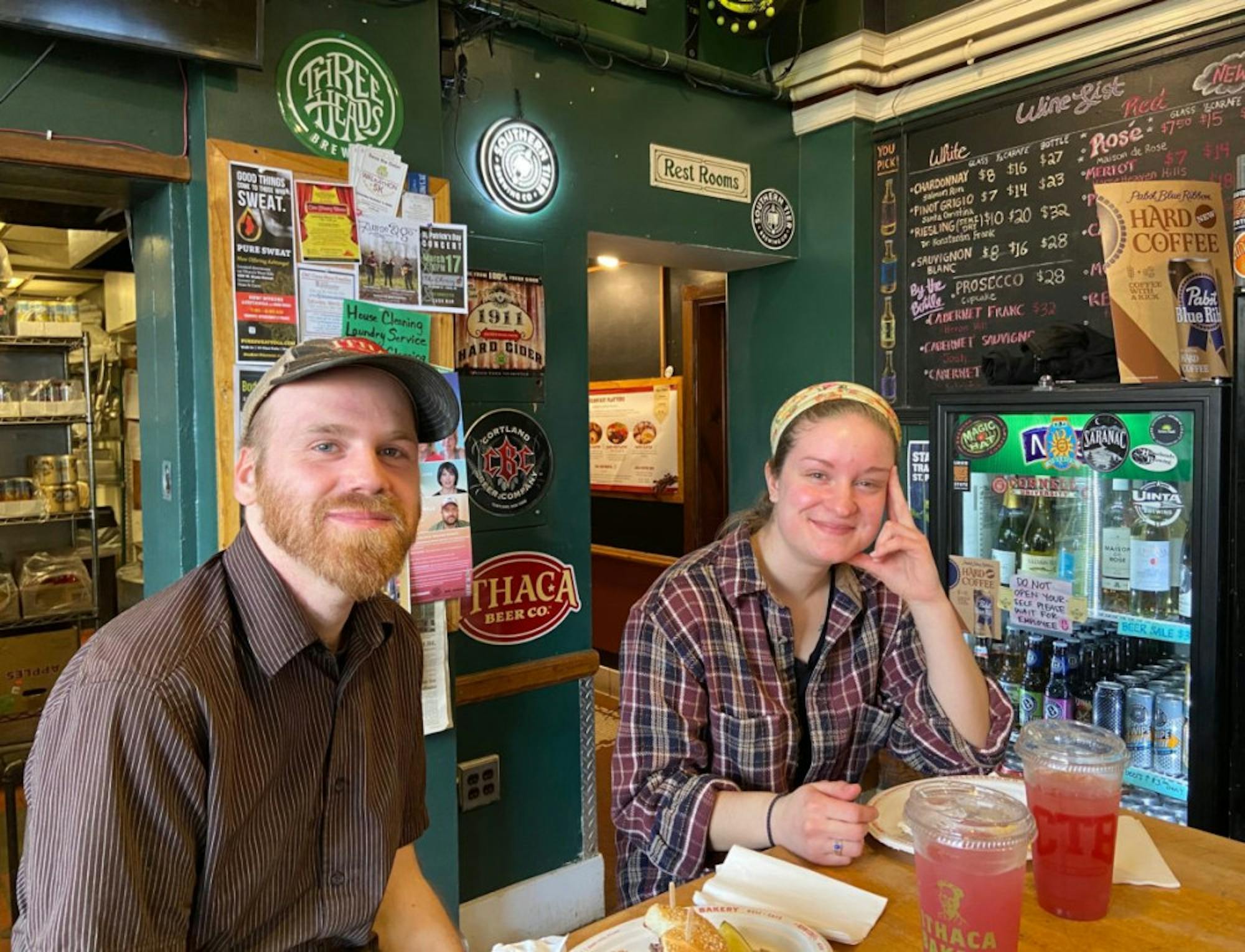
Collegetown Bagels employees Robbie Finch and Paige Twining sit in the College Ave. restaurant on Thursday. Finch said he isn't worried about the impact of Cornell's shift to online classes, but expects CTB to have summer-sized crowds during April and May.
With updates coming every hour and mounds of uncertainty surrounding how Cornell’s shift to online classes will impact businesses, Papachryssanthou and Brous are both crossing their fingers that the virus’ spread will end soon and that their businesses will see a return to normalcy. “I’m sure if this goes on for any period of time that multiple businesses in Ithaca will be out of business,” Brous said. “And we want to not be one of them.” “If there’s anything that is borderline fragile, it may not be here when you guys get back,” Papachryssanthou said. Alex Hale ’21 contributed reporting to this article.We’re a resilient community, but I share the mayor’s concern. We will need state and federal help. Businesses, homeowners, TCAT... so many of us rely on Cornell, IC, TC3.
The whole county will hurt, but I’ll be giving Collegetown businesses more love than usual for a while https://t.co/DmZdBz2nZ9 — Ducson Nguyen (@duc2ndward) March 11, 2020
Read More