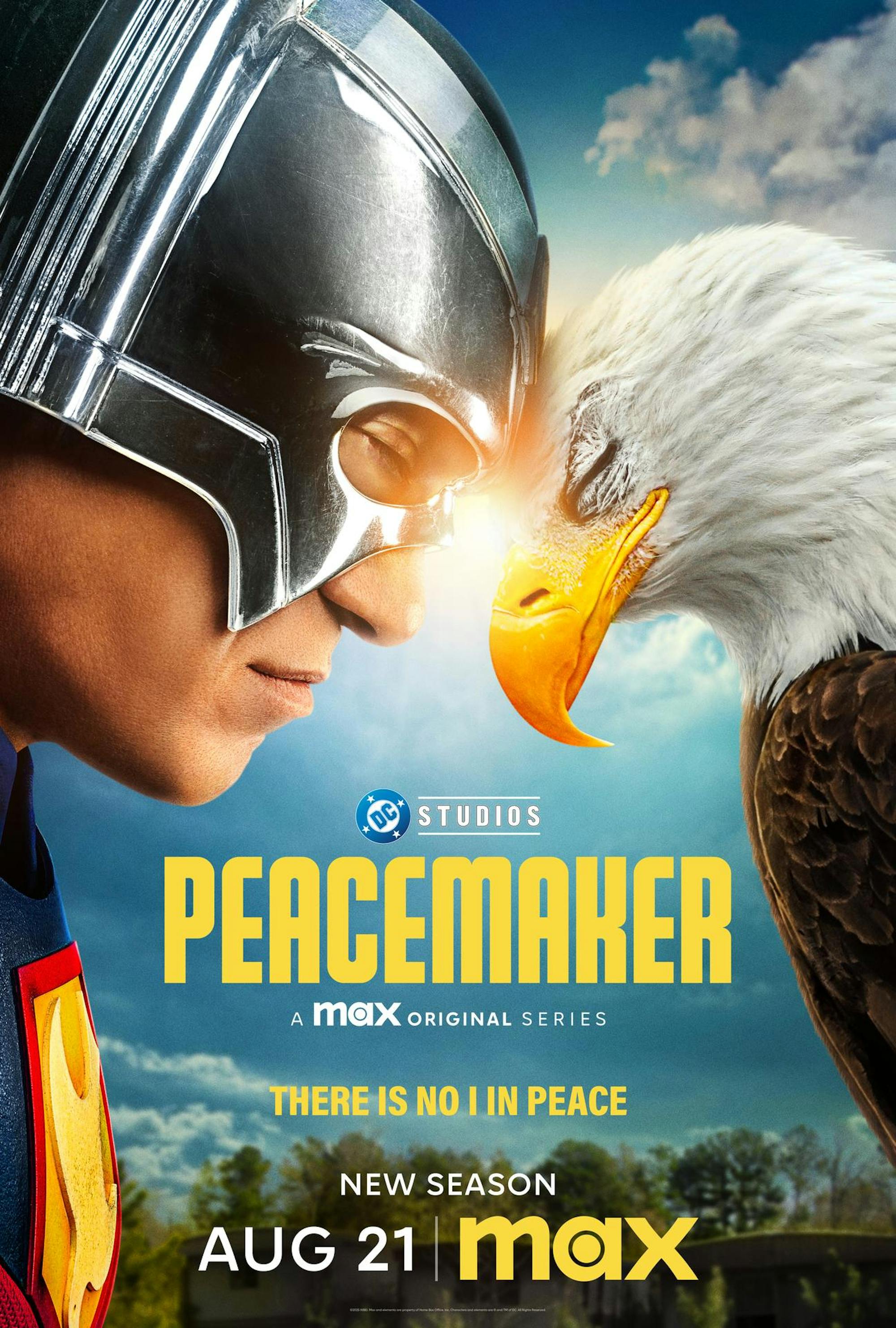
With a ridiculous opening title sequence, an onslaught of raunchy sex jokes and needle drops galore, Peacemaker season 2 picks up right where season 1 left off — sometimes. John Cena returns as Christopher Smith, or the Peacemaker, in another James Gunn-written and partially-directed project. Beginning with a quick, blink-and-you'll-miss-it retcon in the "previously on" segment, Gunn brings Peacemaker and pieces of The Suicide Squad to the new DCU. The subsequent eight episodes are a rollercoaster ride, not of emotion, but of storytelling and writing quality, resulting in a disjointed viewing experience that lacks the punchy feeling of the first season.
Peacemaker season 1 was a stroke of luck for Warner Bros. executives and Gunn. A flailing DCEU was looking for any way to make money, bring people to the HBO Max streaming service and generate hype for the inevitable rebooting of the universe. While Marvel’s Guardians of the Galaxy golden boy, James Gunn, was temporarily fired from the studio, DC jumped at the opportunity to see if the Gunn had any more bullets left. Sure enough, the Gunn did not jam, as The Suicide Squad was critically acclaimed and resulted in the standout Peacemaker receiving a spinoff to be written by Gunn.
What made Peacemaker season 1 so refreshing was that it did not concern itself with connecting at all to an extended universe. It was a comedy show first and a superhero show second. Lacking that tether to an existing dying universe, the show was able to do as it pleased, take risks, make fish-intercourse jokes about Aquaman, because it was essentially in a “Gunn-verse” within the DCEU where every character was a D-tier comic book character and spoke in expletives, quips and the typical James Gunn heart-wrenching dialogue. Season 2 now has to worry about where Peacemaker finds itself in the ever-expanding DC universe — and unfortunately, the show worries too much about situating Peacemaker in a fledgling cinematic universe, and Gunn forgets to pull the trigger on exploring what made the character so relatable.
Season 2 chooses to bounce back and forth between two main plot lines. The first is Chris Smith dealing with his inner struggles of wanting acceptance and love, all while ruminating over his past mistakes — a continuation of a storyline from the first season. In addition, Rick Flag Sr., working in tandem with Lex Luthor and his goons from Superman, seeks revenge for Peacemaker killing his son, Rick Flag Jr., during the events of The Suicide Squad. Having two antagonists being an internal and external threat to Peacemaker was juggled nicely in the first season, so I was anticipating Gunn to be able to shoot straight again. However, what was a mostly good season takes a severe stumble in the finale, with Flag thrust into a more prominent role as the outright villain, sidelining the Peacemaker's internal struggle arc, a much more enthralling plotline thanks to Cena’s incredible acting.
With Gunn calling the shots of the new DCEU and as the writer of Peacemaker, you can see that he is trying to lay the groundwork for his own universe and drop hints of future plotlines. No episode falls victim to this more than the finale, and it suffers for it. The new insistence on connecting Peacemaker to an extended universe detracts from the actual story of Peacemaker and what made the first season so great: Peacemaker dealing with his emotions as someone who grew up in an environment where he was not cared for.
This plotline is somewhat further explored in season 2, with Peacemaker traveling to an alternate "utopia" dimension thanks to his quantum unfolding chamber, which is home to doors to alternate dimensions. In this utopia, Peacemaker finds that his brother never died, his father is a supportive and loving parent, and his family is viewed as heroes of the town they live in. The ability for Chris to experience heartbreak, grieve his long-dead brother and be prosecuted by the law, then give him the option to step into this alternate universe where he is hailed as a hero, masterfully explores Peacemaker’s emotions. Cena runs with this idea and truly nails the despair of Chris Smith on his home Earth, turning a potentially boring will-they-won't-they relationship with Emilia Harcourt into a more complex situation where neither character truly loves themself and pushes themselves away from the other out of self-pity. He follows this up by displaying his thirst for love and appreciation in the alternate world, so much so that he doesn’t realize it is a universe where the Nazis were victorious in World War 2.
It first appeared like Flag Sr. would merely be a nuisance foil, with a steady buildup towards an emotional outburst by Peacemaker in the finale. Rather, this occurred in the seventh episode, not the finale, setting up Flag Sr. as the final boss of the season. With Peacemaker having to lose his brother and father again, I was looking forward to seeing Chris continue in this spiral of emotional troubles. Instead, the final episode feels almost like a pilot for a third season, intercut with the occasional John Cena despair shots. Rather than continuing with Chris having to come to terms with his emotions, a single conversation with his “11th street gang” can snap him out of his sulking, something that has not seemed to help Chris up until now. This feels like a lazy attempt to end the two-season arc of Peacemaker coming to terms with having to live for himself and his found family rather than the family he has lost. It then allows Flag Sr. to be thrust forward as the main villain of the finale, a plotline that has been painfully uninteresting up until now, resulting in Flag trapping Peacemaker in an alternate dimension until the premiere of the next season in two to three years.
Season 3 appears to be almost a guarantee, and as funny as season 2 may have been, and as profound as the writing was at times, the season feels incomplete. Where Peacemaker's character was left off, results in the loss of what made the show so powerful, its risk-taking and independence, in turn for connecting Peacemaker to an extended universe, and thus tethering the show and character down.
Brayden Rogers is a sophomore in the College of Arts and Sciences. He can be reached at bjr236@cornell.edu.
Brayden Rogers is a member of the Class of 2028 in the College of Arts and Sciences. He is a columnist for the Arts & Culture department and can be reached at brogers@cornellsun.com.