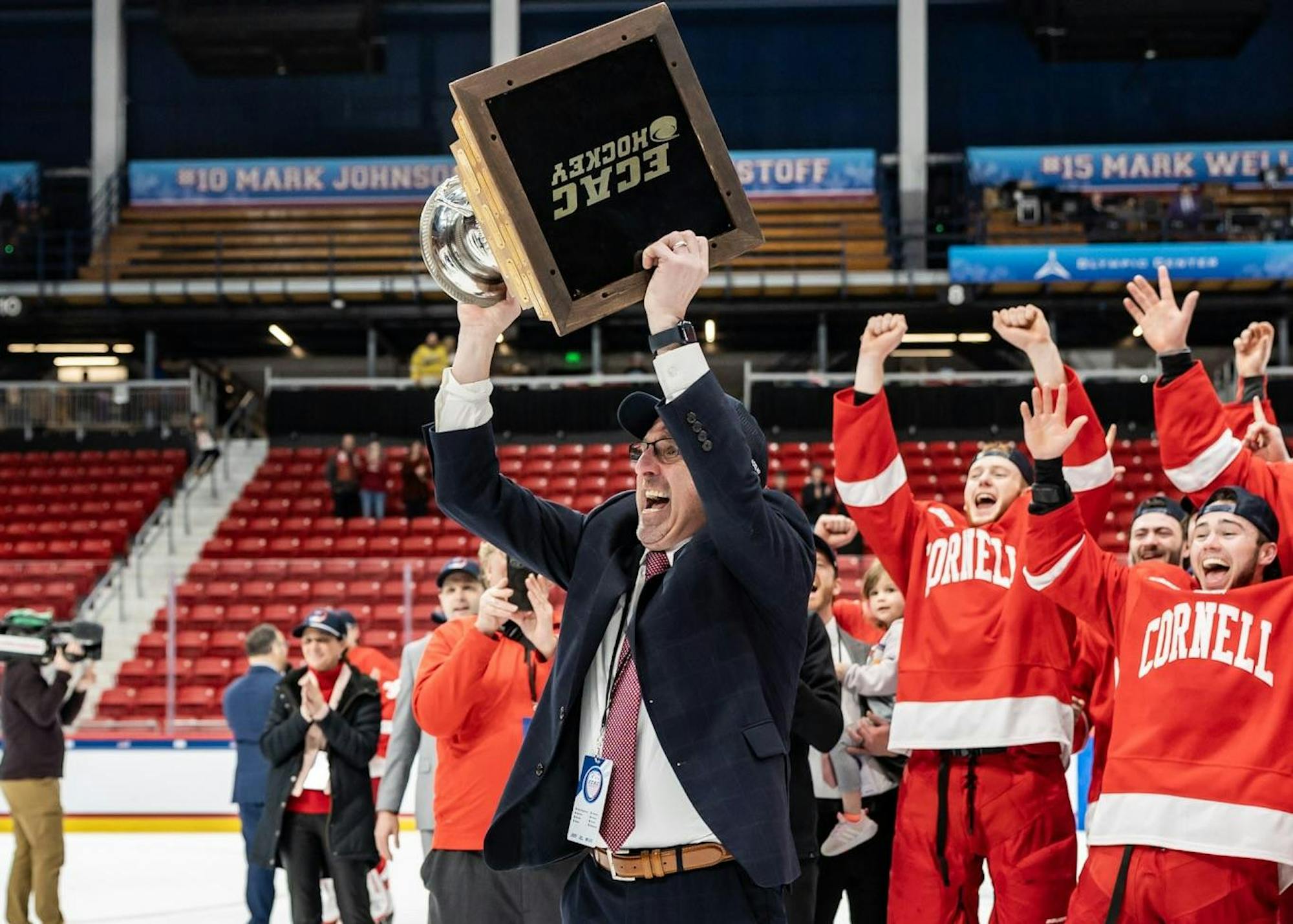
Sitting in his chair, ‘Cornell Hockey’ embossed over shelves adorned with championship trophies and baseball caps, head coach Casey Jones ’90 leaned back and laughed.
“Lots of rookie head coaches, eh?” he said.
It’s true — over the last five years, few conferences in college hockey have seen as much turnover in the head coaching position as the ECAC has. Along with Cornell, eight other ECAC schools — Colgate, Yale, Rensselaer Polytechnic Institute, Dartmouth, Union, Princeton, Clarkson and St. Lawrence — have all made coaching changes within the last five years.
This past summer alone, two faces of the 21st century of college hockey — Mike Schafer ’86 and Keith Allain of Yale — called it quits.
While Allain’s retirement came quite suddenly, Schafer’s was long drawn out. Nearly a year before the team would skate off after an NCAA regional final defeat to Boston University, Schafer knew that the 2024-2025 season would be his final one, no matter the result.
That carved the path for Jones to take the reins — Schafer confided in his former player (and longtime friend) to assume his position once his time at Cornell came to an end. For one year, they’d work side-by-side, handling coaching responsibilities together to smooth out the transition.
Now, Jones sits alone in his office. Lynah Rink has seen some small renovations with the new school year, from the signage on the wall to the layout of the assistant coaches’ home base. There is a different feel. Ahead of Jones lies a 2025-2026 season full of question marks, from who the starting goaltender will be to how to replace all 12 outgoing players. He is preparing for his first season as the head coach of Cornell men’s hockey.
So, yes — Jones is a ‘rookie,’ so to speak.
But really, he’s far from it.
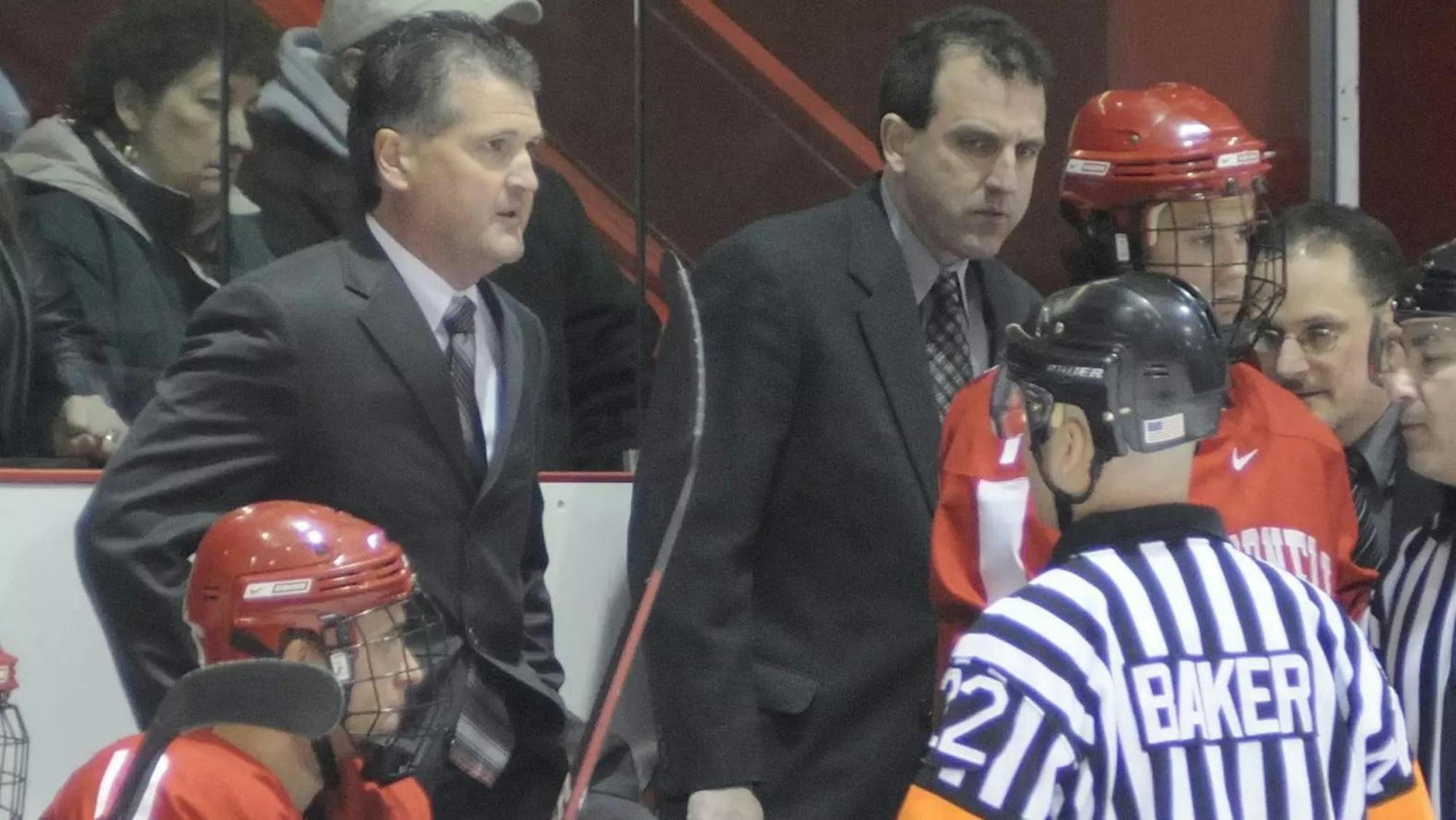
“He loves what he does, and he loves this program.”
Jones, like any other head hockey coach, can often be found on the ice with a whistle. Or, he’ll be glued to his monitor, examining film with his staff and players.
But the other times? He’s probably on the phone.
“He’s just non-stop,” said associate head coach Sean Flanagan. “I think that's why he's able to build teams wherever he is. … He's connected through coaches in every league and advisors, and just never stops. He comes every day, ready to work, ready to recruit, [ready to] coach and handle a lot of balls in the air at the same time.”
When Schafer and Jones reunited on last season’s coaching staff, Schafer was quick to pass along recruiting to his successor. It was a win-win situation — Schafer was given more time to focus on his craft on the ice, while the future face of the program would begin to piece together what that future might look like.
Schafer also knew he was passing the torch to a bona fide recruiter.
“He’s got a great talent,” said assistant coach Cam Clarke. “I think he's got a great way of connecting with kids and selling what his program can offer kids. I think that’s a big part of recruiting in today's day and age — showing kids how this program can make them better, and how they can have an impact here.”
Clarke, who joined Jones’ staff over the offseason, has long been connected to Cornell. His father, Chris Clarke, played under Schafer in 1990-1991 when Schafer was an assistant coach at Western Michigan, just a few years before he’d take over at Cornell.
When Clarke’s ties to the Hill ultimately brought him back, he was instantly captivated by what Jones was building.
“He brings a lot of energy to the rink every day, and it's infectious,” Clarke said. “He loves what he does, and he loves this program.”
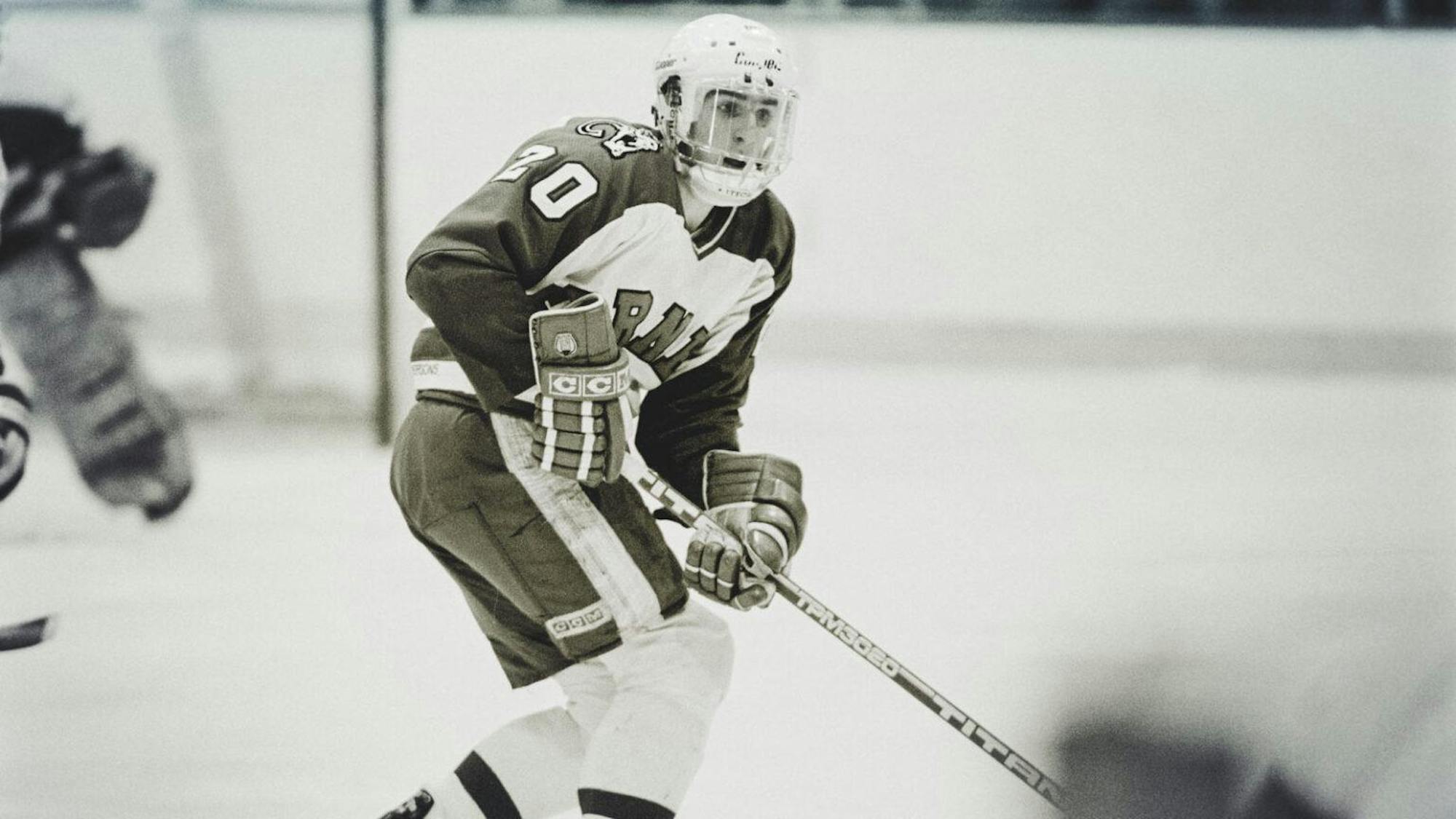
Jones has a lot of love for his alma mater, but his knack for spotting — and securing — talent goes beyond just that. In his 13 years at Ohio State as an assistant and associate coach, he recruited 20 NHL draft picks to the Buckeyes, aiding the squad to a Frozen Four appearance in 1998.
That preceded a 13-year stint at Clarkson, where Jones — this time as a head coach — amassed six 20-win seasons and produced multiple NHL talents, including two-time Stanley Cup champion Nico Sturm.
To make that all happen, Jones spent a lot of time on the phone.
Just ask freshman goaltender Alexis Cournoyer.
“Casey was calling me, like, once a week, just to say, ‘what's up?’ Like, ‘how's it going?’” Cournoyer said. “I think Cornell’s recruiting process was top-notch.”
Cape Breton, Nova Scotia — where Cournoyer played in the Quebec Maritimes Junior Hockey League last season — is over 1,000 miles northeast of Ithaca. Cournoyer was a late recruit, part of the first batch of Canadian Hockey League players debuting in the NCAA this season after the Nov. 7, 2024 rule-change that permitted the previously banned CHLers to play college hockey.
From all that ways away, and even before Cournoyer stepped on campus, he felt like a part of the program.
“[The staff] were watching all my games and we were staying in touch,” Cournoyer said. “I didn't even come for a game. I came here after my season, and I just fell in love with the campus and the people here.”
Relationships — that’s what those around Jones say make him the pristine recruiter he is.
“I think just the way his personality is, the way he coaches — people know he really cares,” Flanagan said. “That's why the kids are attracted to him.”
One of those kids Jones talked to is now on his staff — Josh Robinson, hired this summer to be the director of hockey operations at Cornell, was one of the countless recruiting phone calls Jones made, back when Jones was at Ohio State and Robinson was playing in the United States Hockey League.
“He’s been around college hockey for a long time now,” Robinson said. “He has a great eye for it and part of that is experience, but he’s recruited a lot of really good players over the years.”
“He knows what he's looking for in a player as far as what skills and attributes they have,” said assistant coach Chris Brown, another new addition to Jones’ coaching staff. Brown came all the way from Alaska to join Jones’ staff. “Then, I think he's good at digging deeper into finding out, will he fit the culture? What type of character does he have? What's his background?”
Jones’ coaching career has taken him many places, from the North Country to Columbus. He’s coached in the Central Collegiate Hockey Association against the big-time midwest gauntlets, and has learned the ECAC from the inside out.
None of those places are like Cornell.
A Different Player Pool
"You've got to get kids in, retain them [and] develop them. And it's the model that will have to be in place.”
– Head coach Casey Jones '90
Down the road in State College, Pennsylvania, a 17-year-old kid named Gavin McKenna is lacing up the skates for the Nittany Lions. He’s the projected first overall pick in the 2026 NHL Entry Draft. He’s making $700,000 in the process.
Last season, McKenna played in the Western Hockey League — a league within the CHL — and is one of the many players that has recently flocked to the U.S. to play in college. In one year’s time, he’ll likely make the roster of whichever NHL team drafts him, playing in the top professional hockey league in the world while his classmates suit up for their sophomore years at Penn State.
Competition between NCAA teams is fierce — Michigan State reportedly engaged in a ‘bidding war’ for McKenna, while other schools like Boston University, Michigan and Providence have all made splashes in the new age of college hockey recruiting.
Quietly, Jones heads on the road up to Newfoundland. He makes his phone calls. He asks his prospective recruits where they see themselves in 20 years, what kind of degree they are seeking out.
In the age where the transfer portal has overtaken college sports, and where name, image and likeness money has redefined some coaches’ recruiting strategies, the way Cornell — and Jones — recruits has remained relatively unchanged.
“As our players develop, we get better, we have better depth, and that's how we beat teams,” Jones said.
To be a student athlete at Cornell requires an unparalleled amount of mental and physical strength — mornings not spent at the rink are spent either lifting or in class. Players must miss practice for required labs or simulations. Last March, the night before Cornell played Boston University in the NCAA regional final, multiple players sat in front of laptops to take their midterm exams from the Toledo, Ohio hotel.
That strength translates on the ice.
“You're not coming to Cornell if you're not staying for four years, or maybe three years where you're gonna get your degree,” Jones said. “We have to get the big picture — the family that's going to look at what an Ivy League education is worth. Some people say it's $1.5 to $2 million in the span of a lifetime in terms of earnings.”
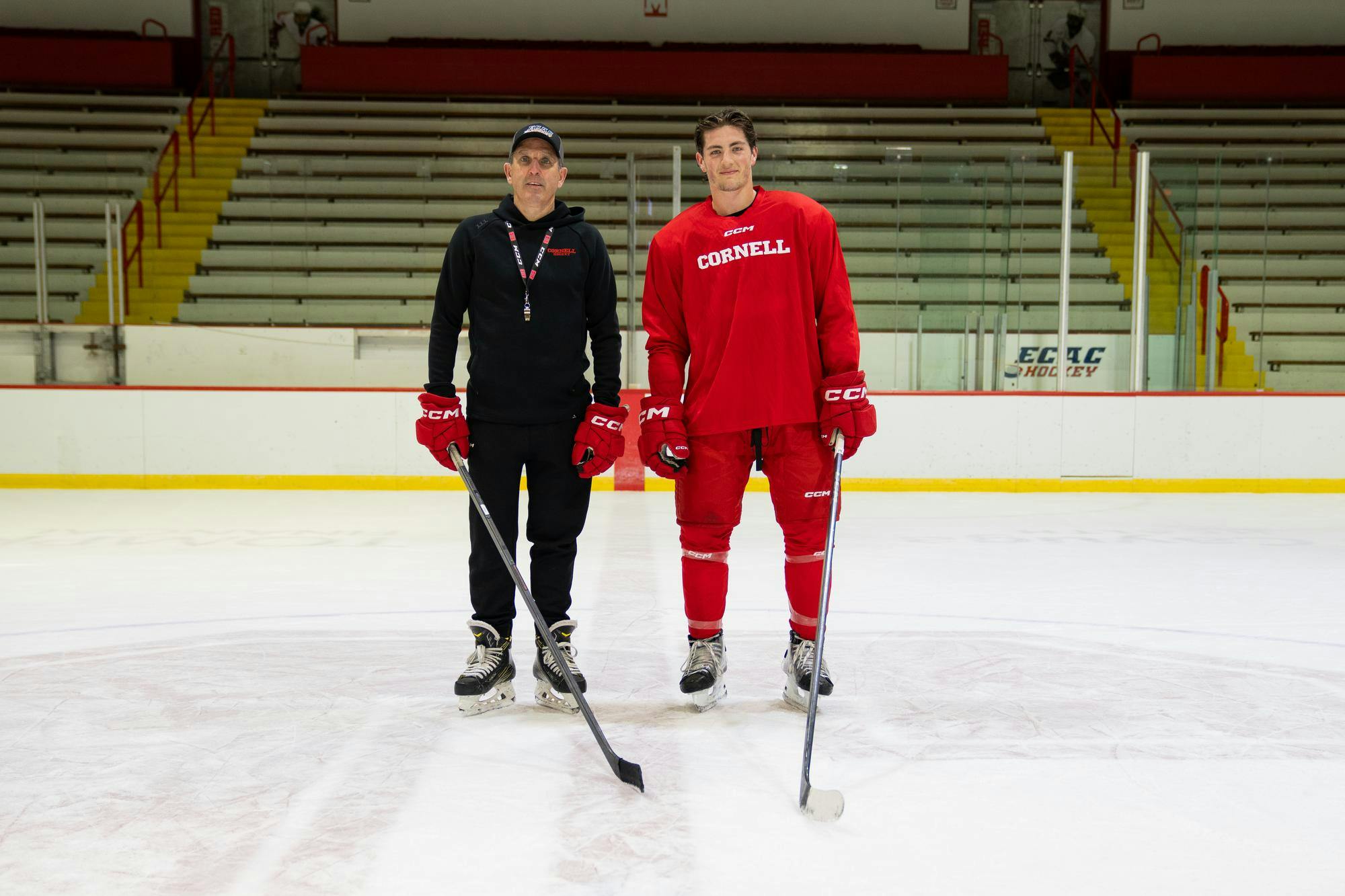
Year after year, teams adorned with countless NHL draft picks have been favored to win national titles. Last season, Boston College boasted top NHL prospects Gabe Perreault, Ryan Leonard and goaltender Jacob Fowler. In 2023-2024, Boston University touted 2024 No. 1 overall pick Macklin Celebrini. In 2022-2023, Michigan had six NHL first-rounders on its roster.
None of those teams won national titles.
“We still have to target that family that values education, that big picture,” Jones said. “You’ve got to get kids in, got to retain them, got to develop them. And it's the model that will have to be in place.”
It’s not an easy task to be handed a program that has gone 30 years without a change at head coach. For the players, there will be some quirks that make the switch between the two coaches more noticeable.
But at the root of it, there is a coach — one that had been in each of his players’ shoes as both a student and an athlete — that loves to come to the rink.
“He just gets things done. He’s got a high energy, glass half-full,” Brown said. “He challenges you, he pushes you. But he also gives you a lot of autonomy as a staff to come up with ideas and come up with a plan. But he has his vision too, right?
For Jones, when he wasn’t on the bench coaching beside Schafer last season, he was calling recruits. He was meeting with families, shaking hands with alumni, introducing himself as the newest face of one of college hockey’s storied programs.
Jones was on the road, scouting out the next wave of talent, keeping an eye on the future while preparing for the upcoming weekend’s games. When the season was done, he picked up two NHL drafted transfers to complete a 14-player incoming class, joining a roster of nine drafted players.
He juggled it all. It’s been only one year.
“It takes work and talent. You have to go and you have to grind and see a lot of players,” Robinson said. “I don't know his secret. You have to ask him why he's so good — it's something we all can learn from.”
Jane McNally is a senior editor on the 143rd editorial board and was the sports editor on the 142nd editorial board. She is a member of the Class of 2026 in the College of Agriculture and Life Sciences. You can follow her on X @JaneMcNally_ and reach her at jmcnally@cornellsun.com.