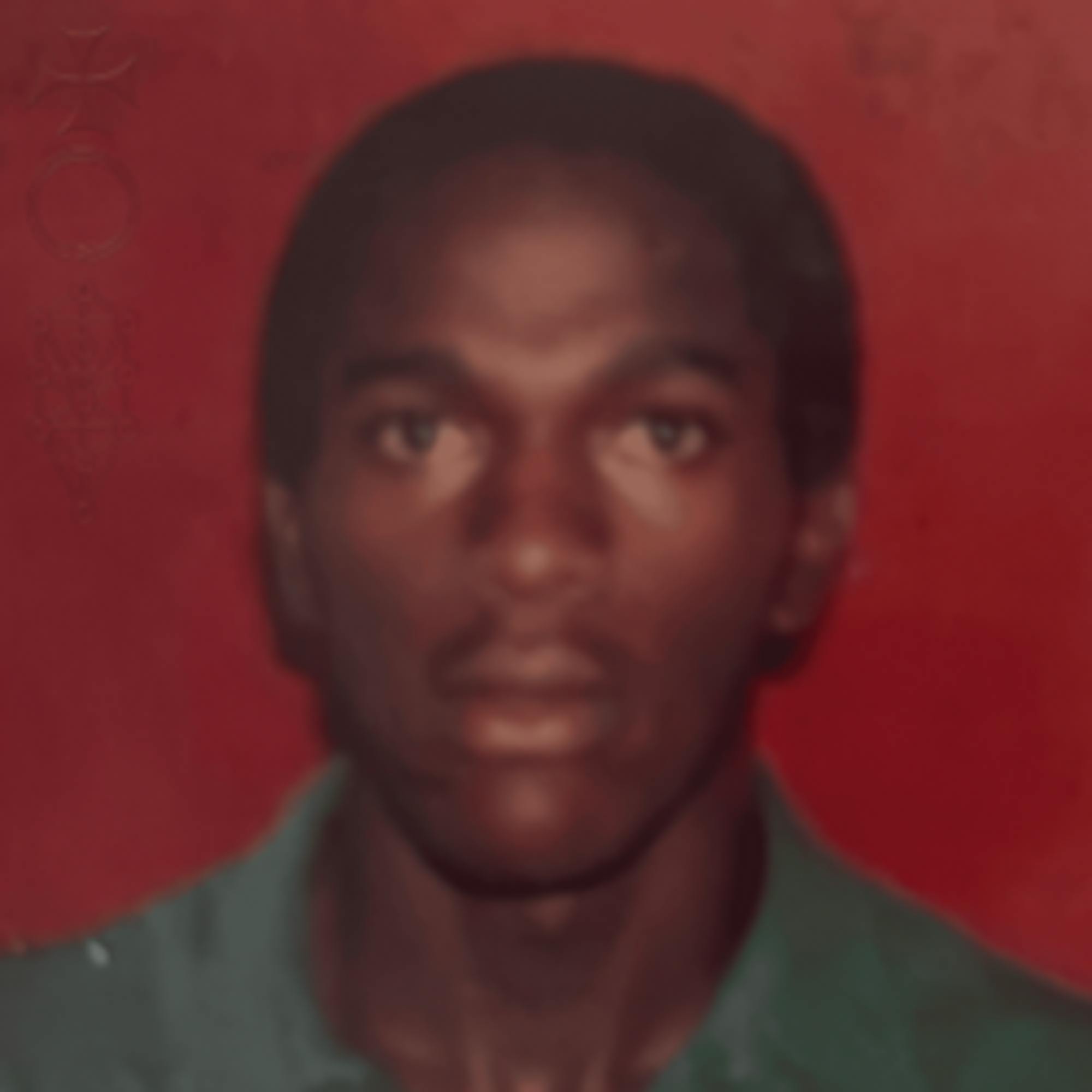
Love, introspection and spirituality: these are the three themes that characterize pretty much all of Daniel Caesar’s discography. Yet, in his latest project, the third seems to take the spotlight, along with a new motif not explored extensively in his past works: his relationship with his father, who seems to be a fairly central figure in this album’s narrative, being featured on the album itself and being pictured in his younger days on the album cover. Those open to even more soulful and introspective pieces from an artist already known for the presence of these qualities in his past works are sure to find a plethora of things to love about this project.
Son of Spergy is Daniel Caesar’s fourth studio album, coming about two and a half years after the release of its immediate precursor, Never Enough. “Spergy” is the nickname of Norwill Simmonds — singer, Adventist preacher and Caesar’s father. Caesar and Simmonds’ relationship is one of two major focal points of this album, with the other being Christianity, which Caesar explores more in this album than any of its predecessors. Son of Spergy echoes many aspects of the musicality commonly attributed to Caesar’s music, with his smooth, flowery vocals being front and center yet again. In this compilation, however, the heavy inclusion of acoustic guitar and choral harmonies both aid in establishing a sense of intimacy that lingers from beginning to end.
Son of Spergy opens with a piece that captures the gospel-oriented nature of the album: “Rain Down,” featuring Sampha. Between the continuous rainfall noise establishing an immersive backdrop, the enticing softness of each piano chord and the passionate gospel vocals, this track truly sets the scene, before seamlessly transitioning into the next track, “Have A Baby (With Me).” In this single, Caesar makes a last-ditch plea to save a dying relationship with something permanent, forging a piece characterized by its poetic messaging and intense melancholy.
The third track, “Call On Me,” opens with bold electric guitar that carries throughout the song and makes for a welcome stylistic standout. “Baby Blue,” the track featuring Caesar’s father, is a beautiful reflection on the fulfillment he received from a partner, through whom he experienced an unprecedented love and sense of belonging. The vocals of Caesar’s father paint the outro to this track, reintroducing the spirituality that lingers through the remainder of the album as he sings a passionate gospel hymn. This track is followed by “Root Of All Evil,” a personal favorite of mine, hallmarked by its groovy bassline and introspective theme of slipping into temptation to self-sabotage and wrongdoing.
The track “Who Knows” rather appropriately centers around the theme of uncertainty. Throughout this song, Caesar harmonizes with himself, creating an echo chamber effect that serves as a creative metaphor for how he has become deeply immersed in his own self-doubt and regret regarding a failed relationship. “Moon,” the first of two tracks on this album featuring production by Bon Iver, is underscored by serene instrumentalism and windy ambience. In this piece, Caesar meditates on his own imperfections and dire need for guidance as he continually inquires, “Who’s going to be my Jesus? Who will advocate?” The track “Touching God” is perhaps the spiritual highlight of the album, as Caesar speaks directly to God, lamenting the shortcomings of mankind juxtaposed with the perfection he sees up above. This piece features Blood Orange and Yebba, with the former reciting scripture in a hazy sequence towards the end of the track, followed by the latter closing out the song with powerful vocals in direct praise of God.
“Sign of the Times” merges the themes of spirituality and romance, as Caesar navigates the line between love and lust, desiring a sign from God that will show him to a meaningful love beyond the surface level. “Emily’s Song” is a much simpler and straightforward track — both instrumentally and thematically — where Caesar takes on the maturity to thank a past partner for helping him to grow as an individual. “No More Loving (On Women I Don’t Love)” is also fairly straightforward, with the premise of the song being encapsulated completely by its title. I would point to this as a weaker moment of the album, with said weakness stemming only from redundancy; but like every other track in this compilation, its smooth production and buttery vocals make listening worthwhile.
The eight-minute powerhouse that is “Sins Of The Father,” featuring production yet again by Bon Iver, provides closure to this album. This piece marries the themes of spirituality and paternal bonding, as Caesar acknowledges his father’s imperfections, yet also expresses immense gratitude for his presence, as well as for God’s grace and forgiveness towards him. In many aspects, this piece is reminiscent of “Freudian” — the closing track on the album of the same name — especially with regards to the theme of gratitude towards Caesar’s parents.
If it hasn’t already been made clear, Son of Spergy is embedded with soulful immersion, maintaining the motif of spirituality throughout and exploring each topic with a sense of unfiltered sincerity. One of the album’s primary critiques is its lyrical simplicity; certain critics are convinced that the straightforwardness of Caesar’s writing marks a lack of creativity. On the contrary, I believe that this is intentionally the essence of the album; in a hyper-consumerist world plagued by epidemics of overstimulation and superficiality, Caesar has deliberately released an album that thrives on simplicity and exposes the raw, inner workings of a growing individual. Bearing a strong resemblance to Frank Ocean’s legendary Blonde, Son of Spergy preserves the musical spirit of Daniel Caesar’s discography up to this point, while bringing the most raw and spiritual presentation we’ve seen yet.
Jordan White is a freshman in the College of Arts and Sciences. He can be reached at jiw39@cornell.edu.

Jordan White is a member of the Class of 2029 in the College of Arts and Sciences. He is a columnist for the Arts & Culture department and can be reached at jiw39@cornell.edu.