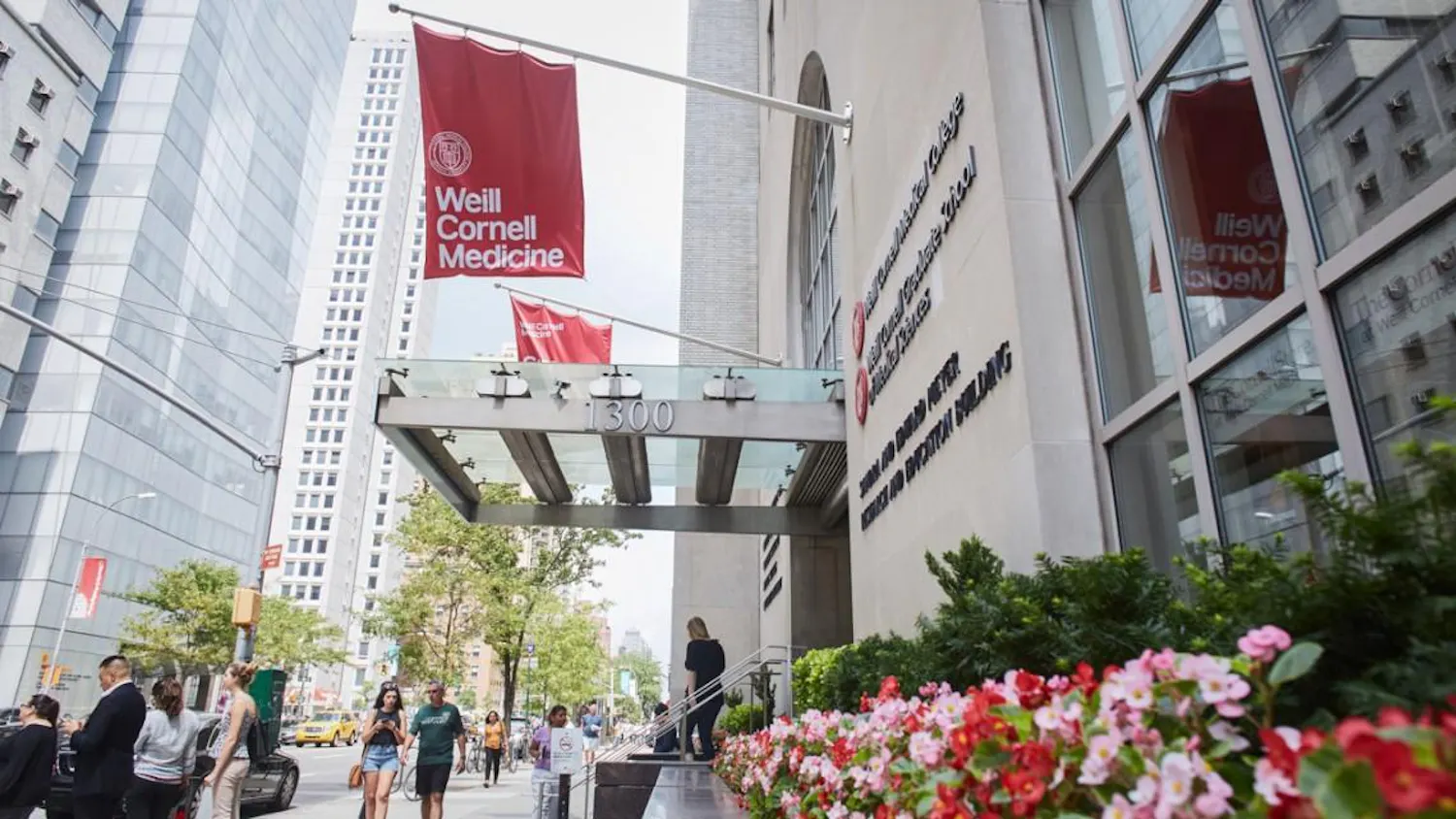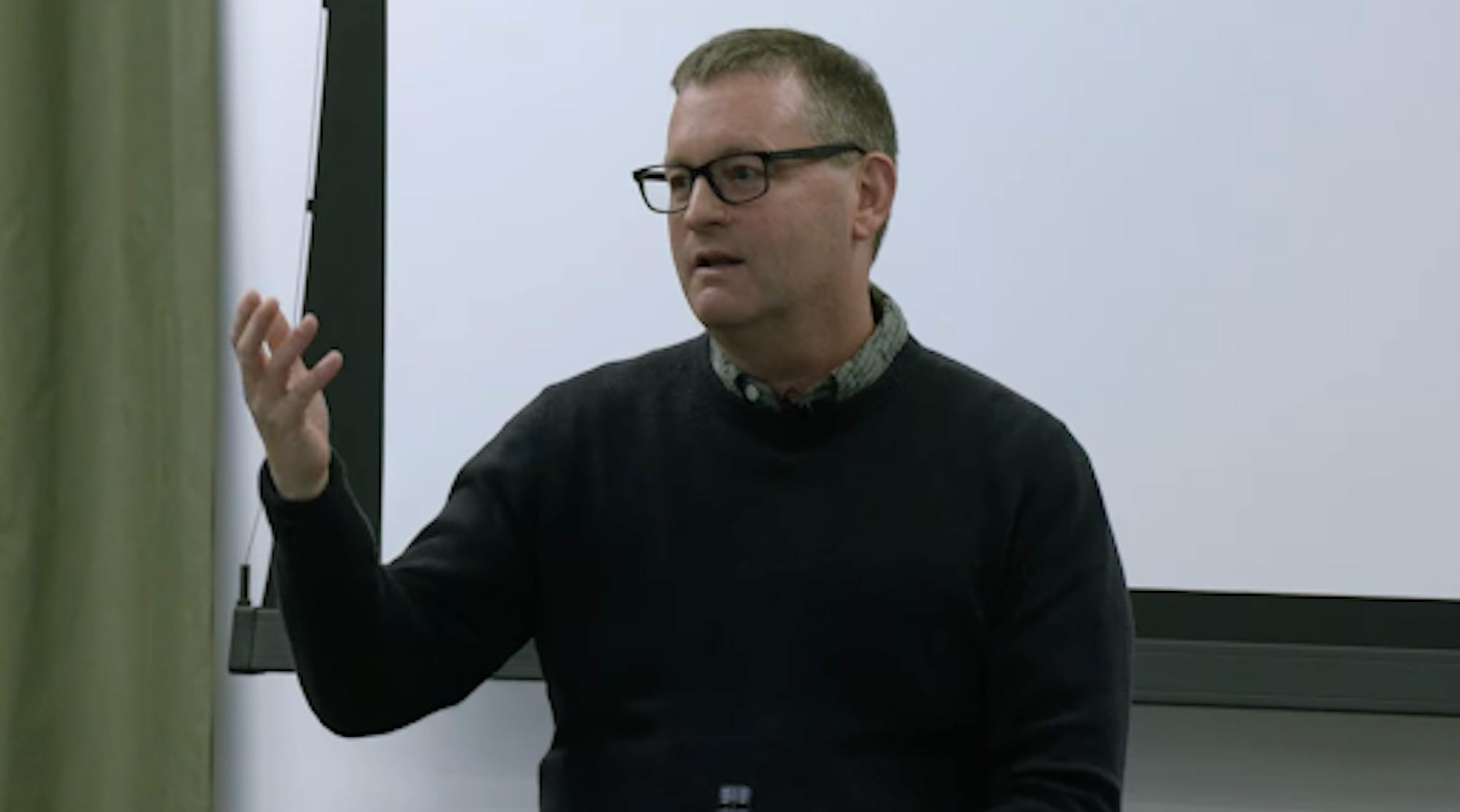
Cornell’s Atkinson Center for Sustainability hosted political scientist Roger Pielke Jr. for its Cornell Climate Impact Speaker Series on Wednesday. Pielke Jr.’s invitation to speak was met with excitement and disdain from the Cornell community, some of whom criticize his work and ties to the American Enterprise Institute, a think tank with a history of disputing climate change and financial ties to the tobacco, oil and gas industries.
Pielke Jr. took the stage with his presentation titled “What Climate Science Actually Says About Extreme Weather” on Wednesday for a filled auditorium. His presentation was followed by a Q&A session where audience members asked him about his background, research and views on climate advocacy.
The Cornell Climate Impact Speaker series aims to spotlight the work of “prominent leaders in climate change mitigation and adaptation,” and brings professionals in a range of fields to speak to students about their experiences, according to its website.
Pielke Jr. is a professor emeritus at the University of Colorado Boulder and senior fellow at AEI. Pielke Jr.’s ties to AEI — alongside allegations that he misleads audiences to support climate inaction — raised questions among faculty about whether he should have been invited to speak at the series.
Since 2013, AEI has received over $38 million from major organizations, many of which are known for supporting climate denial. Exxon, a major gasoline company, donated over $4 million to AEI in 2021, allegedly a part of their $33 million campaign to fund opposition work on climate policy through think tanks, front groups and other organizations.
The Sun asked Pielke Jr. about AEI’s ties to the fossil fuel industry and alleged climate denial campaigns.
“I was hired by AEI and I was told, ‘Do your research. Call things like you see them.’ There’s no house view on climate or climate denial,” Pielke said. “I am exceedingly proud to be a fellow at AEI. It is a highly respected think tank. I have complete academic freedom to do what I want.”
Pielke Jr. has stated that he believes that climate change is real. He believes that human activities significantly alter the temperature of the climate system, but has criticized the Intergovernmental Panel on Climate Change for oversimplifying the science involved.
For example, on Pielke Jr.’s Substack publication “The Honest Broker,” he wrote that “when it comes to [climate change’s effect on] U.S. hurricanes, IPCC … engaged in blatant cherry-picking of research.”
Pielke Jr. Fields Questions, Sparks Audience Critique
Pielke Jr.'s presentation on Wednesday said that the trend of increasing damage from extreme weather is not due to a change in frequency and intensity induced by climate change, but societal and economic factors. In his presentation, he said increased coastal development is the reason behind greater damage by hurricanes.
During the Q&A, several audience members voiced their concerns regarding his stance. Mikel Alvis ’26 questioned Pielke’s view on climate change’s impact on humans, commenting on her own experiences with extreme weather.
Pielke Jr. answered that Alvis hasn’t been around for long enough to see the impacts of climate change.
“So you’re in your 20s, is that fair? The definition of climate change by the IPCC is the change in the statistics of weather events over periods — the canonical time is 30 years or longer,” Pielke Jr. said. “So under the IPCC definition, you haven’t lived long enough to experience climate change.”
Pielke Jr. also celebrated in his response that 2025 is slated to have the record-lowest number of human deaths worldwide due to extreme weather in recorded history.
“The world is on track for the lowest number of deaths from extreme weather in recorded history and probably all of human history, this year,” he said. “Cross your fingers there’s no big typhoons or weather events on New Year’s Eve. Raise a glass; good job, humanity, we are living in a really spectacular period.”
It is true that as of August, this year was on track to hit a record low number of extreme weather-related deaths globally. However, extreme weather events have also caused above-average economic damages of $162 billion worldwide this year.
Prof. Flavio Lehner, Earth and atmospheric sciences, questioned the technicalities of Pielke Jr.'s analysis.
“There are two ways to do this kind of attribution of changes in extreme events, and they give different but consistent results,” he said in an interview with the Sun. “It’s a choice to pick the one method that looks like everything is uncertain.”
Lehner explained that the alternative method of understanding change in events is to identify how the same natural disaster would be different today than in the past. He says that, looking at the physics, warmer water temperatures today would increase the strength and wind speed of hurricanes.
Prof. Robert Howarth, ecology and environmental biology, is known for his groundbreaking research on the harms of natural gas and his environmental activism. Howarth also criticized Pielke Jr.’s messages regarding climate change and extreme weather.
“There’s a consensus put together through the [IPCC], and then Pielke Jr. is sort of off on his own disagreement with everyone else. And so it’s not like a structured debate, even of two sides,” Howarth said. “It’s like you’ve picked the contrarian non-science.”
Controversy in the Scientific Community
Pielke Jr. has been criticized for his claims on climate change, with members of the research community expressing that his views are not credible as a scientist.
Howarth claims that Pielke Jr. selectively chooses data to support his stance, making him unethical and not credible.
“He’s determined that climate change isn’t as bad as the strong consensus says — he cherry-picks, misleads, and ignores most of the information in order to reach that conclusion. He does not have credibility as a scientist because he’s not being ethical as a scientist,” Howarth said.
However, other members of the scientific community were less critical of Pielke Jr.’s rhetoric and looked forward to hearing him speak.
Prof. David Lodge, the Francis J. DiSalvo director of the Atkinson Center for Sustainability at Cornell, expressed his anticipation prior to Pielke Jr.’s visit, calling him an “important scholar of climate change on how science should advise policy.”
“I think it’s a message that was important then, and it remains important now, maybe even more important. We experts need to remember what our role is in democratic decision-making,” Lodge said.
When asked about Pielke Jr.’s background as a senior fellow of AEI, Lodge said, “I think what’s important with Pielke Jr. or any speaker is to consider what they say and what the evidence is. So I don’t think it’s particularly helpful to try to [put] speakers in boxes before you’ve heard and considered what they have to say.”
Prof. Benjamin Horton, dean of the School of Energy and Environment at City University Hong Kong, recently spoke out against Pielke Jr. at the Aon 18th Biennial Hazards Conference, calling his presentation “full of classic climate misinformation, distraction [and] deflection.”
He warned that Pielke Jr. could use the prestige of speaking at Cornell to back his credibility on his stance regarding climate change. He also believed that more information should have been disclosed regarding Pielke Jr.’s background for Cornell’s Speaker Series.
“If it is about free speech on campus, I have no problem with that as long as it’s advertised — who he is, who his sponsors are, what is agenda is,” Horton said. “If Cornell wants to invite [Pielke Jr.] and publicize that he’s funded by a right-wing conservative think tank, then fine, the people who go there will be aware of where this is coming from.”
Prof. Michael Mann, a presidential distinguished professor of Earth and environmental science at the University of Pennsylvania and collaborator of Howarth, recently published a new book, Science Under Siege, in which he accused Pielke Jr. of “admonishing” climate scientists that “don’t follow his lead.”
Mann also criticized the fact that Pielke Jr. was invited to speak at Cornell at all, calling it “problematic.”
“Academia is under assault right now by the right. And some institutions, I feel, are bending to that pressure. Inviting individuals from conservative think tanks, like Pielke Jr., is one way that some universities are attempting to demonstrate how balanced they are,” Mann said. “But there can be no balance between science and antiscience, between whether the Earth is round and whether it is flat.”
Andrea Kim is a Sun Contributor and member of the Class of 2028. She can be reached at ack247@cornell.edu.