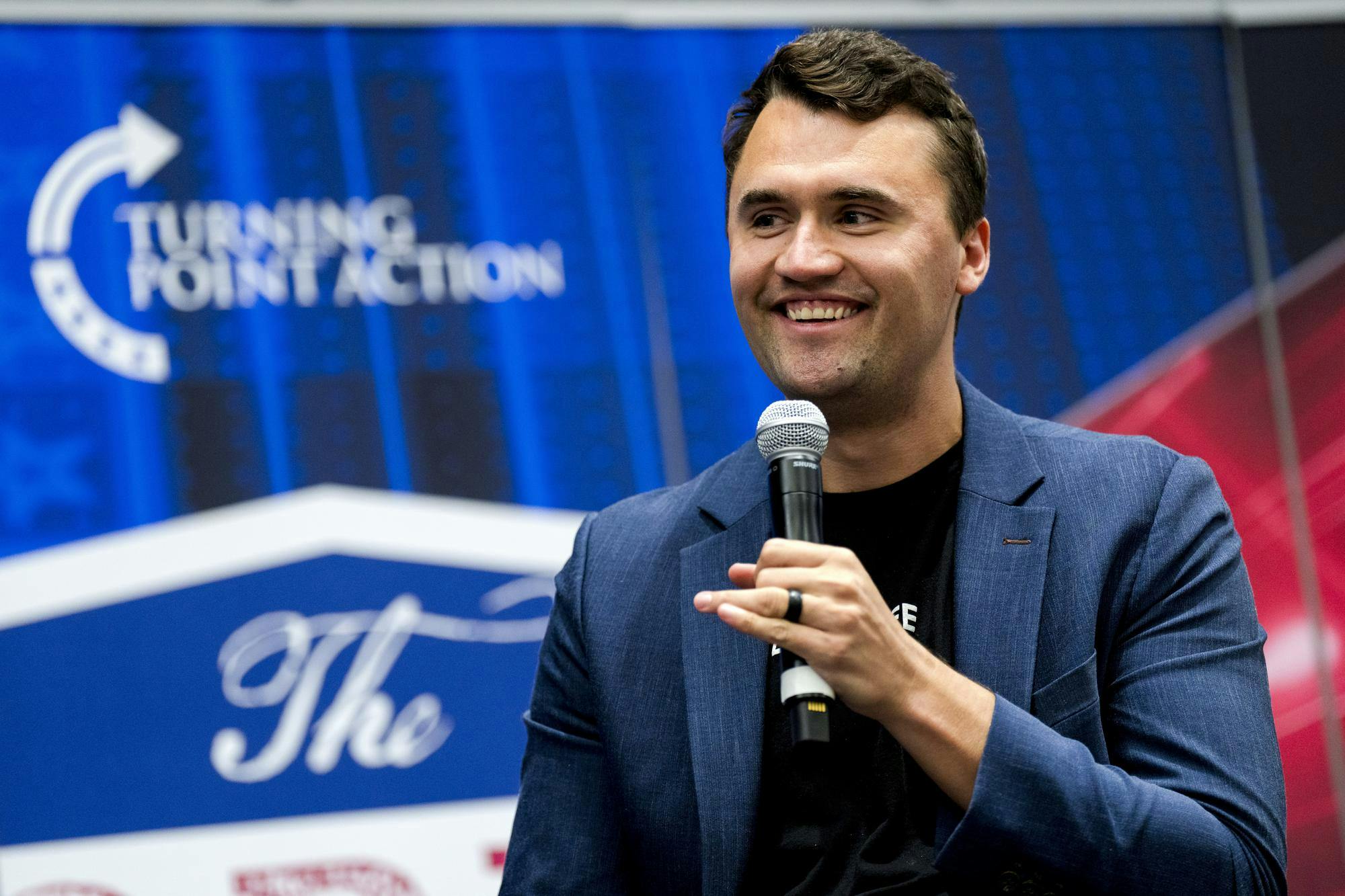
In the wake of Charlie Kirk’s death, his 501(c) nonprofit conservative activist organization Turning Point USA has drawn renewed national attention. TPUSA’s Professor Watchlist features four Cornell faculty members: Monica Cornejo, Russell Rickford, Bruce Monger and Sarah Pritchard.
According to TPUSA’s website, the watchlist aims to “expose and document college professors who discriminate against conservative students and advance leftist propaganda in the classroom.” The watchlist was launched in 2016 with around 200 professors and now includes over 300. Professors can be tagged for a large range of issues, from antisemitism to immigration to feminism.
Prof. Russell Rickford, history, appears on the watchlist with tags for racial ideology, antisemitism, anti-law enforcement, protests and terror supporter. Rickford drew national attention in 2023 for saying that he was “initially ‘exhilarated’” by Hamas’s attack on Israel on October 7, 2023. His statement was widely condemned, including by University leadership. Following backlash to his statement, he did issue an apology in the Sun for “for the horrible choice of words that I used in a portion of a speech that was intended to stress grassroots African American, Jewish and Palestinian traditions of resistance to oppression.”
Rickford subsequently took a voluntary leave of absence from Cornell and returned in Fall 2024.
“Reactionary forces target the left because they serve the interests of a ruling class that sees as a threat any challenge to patriarchy, white supremacy and global capitalism,” Rickford said in a statement to The Sun in response to being added to the watchlist.
Prof. Monica Cornejo, communication, is also listed, primarily due to her arrest involving the Ann Coulter ’84 lecture in April 2024. The aftermath of her arrest and placement on the watchlist led her to take a medical leave of absence.
“[I] have a beautiful long list of all the … hate mail I got,” Cornejo told The Sun, referencing messages that included anti-immigrant hate speech and death threats. Cornejo said she felt discouraged from speaking out “for a while” after. She said her leave was necessary “to reconcile what it meant for somebody like [her] to be in academia” in the era of TPUSA’s watchlist.
In a 2016 interview with Time Magazine, Kirk said the list’s goal was not to intimidate professors but “to shine a light on what we feel has been an unfair balance toward left-leaning ideas and biases in our universities.”
Cornejo, however, believes this watchlist does have adverse effects. She believes it damaged her relationships with colleagues, some of whom withdrew from collaborations.
“They perceive that … being affiliated with me, it's going to mean that they're going to also land on that website,” Cornego said. “It just continues to divide us instead of having these conversations.” Cornejo believes TPUSA is intentionally creating this fear.
Following her arrest at the Coulter event, Cornejo claimed that no one from the University officially reached out to offer any protection or support. After reaching out to Cornell Media Relations about this claim, the University declined to comment.
Cornell’s University Policy 4.23 Expressive Activity Policy states, “Disagreements about ideas should be resolved not by university regulation, but through debate and discussion among Cornellians.”
In a letter written following her arrest, Cornejo drew attention to this policy, arguing that the right to speak freely without consequence often belongs primarily to those who are socially privileged. She advocates for the University to do more to promote conversations that involve the perspectives of historically marginalized groups, writing, “we must use our privileges and voices to uphold all people’s humanity and right to exist with freedom from suppression and oppression.”
She worries that the creation of sites like TPUSA’s watchlist hinders engagement in such conversations.“We are now seeing the consequences of hiding under a veil of either objectivity, which we know does not exist, or neutrality, which we know has consequences to folks who are most impacted by oppression.”
Despite her concerns, Cornejo remains hopeful. When asked about the student response to her placement on the watchlist, she remarked that it was mostly positive, with many expressing appreciation that a faculty member recognised and supported their experiences. The experience, she said, caused her to recenter lectures on the importance of open dialogue and the dangers of hate speech.
Her love for Cornell is what propels her to continue advocating for the University to allow all people the freedom and safety to voice their opinions.
”Given our mission of any person, any study, any place, that has to also not only encompass scholarship and teaching, it also has to include or incorporate who is allowed to talk and who is given credibility when they talk,” Cornejo said.

Valencia Massaro is a member of the Class of 2029 in the School of Industrial and Labor Relations. She is a staff writer for the News department and can be reached at vmassaro@cornellsun.com.