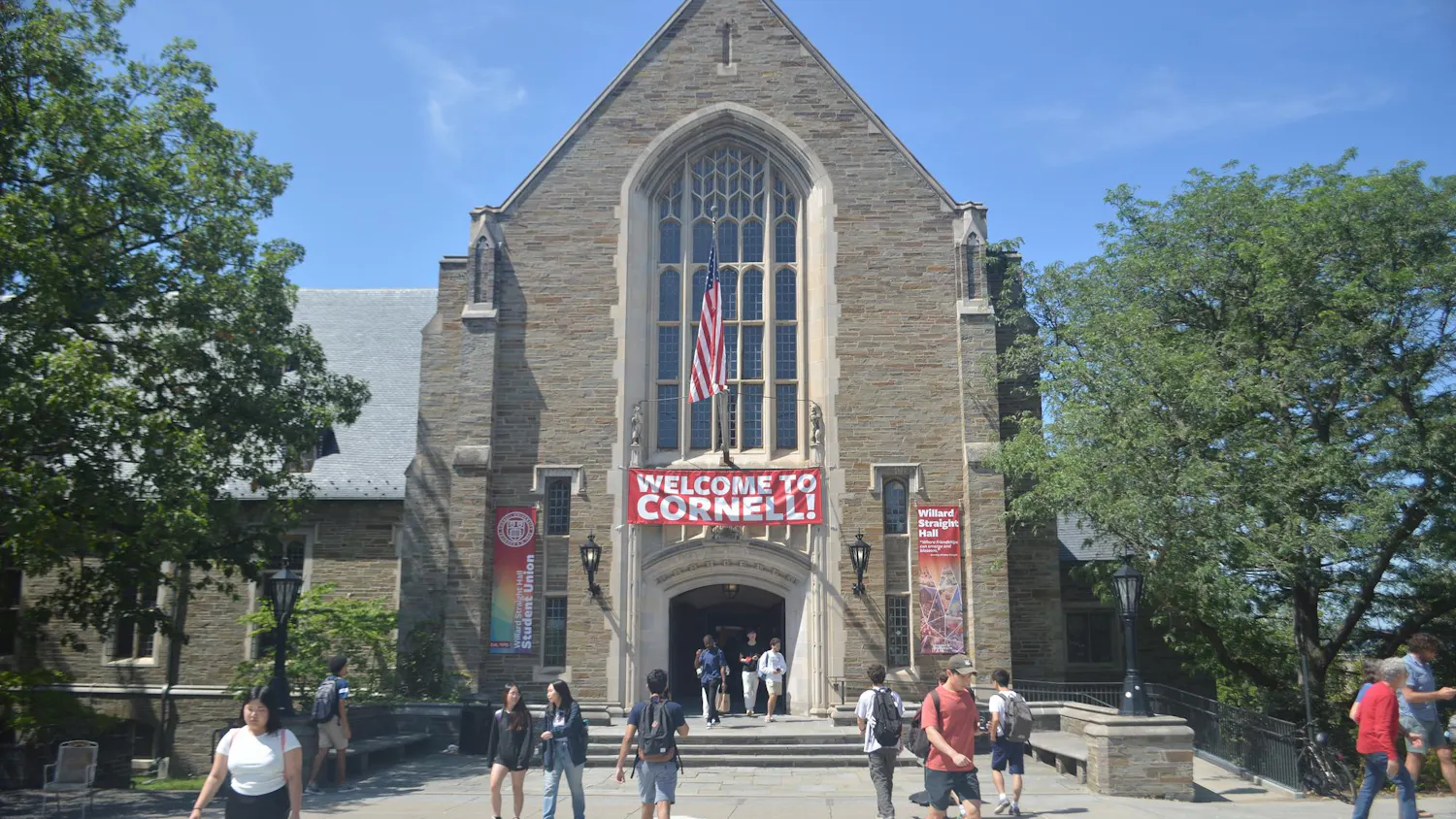
“Who speaks through the meme?” Prof. Anna Shechtman, English, asked to a small auditorium of students, a TV screen of the Disaster Girl meme standing next to her. Is it the original creator of the meme? The social media user reposting it onto their meme account? Someone else? If Roland Barthes were at that Coffee & Chat with Profs session, sitting in a corner, bearing a smoked cigarette on his right, he might respond: “We shall never know, for the good reason that writing is the destruction of every voice, of every paint of origin. Writing is that neutral, composite, oblique space where our subject slips away, the negative where all identity is lost, starting with the very identity of the body writing.”
We may feel a slight shock at this statement, a sense of its seeming absurdity. Don’t all memes have an author, with their own biography and psychology, a reason behind making the initial post? Can’t we go on Know Your Meme right now and find a meme’s full genealogy, from first appearance to when it achieves virality? But after that first jolt of confusion, we come to understand how self-evident Barthes' statement actually is. The meme creator doesn’t exist when we consume a meme on social media; they aren’t with us when we first encounter it. The author doesn’t magically manifest out of nowhere, maintaining that, indeed, “I” created this meme. When you’re reading Pride and Prejudice, Jane Austen isn’t really saying anything; it’s the narrator, the language that speaks. In The Death of the Author, Roland Barthes (rolling in his grave for this sacrilegious authorial attribution) tells us: “it is language which speaks, not the author; to write is, through a prerequisite impersonality … is to reach that point where only language acts, 'performs,' and not 'me.'”
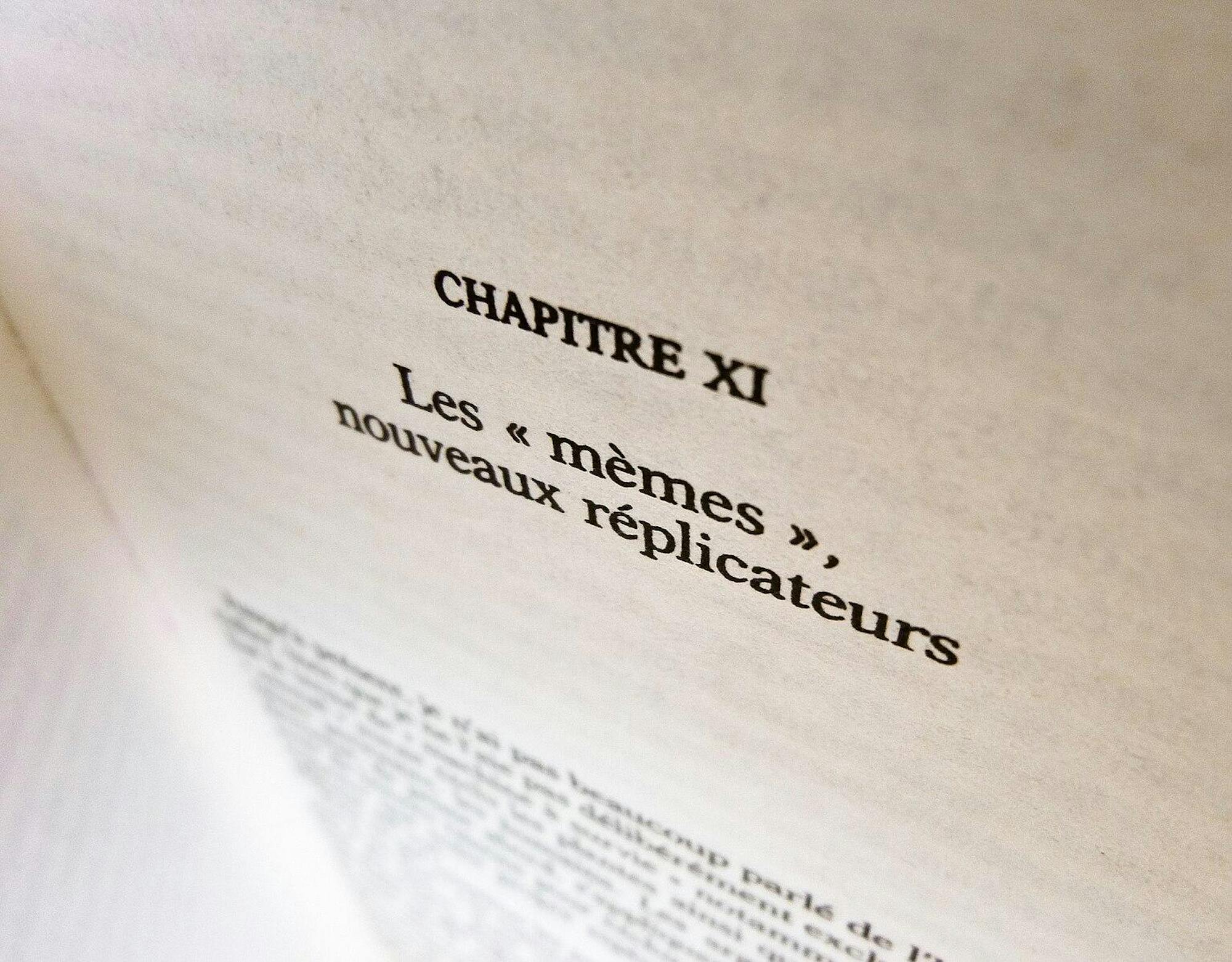
This is fundamentally part of the meme’s genetic makeup. The word was coined by Richard Dawkins, who needed “a name for the new replicator, a noun that conveys the idea of a unit of cultural transmission, or a unit of imitation.” Dawkins combined the Greek-rooted “Mimeme” with the monosyllabic “gene” to create this new word, to analogize how ideas, images and practices, like our genes, replicate and transmit themselves through large populations. Memes, like any form of written expression, survive through reuse, recycling, compression and change, the “author” disappearing behind the text and image that perform, part of a long lineage dating back to oral transmission. Though we attribute epics like The Iliad or The Odyssey to the singular Homer, those texts survived only through constant revision and transmission, the collective strength of thousands sculpting the story, structure and poetic meter to their liking. It is possible that the initial story dictated by the blind poet millennia ago is vastly different from the text available in libraries and bookstores today. And the original Disaster Girl image, probably posted decades ago, has spawned a barrage of different reuses, the original image and its author passing into the collective performance of that image.
To understand how memes spread and infect us, it may not be useful to become forensic investigators looking for patient zero, the original meme creator. The authorial invisibility of the meme–speaking through what Barthes considers “a subject empty outside the very enunciation which defines it,” is what makes memes both delightful and dangerous. At least when someone publishes a book or an article with the author attached, we can hold that figure accountable for any terrible ideas or views expressed within it. The author no longer exists after a meme becomes viral, any figment of personal accountability slowly evaporating within the infinite sea of retweets, reposts and remixes. You can nurture misinformation, excite laughter, reinforce echo-chambers, strengthen community and normalize hate-speech, all without the need of the all-knowing author persona. Obviously, we can trace and track the authorship of most memes on the internet, but this information proves useless for anything outside archival purposes. Understanding the effectiveness of memes means knocking the author from his exalted position in interpretation, to de-center the author as the main unit of analysis. It means focusing more on our culture, the fertile soil where the meme takes root.
In memes, we find an overly literal embodiment of what Roland Barthes sees in any form of written expression. Once the post button has been clicked, the author dissolves into a repeating cycle of reproduction, surviving only off this process, a self-sufficient gene that will continue to mutate ad infinitum.
Basil Bob is a junior in the College of Arts and Sciences. He can be reached at bob27@cornell.edu.

Basil Bob is a member of the Class of 2027 in the College of Arts and Sciences. He is a staff writer for the Arts & Culture department and can be reached at bbob@cornellsun.com.