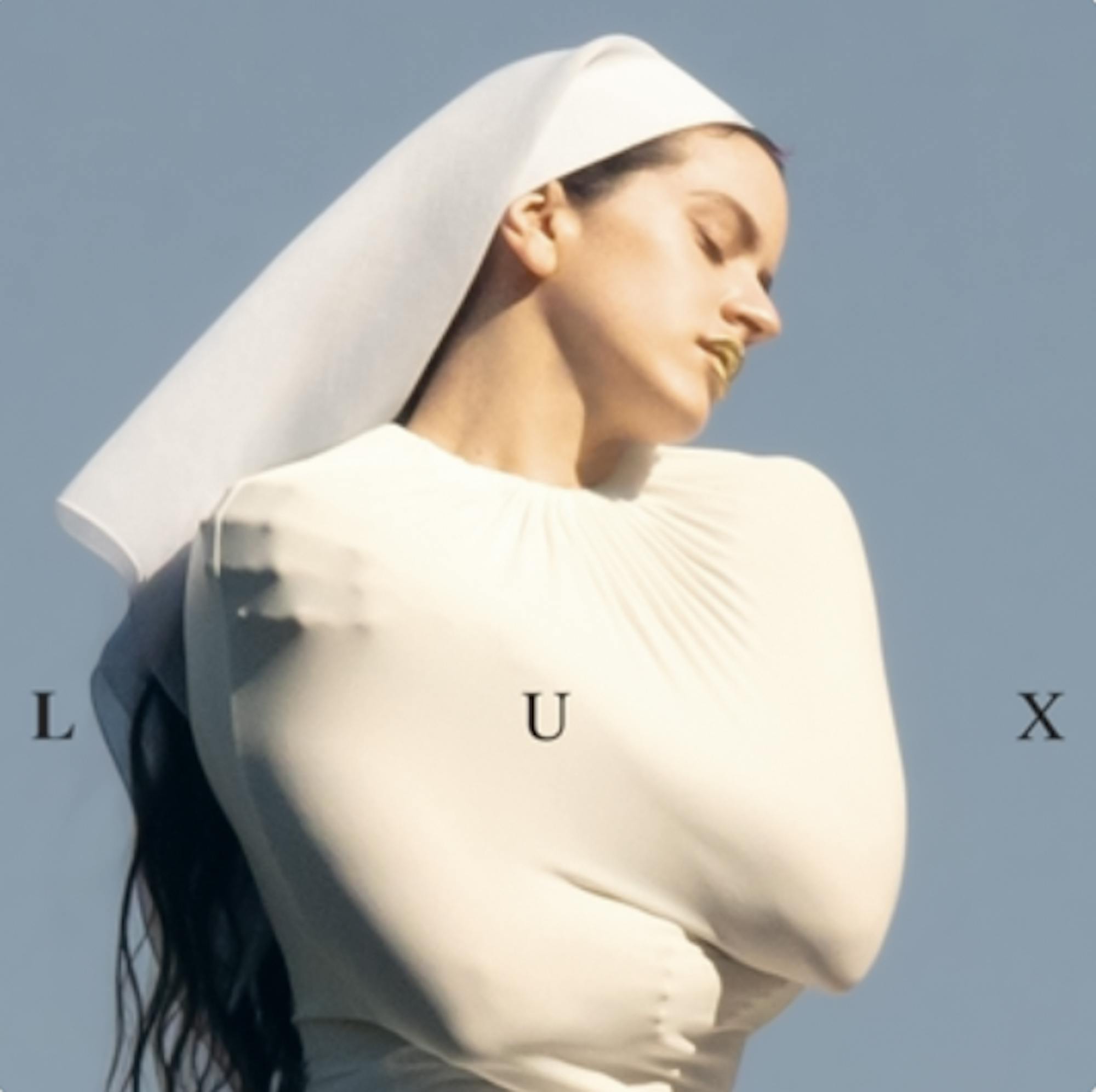
Three years after her Latin Grammy award-winning Album of the Year, Motomami, Rosalía returned this past Friday with the anticipated release of her fourth album, LUX. On Oct. 27, to much critical acclaim, she released the lead single “Berghain,” a song made in collaboration with experimental artists Björk and Yves Tumor. “Berghain” opens to a thundering choir and hasty violin, chanting in German while a somber Rosalía sings in opera — signaling to us, her audience, that she is striving towards boundless territory and pushing the limits of artistry in her upcoming project. With LUX, Rosalía proves her divine artistic visionary through a spectacle of mastery described by Pitchfork as an “operatic lament for a new generation, an exquisite oratorio for the messy heart.”
Because of her training in classical music, Rosalía has always been producing music that sounds unlike anything else happening in the mainstream; LUX is no exception. She invites the London Symphony Orchestra to create grand compositions that accompany her outstanding vocals, dramatically rising and falling in an operatic way. Lyrically and thematically, LUX is broken up into four “movements,” dispensing the 18 tracks across discussions of femininity and religion.
Rosalía said her goal for the record was for it to be undeniably human, opposing AI — the record’s pulse is humanity and pushing the boundaries of how high artistry can get. Every word, strum, note, beat, from a solo to a choir singing in German to a lonesome Rosalía singing to herself, feels divine and out of this world, yet here it is, demanding your full attention and intention while you listen. LUX is an essential record that reminds humanity, or at least me, of the insane capabilities we have to create the most fascinating, raw and downright beautiful works of art. She tells the New York Times, “The more we are in the era of dopamine, the more I want the opposite.” Upon listening to this album, it’ll demand your undivided attention and invite you to think and research further. Rosalía achieves this in a very unique way; by singing in 13 different languages throughout the album, motivating listeners to sit with the words as they’re sung/spoken, either to fluent understanding or total oblivion, combating the individualized and algorithmic thought process. The 13 languages serve not as a means to exclude any, but in hope that across languages the music can bring different people closer together. It makes you wish you could speak the language, inspiring dialogue and further learning and research — really doubling down on the idea that music is a universal language.
While three of the album’s 18 tracks are only available on physical copies, 15 show-stopping songs were released at 6 p.m. EST on Thursday night to my thorough enjoyment and intrigue. Upon first listening to LUX, having gotten a taste of it through “Berghain,” I was so happy to hear the cathartic and grandiose vision executed so perfectly and beyond my wildest imagination, proving (not that I ever doubted her), yet again, that Rosalía is a visionary who isn’t afraid to take risks; she embraces them. The sheer sound of her music is enough to immerse any listener in an intense emotional experience. I had to put down the homework I was doing and submit to her voice. The experience doesn't lie in the simple semantic understanding of the words articulated by her captivating voice, though, as a lyric-loving girl, I did have Google Translate at hand to fully understand the poetics of the songs. The more I listened to it, the more I understood that Rosalía is the very essence of emotion; her lyricism is incredible and worth the translation to appreciate it, yet not necessary to get a feel of what she’s trying to say.
I could write a whole other article about the storytelling and religious allusions Rosalía makes in LUX, because that in itself is another divine achievement. LUX fosters a unique environment where pop and religion engage in an intrinsic dialogue that forces Rosalía to face pain, loss, anger, grief, love, worship, desire and above all navigate who she is, and how and why she loves. LUX is a spiritual quest towards finding herself through sonic and lyrical moments of opera references, classical sounds, hagiography, comedy and — would it be a Rosalía album without a nod to her roots in Flamenco traditions?
Album highlights include “La Perla,” a snarky clapback at ex-fiancé Rauw Alejandro with cut-throat lyrics such as: “A mirage, Olympic gold medal for the biggest jerk / You've got the podium of the great disappointment / An emotional terrorist, the greatest disaster in the world.” The next single for the album is “Reliquia,” a beautiful song that tackles Rosalía’s tendency to give her heart away and leave it scattered throughout the world through the hearts she touches and the pieces of herself she leaves behind: “Take a piece of me, keep it for when I'm gone / I'll be your relic.” “La Yugular” and “Mio Cristo Piange Diamanti” are the most heartbreaking ballads on LUX, in these songs is where she delivers her most impressive vocals and lyrics, fully submersing the listener in an emotional catharsis; some lyrical highlights from these songs are: “Your love is an avalanche / It collapses under its own weight just by existing / Yesterday, today, and tomorrow / The snow in which I want to sink,” and “How many punches were given to you / That should have been hugs? / And how many hugs / Have you given that should have been punches?”
All in all, LUX left me feeling thankful for Rosalía’s unique, transcendent bravery and vulnerability that pushes her to create and inhabit the world through her artistic vision, making listeners all around the world, speaking any language, find a place in her music and solace in her storytelling.
Paulina Delgado Umpierre is a sophomore in the College of Arts and Sciences. She can be reached at pmd99@cornell.edu

Paulina Delgado-Umpierre is a member of the Class of 2028 in the College of Arts and Sciences. She is a staff writer for the Arts & Culture department and can be reached at pdelgadoumpierre@cornellsun.com.