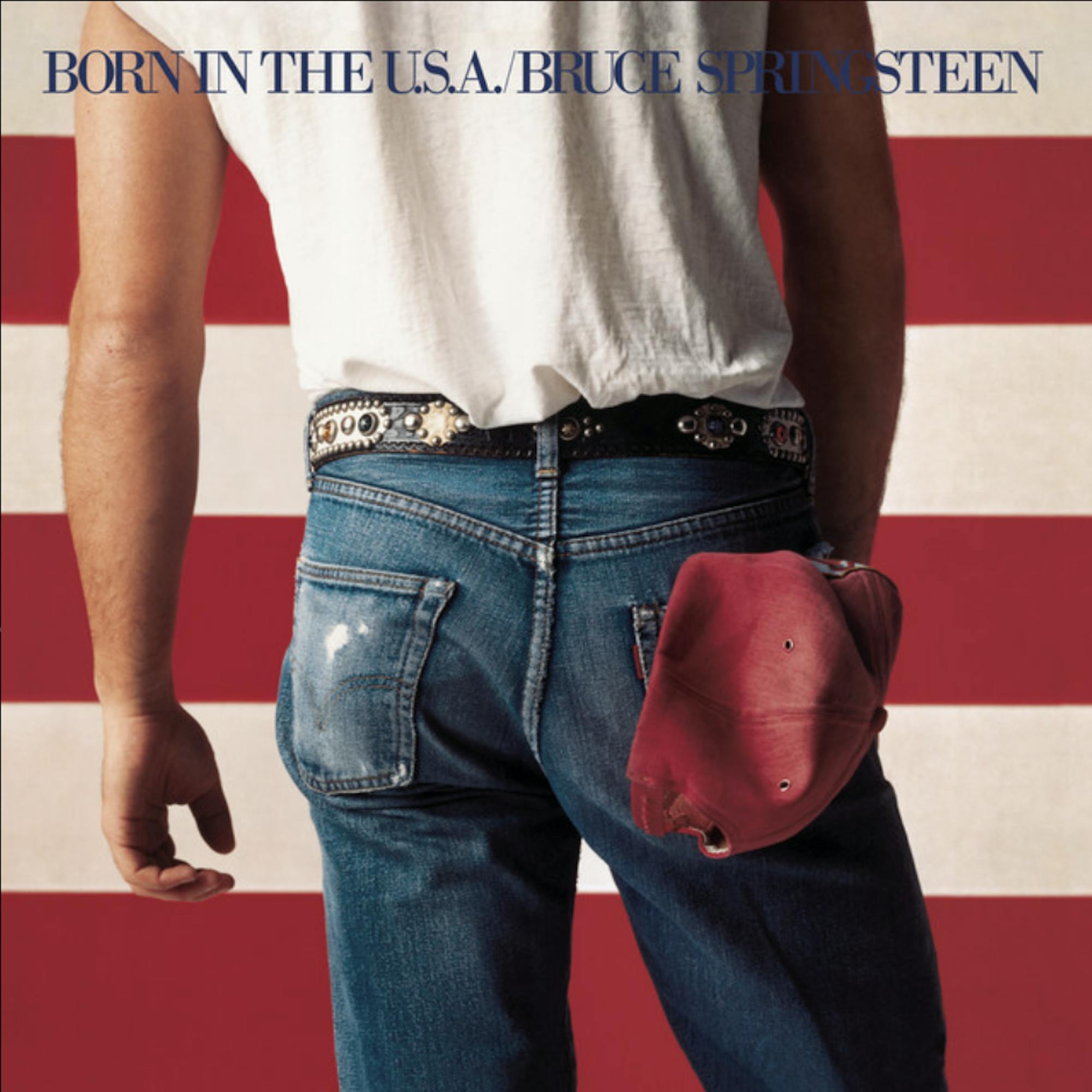
“Bruce Springsteen broods in an empty theater in Springsteen: Deliver Me From Nowhere (2025),” reads the caption of a screengrab in Lisa Laman’s review of the film. Apparently, she wasn’t kidding — Deliver Me From Nowhere was a complete flop in the box office, with one of the worst debuts ever for a film with such a large scope of theaters. In a world in which audiences are constantly getting biopics shoved down their throats, it’s difficult not to compare the film’s performance to the success of one of its immediate predecessors, A Complete Unknown. But while reviews like Laman’s attribute Deliver Me From Nowhere’s failure to a lack of big names and “spectacle” — especially in comparison to films like A Complete Unknown, Elvis and Rocketman — I’d like to offer an alternative explanation. Deliver Me From Nowhere focuses on Springsteen’s process making Nebraska — a critically acclaimed album, but certainly not his most successful. Director Scott Cooper told Entertainment Weekly that “One can very easily make a film about Born in the U.S.A. … Nebraska is Bruce alone with a four-track recorder whispering his despair into a microphone. Born in the U.S.A. is Bruce talking about some of the same themes, but he sets them in stadium-sized anthems. One is Bruce’s private diary, and the other is a larger, public declaration. You can’t have one without the other.” There is undoubtedly value in such intimate documentation of a period of struggle in a lauded singer-songwriter’s life, and it’s particularly important when you consider that most of Born in the U.S.A. was written during the Nebraska period; nevertheless, regardless of the value, audiences want to hear hits — not introspection — within this musical biopic landscape. Nebraska is and will always be an important part of Springsteen’s discography and story, but another look at Born in the U.S.A. makes it clear why a movie about this album would have been a box-office smash.
The 1984 record starts off with its title track, a perennially misunderstood song that is often thought of as being patriotic, and yet talks about the difficulty faced by a Vietnam veteran returning home after the war. The lyrics of “Born in the U.S.A.” touch on themes of alienation and discontent, but are laid over slyly upbeat instrumentals. Meanwhile, “Cover Me” — a song Springsteen originally wrote for Donna Summer — is more sonically interesting, and one of my favorites off this record. His voice is gritty and harsh, which works well with the moody guitar in the background. For me, “Darlington County” is lyrically questionable and a low point for Born in the U.S.A. Clarence Clemon’s saxophone solo is definitely a highlight, but the song is underwhelming otherwise. “Working on the Highway” is another deceitfully dark song with lyrics meant to give you pause set against peppy instrumentals — Springsteen’s modus operandi on this record.
Like many of the songs that made it onto this album, “Downbound Train” was written during the Nebraska period. Originally an acoustic track, the shift to electric guitar was a wise one, giving the song a more charged, emotional feel. Springsteen’s songwriting skills really shine in the first verse: “I had a job, I had a girl / I had something going, mister, in this world / I got laid off down at the lumberyard / Our love went bad, times got hard / Now I work at the car wash / Where all it ever does is rain / Don’t you feel like you’re a rider / On a downbound train?”
“I’m On Fire” is a turn for the softer, pluckier and more reflective, while “No Surrender” represents a departure from his comfort zone: “It was a song I was uncomfortable with… you don’t hold out and triumph all the time in life. You compromise, you suffer defeat; you slip into life’s gray areas.”
“Bobby Jean” is an underrated standout from Born in the U.S.A. and sees Springsteen bidding one final, ambiguously romantic goodbye: “And I’m just calling one last time, not to change your mind / But just to say ‘I miss you, baby’ / Good luck, goodbye, Bobby Jean.” In “I’m Goin’ Down,” Springsteen’s voice gets deeper and clearer, and it’s impossible to explain it better than Pitchfork’s Sam Sodomsky when he writes, “For many of the characters in these songs [including “Downbound Train” and “I’m Goin’ Down”], down becomes homebase: the direction you’re cautioned to ignore when you’re at the top; the inevitable crash after any high.” “Glory Days” is one of the most popular tracks from this already-popular album, where Springsteen reminisces on the good old days in the ideal soundtrack for a high school reunion. “Dancing in the Dark,” about feeling stagnant and needing a spark, is the best song on the record. Springsteen is honest and vulnerable but still, as always, rocking. The record closes out with “My Hometown,” a song partially inspired by his New Jersey origins. It’s slow and lullaby-esque, but as is the case with any Springsteen song, has infinite layers to peel back and dissect.
Given the success of the album itself, concentrating on Born in the U.S.A. would have made the Bruce Springsteen biopic financially successful. That being said, Born in the U.S.A. would not exist without Nebraska the same way the Boss wouldn’t exist without the very real, very human Bruce Springsteen underneath. So what does it say about us as viewers that we refuse to see him? I don’t have a clear answer, but I do know that sometimes it’s important to look behind the curtain and beyond the spectacle. Deliver Me From Nowhere may not be perfect, but it allows us to do just that.
Test Spins is a fortnightly throwback column reviewing and recommending classic and underrated albums from the past. It runs every other Friday.
Sydney Levinton is a junior in the College of Arts and Sciences. She can be reached at slevinton@cornellsun.com.
Sydney Levinton is a member of the Class of 2027 in the College of Arts and Sciences. She is a Senior Editor specializing in music and was the Arts and Culture Editor on the 142nd and 143rd Editorial Boards. She can be reached at slevinton@cornellsun.com.