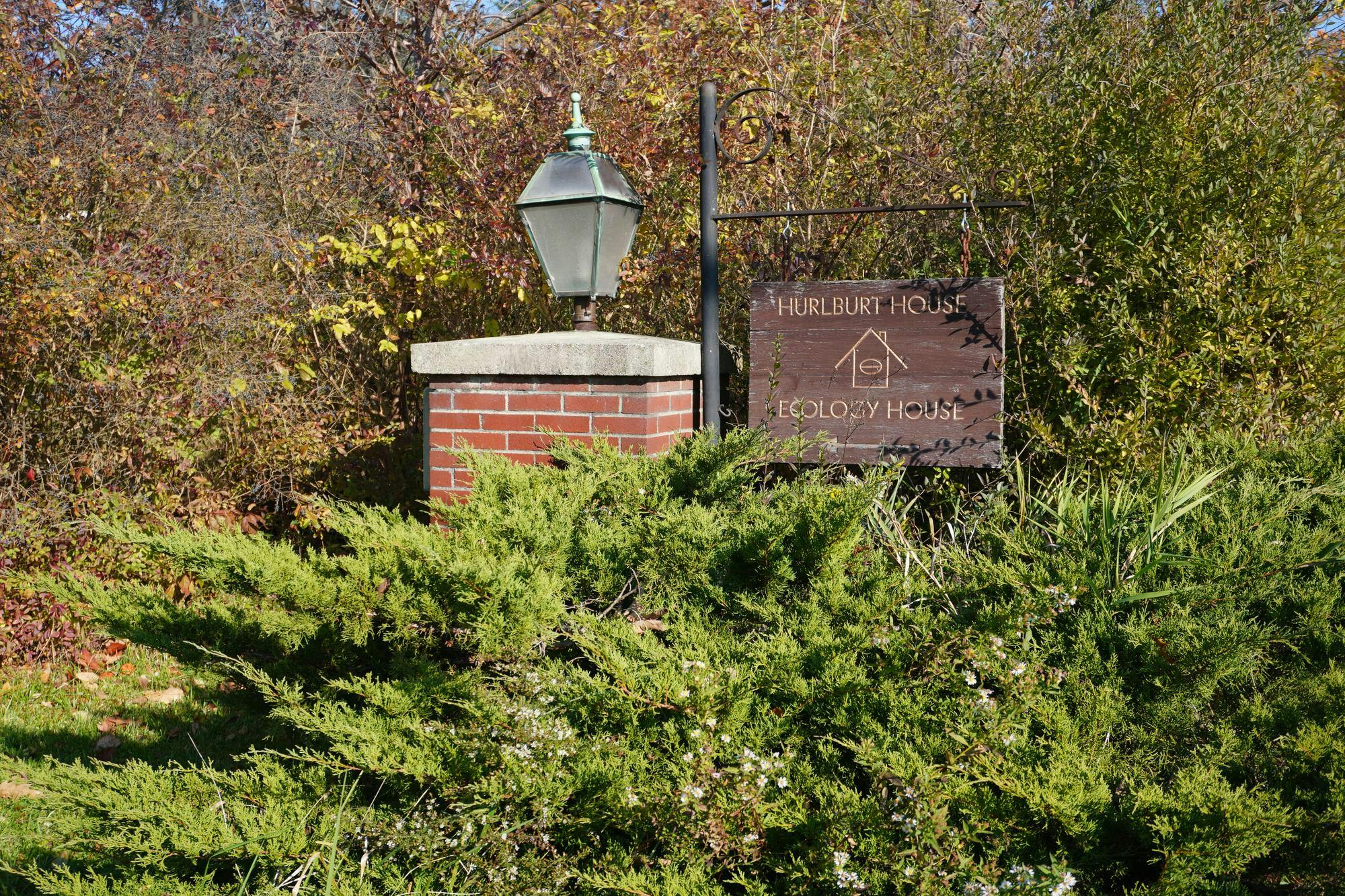
The North campus dormitory Ecology House bears the colloquial title of “the pet dorm,” according to its residents, even after it lost its calling card of being the only on-campus dormitory to allow student-owned pets in 2024.
Students and alumni alike express that they believe this ban on pets has contributed to an erosion of the dormitory’s unique culture and community, although some current residents are unaware of Eco’s pet-friendly legacy.
Ecology House, otherwise known as Eco, is a program house with about 100 residents united around a shared interest in “sustainability, environmental justice, [and] plants and animals,” according to their Housing & Residential Life page. It was established in 1970.
Aligned with this emphasis on nature, Eco was also a uniquely pet-friendly dormitory.
“For many years, Ecology House was the only residence hall on campus that allowed student-owned pets,” HRL wrote in an email to The Sun.
While fish are allowed in all on-campus housing, according to HRL Community Living Standards, non-fish pets, such as rodents, birds, and reptiles, were also permitted in Eco prior to Fall 2024. No dogs or cats who weren’t ESAs or service animals were allowed.
Mary Margaret Ferraro ’15, who lived in Eco for two years as an undergraduate and now works at the Cornell Lab of Ornithology, chose to live there because of its pet policy, as she wanted to bring her pet cockatoo Cielo to Cornell with her.
As a sophomore transfer student, Ferraro applied to live in Eco her first semester but didn’t get in, forcing her to leave behind Cielo as she was residing in Cascadilla Hall.
“I was totally heartbroken, because I had really wanted to come to Cornell with my pet bird,” she said. “I went one semester without my bird. I was really sad.”
A friend of Ferraro’s lived in Eco at the time and offered to house Cielo during the spring semester.
“I would go pick him up at, like, six a.m. every day,” Ferraro said. “So we had our work-around.” After that year, for her remaining semesters at Cornell, Ferraro lived in Eco.
“It really was the only [on-campus] option that allowed pets,” she said. “And for those of us introverts who really need time with animals to, you know, just be happy people, it’s a needed thing.”
That passion for pets at Eco was maintained into more recent years, too.
“It was a very, very big part of its identity,” said Sarah Rackowski ’25, who lived in Eco for two years as an undergraduate. “I think the main attraction to living at Eco House was that you could have pets other than fish.”
Restrictions on pets included size limits on fish tanks and terrariums, and students had to fill out an application detailing the pet’s living space and care plan.
“People would come into your room and do inspections,” Rackowski said. “They'd look at your animal, they'd look at the enclosure … and if they didn't think it looked right, they'd let you know.”
Since Fall 2024, however, all non-fish pets have been banned.
According to current Eco resident Hannah Rams ’27, the catalyst for the pet ban was not explicitly given to residents by HRL staff, nor did HRL give specific details in their statement to The Sun when asked about why the pet ban was instituted. However, alumni and current residents testified that shortly before the ban, somebody’s pet snake escaped its enclosure in the dormitory.
“What I heard was this one person had a snake,” Rams said. “The snake got out, and they could not find it. Because of that, I heard [HRL] was very upset with said person … since then, they’ve really cracked down.”
Rackowski, who was living at Eco at the time of the escape, confirmed that it was the catalyst.
“All of this around banning pets happened in the aftermath of the snake escape,” she said. “I don’t believe it was on any official documents about the pet ban, but it was verbally discussed [by Resident Advisors and residents] as the number one reason for the pet ban.”
When asked to confirm if the snake was the primary cause of the pet policy changing, Cornell Housing & Residential Life did not respond in time for the publication of this article.
Many who spoke with The Sun believed this incident prompted HRL to examine and adjust their policy surrounding pets in the dormitory. “Beginning in Fall 2022, Housing & Residential Life reviewed the sustainability of the pet policy and determined it was no longer feasible due to resource, facilities, and accessibility challenges,” HRL wrote in a statement to The Sun.
According to Rackowski, this review process meant that no new pets could be brought into the dormitory, but residents who already had pets that were approved in previous semesters could keep them. By Fall 2024, Eco instated a full ban on pets, permitting only ESAs, service animals and fish.
However, current residents testify that the change in rules has not stopped some students. Rams said that some residents continue to secretly keep pets, recalling a hamster that escaped its enclosure and was found by one of the Resident Advisors.
The Residence Hall Director at the time of the incident told the hamster’s owner to rehome it, according to Rams.
Prior to the pet ban, pets served to bring the Eco community together. Rackowski recalled “pet nights,” where people would bring their pets out into common areas and socialize, as well as official dormitory newsletters that contained references to residents’ pets.
Ferraro also recalled that pets were something that people socialized and bonded over at Eco.
“A lot of those of us who were social and interacting out in the lobby and spending time in the communal spaces, a lot of us did have animals,” she said.
Ferraro believes that the pet ban has removed something that was the “heart of Eco, and what made it Eco.” In particular, she criticized how one student’s pet escaping sparked the re-evaluation of the pet policy.
“You should expect responsibility from owners to keep track of their animals,” she said. “And I could see not allowing that person to have pets anymore, potentially, but to ban it for the whole dorm is just really sad.”
Ferraro also noted that there were no pet escapes in Eco that she could recall during the two years that she lived there.
As a current resident, Rams believes the current regulations are “reasonable,” but she also notes that Eco is still known as the “pet dorm” despite pets having been banned for over a year now. “When I tell people I live in Eco, some of them are like, ‘What is that?’” she said, “and others ask, ‘Oh, isn’t that the dorm where people can have pets?’”
Some students who arrived on campus after the pet ban are unaware of Eco’s legacy as a pet-friendly dorm, though. When asked if he knew “anything at all about Eco’s history as a pet-friendly dorm” when he chose to live there, Kaiyu Yang ’29, a current resident of Eco, replied that he did not in a written statement to The Sun.
“I think it’s a cozy place offering both personal spaces and a variety of entertaining community activities,” Yang wrote regarding his perception of Eco. He also wrote that he attended the dormitory’s “canoeing, rappelling and pumpkin carving activities.”
Having lived at and observed Eco both before and after the pet ban, Rackowski feels that it eroded away the dormitory’s unique identity.
“I think that after the pet ban, Eco House became more of a mainstream dorm,” she said. “I'm sure they're still trying to keep that Eco identity going, but it's just not going to be as strong in the future, in my opinion.”

Angelina Tang is a member of the Class of 2028 in the College of Agriculture and Life Sciences. She is a science editor for the 144th Editorial Board and was an assistant news editor for the 143rd Editorial Board. She can be reached at atang@cornellsun.com.