From Nov. 12 to Nov. 20, four Cornell students transformed the Olive Tjaden Experimental Gallery into a space of reflection and rebirth through their collaborative exhibition: What Remains — Traces of Fire, Memory and Renewal. The show was curated by Christina Song ’28, Cesaire Carroll-Dominguez ’28, Hayden Hogue ’28 and Ryan Ye ’28, exploring themes of remembrance and restoration in the wake of the Palisades fire that destroyed parts of Los Angeles in January of this year.
The idea for the exhibition originated from a mission trip over spring break to Los Angeles, where Song and Ye partnered with Samaritan’s Purse to assist homeowners sifting through ash to recover what was left behind from the fire, including wedding rings, ceramic fragments, family photographs and more. Each object carried not just material residue, but traces of history, grief and resilience. Those encounters shaped the concept of What Remains, prompting the artists to ask how memory endures after catastrophe, how architecture fails or persists under fire and how identities are reconstructed post trauma.
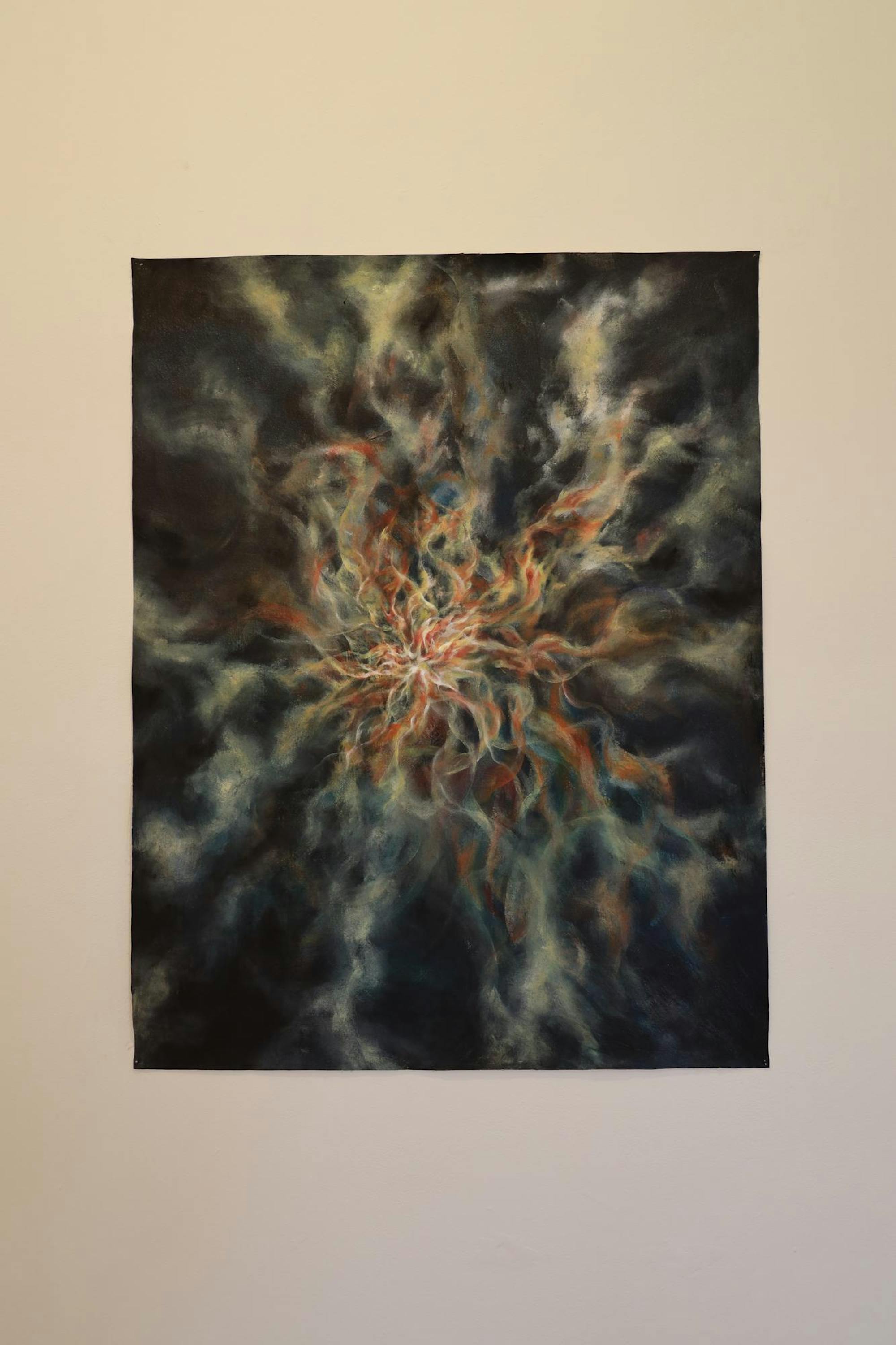
Across painting, film, sculpture and photography, the goal of the exhibition was to allow viewers to move through the gallery as though moving through layers of memory: intimate, fragmented and continually reforming. Song, who participated in the relief trip, made two oil paintings that grapple with the emotional and atmospheric qualities of the fire. One work The Breeze attempts to capture “the breeze of how the fire moves through the city,” translating the destructive force into a gesture of motion and vulnerability. Her second painting Forgive as He Has Forgotten You reaches toward hope: “It’s about how hope starts from the heart and moves outwards into the darkness,” Song explained, embodying an inner ignition that defies despair.
Carroll-Dominguez approached the tragedy through the curation of digital filmmaking and archival assembly. Their video installation weaves together interviews with affected families, raw news footage, helicopter recordings and cellphone videos taken by pedestrians as the fire encroached on neighborhoods. Looking through the archives, Carroll-Dominguez discovered that the Palisades Fire had been categorized as arson, with a man named Jonathan Rendeknecht accused. This revelation added another layer to their work, complicating narratives of disaster and responsibility. Displayed through three projectors, Carroll-Dominguez’s installation offered multiple vantage points — aerial, personal and political — creating an immersive space where viewers are confronted not only with devastation but with the bureaucratic, social and emotional dimensions of its aftermath.
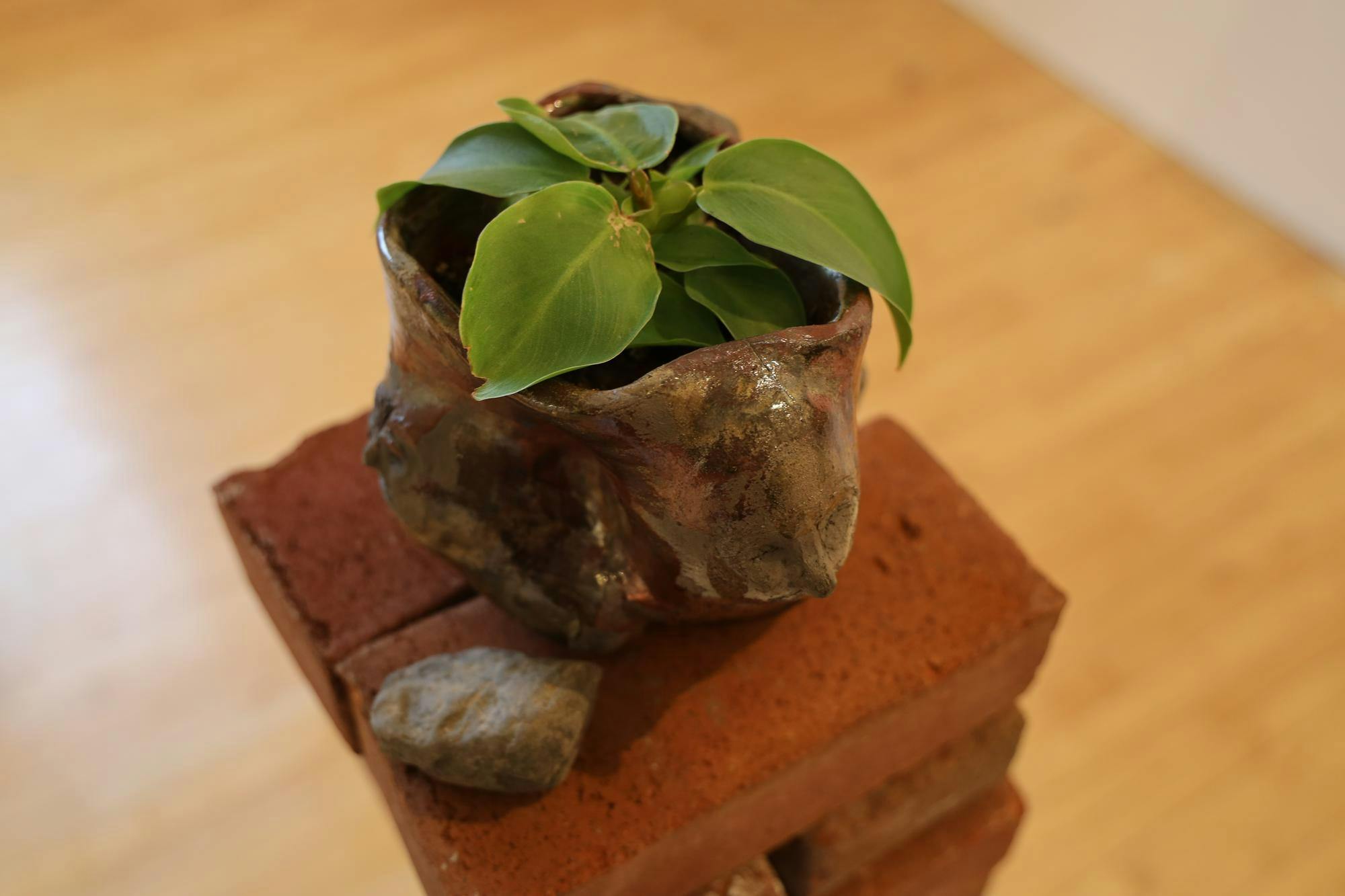
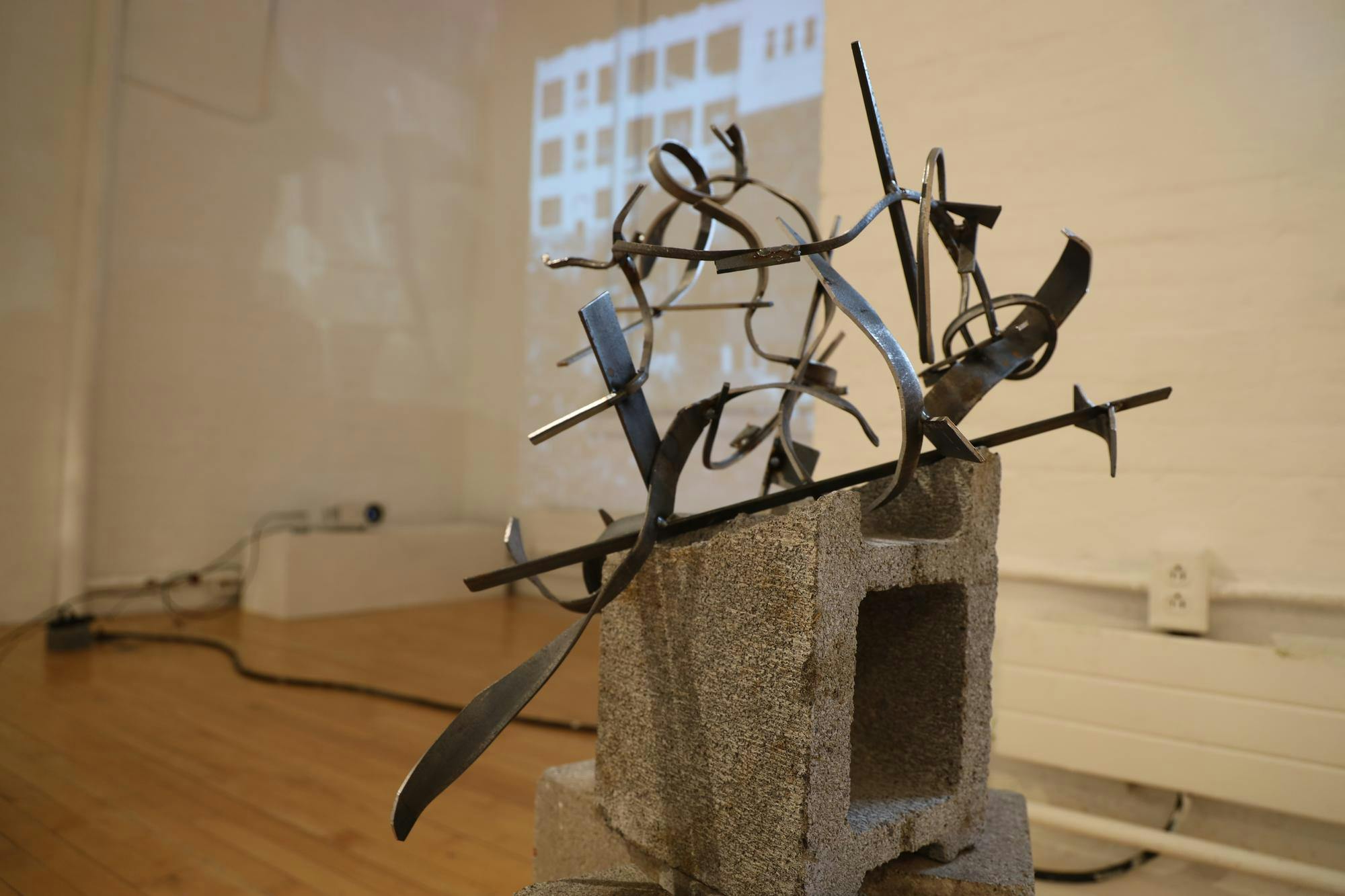
Hogue, who previously shared a sculpture studio with Song, contributed “In Your Hands,” a sculptural installation that merges ecological systems with remnants of destruction. Using welded metal, fishing nets, bird feeders and wire intertwined with Selaginella, a “resurrection plant” capable of returning to life when rehydrated, Hogue’s work echoes the theme of renewal. Visitors were invited to spray the plant with water, witnessing its gradual resurgence. “What seems to be a disaster, nature has the ability to recolonize and renew itself,” Hogue reflected. His work echoes the exhibition’s theme that from ruin comes regeneration, a reminder that life persists even in burned landscapes.
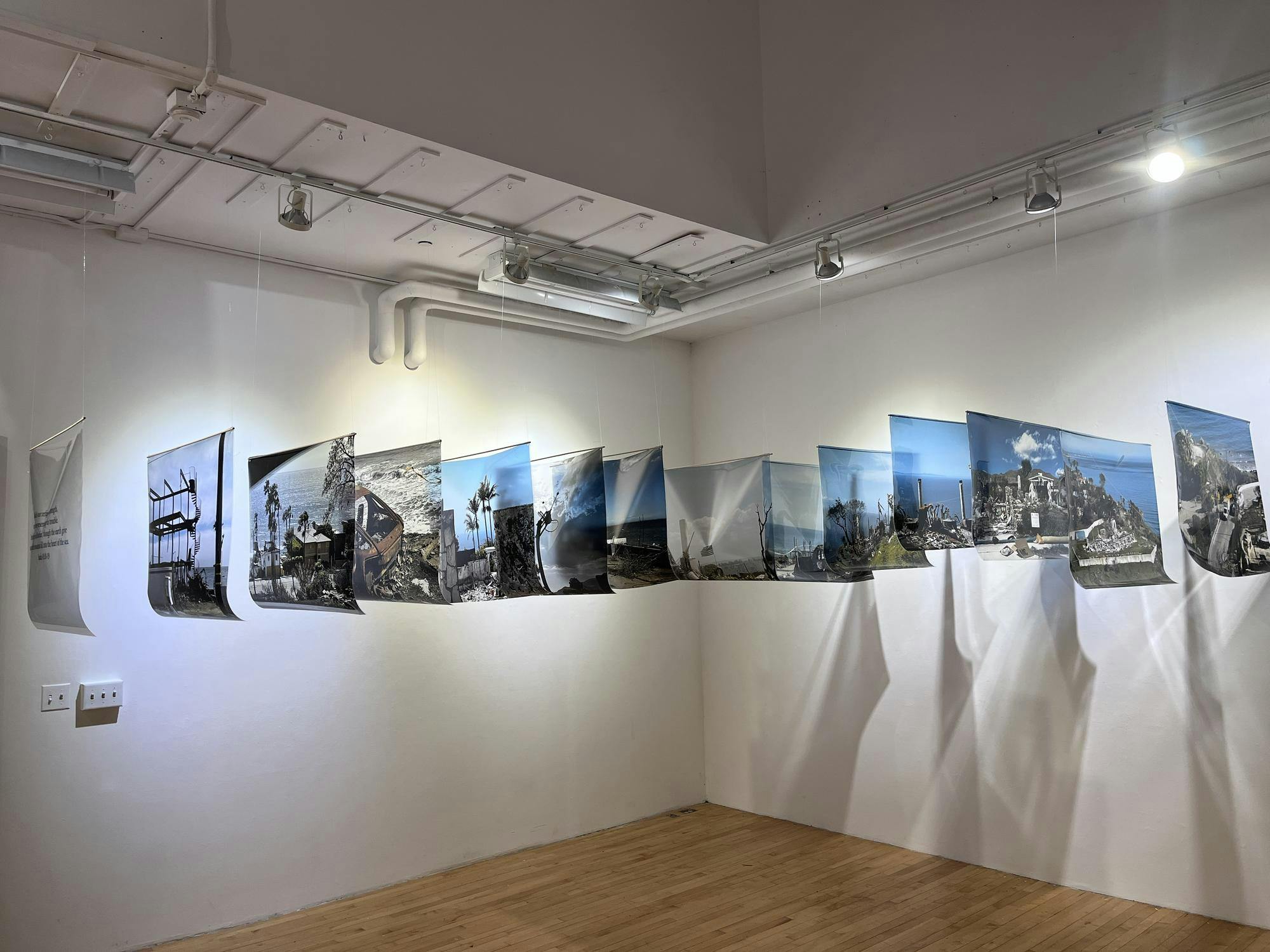
Ye, who also joined the spring break relief trip, contributed digital and photographic work “Though the Mountains Fall Into the Sea,” reflecting on his time in the destructured neighborhoods of the Palisades. Drawing on images captured amid the ash and remnants of the destroyed homes, his pieces explore the interplay between memory and material fragments in the disaster’s aftermath. By displaying his work on transparent material, Ye allows the images to overlap and refract, mirroring the way memories intersect and reshape one another. Thus, what remains is a gentle reminder that even amid ruin, renewal is possible, and that from the ashes, new and enduring forms can emerge.
Together, the works ground viewers in a shared contemplation of viewing destruction through a physical, emotional and structural lens. The exhibition does not attempt to provide clear answers. Instead, it creates a space where viewers can confront grief and resilience. Thus, in this environment, memory becomes both an anchor and a catalyst as a way of witnessing and rebuilding.
Alex Chou is a junior in the College of Architecture, Art and Planning. She can be reached at apc97@cornell.edu.