Generative AI has burst onto the scene at universities, overturning long-held norms in research and teaching. As GenAI is rapidly rolled out, students, faculty, staff and administrators are scrambling to understand how work, learning, research and the very concept of knowledge itself are changing. At times it can feel like we’re just struggling to keep up.
But GenAI is here for the long haul. And if universities are to respond effectively, we need to think beyond the current moment. We need to understand GenAI as part of a longer historical trajectory of technological change, which extends decades into the past and will continue well into the future.
At this scale, the eventual effects of AI, let alone other possible future technologies, are as yet unknown. For example, it is hard at present to assess the longer-term impact of AI on work and on the skills workers will need. Nor is it possible to accurately anticipate the transformative possibilities for teaching, learning, scholarship, and public engagement. But in the face of such unpredictable change, one principle universities can adopt is to develop and foster resilience as an institution and in our students, faculty, and staff.
Thinking more broadly about technological change, we recognize GenAI joins a long line of digital technologies – the calculator, internet, world wide web, social media, data science and machine learning – that have already reshaped how people understand what knowledge is, where to go to seek information, how quickly that information should be available and how to distinguish fact from fiction. These technologies have also shifted how and where work is done at the university, and how students, faculty, and staff understand themselves and relate to the world around them.
Digital technologies have enabled extraordinary advances in education, research, and democratization of knowledge. But they are also implicated in trends that undermine the university’s mission to seek and disseminate reliable knowledge – including but not limited to political polarization, online bullying, deliberate spread of falsehoods and a culture of trolling. As my colleague Adam Smith notes, these forces have contributed to loss of trust in universities as an institution.
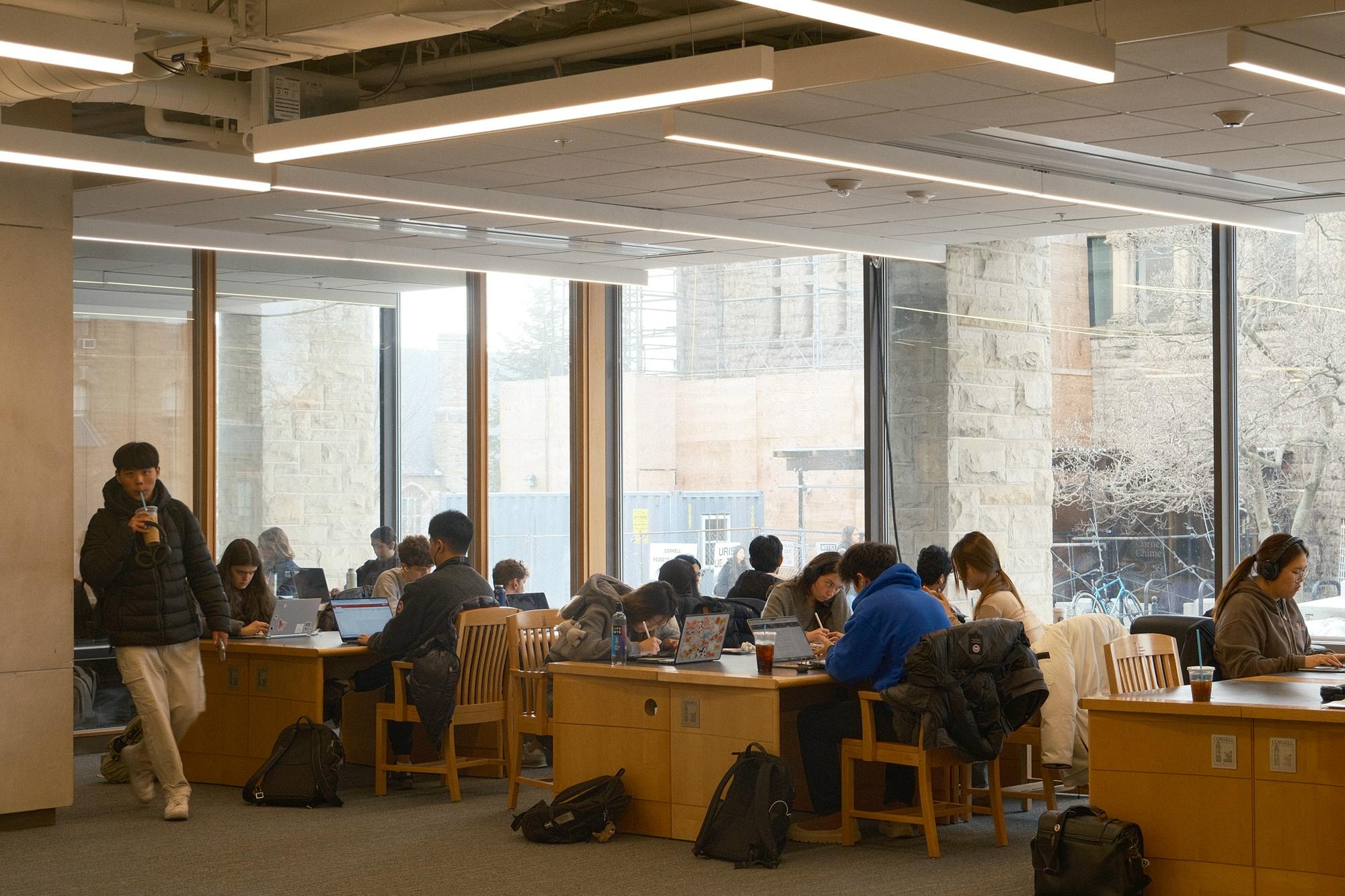
Students have been especially affected by these technological changes and accompanying cultural shifts. Students are arriving on university campuses with significantly different outlooks, attitudes and skills than prior generations.
Their social interactions have been reshaped through always-on connectivity and pressure to constantly curate online reputations. They have unprecedented access to information, informal learning opportunities and networks beyond the university. At the same time, rates of anxiety and other mental health challenges have increased dramatically and paths to career success have become far less certain. For better or for worse, online political interactions shape how students understand themselves as citizens. Their cognitive skills are also changing — students report problems with basic reading skills, focused attention and the ability to tolerate intellectual and emotional discomfort.
These changes extend beyond the classroom to all facets of university life, reshaping the fabric of our campus community. If Cornell is to successfully achieve its missions of education, research and public impact moving forward, we must grapple with these changes and their consequences head-on.
So what should Cornell do? Three starting points stand out.
First, we need to talk explicitly and openly about how cognitive, emotional and social skills are shifting with the ubiquitous adoption of digital technology and the use of AI tools. We must ask how we want to cultivate minds in this era. Our technology choices must be driven by great clarity around the core skills, capacities, experiences and forms of character development the university must foster, and recognize that our ways of teaching these may need to shift with the arrival of new technologies.
Second, a unique strength of Cornell is our breadth of areas of study and our low interdisciplinary barriers. This allows us to address AI and other technologies from a vantage point that synthesizes social, humanistic, scientific, technical and creative perspectives. We are simultaneously developing AI, critiquing AI and using AI, and we have the distinctive capacity to cross-pollinate these efforts – even to produce new forms of AI that support better use of AI.
Third, the eventual effects of present and future technologies are not predetermined; they depend on ongoing technological, economic and policy decisions that Cornell can inform through our own teaching, research and public engagement. Unlike private industries, universities operate with different incentive structures. It is, therefore, possible for us to imagine designing, deploying, organizing and utilizing technologies in different ways.
Most importantly, we can contribute to relevant ethics, policy and law, in turn,developing technologies in the public interest and in domains underserved by industry. We can also leverage our robust outreach and extension arms to engage the public in considering the consequences of technology as well as the needs it could address.
These principles emphasize our conviction that Cornell is not, should not be and need not be simply a passive recipient of new technologies. Instead, we can cultivate a principled and strategic approach to technologies, which leverages “all hands on deck” to further the university’s core missions of education, research, scholarship, public impact and community engagement.
Phoebe Sengers, Co-Chair of the Committee on the Future of the American University and Professor of Information Science and Science & Technology Studies. She can be reached at phoebe.sengers@cornell.edu.
The Committee on the Future of the American University is a group of 18 faculty appointed by the provost to explore how the University can evolve to best serve future generations while pursuing its core mission of education, scholarship, public impact and community engagement. They welcome ideas and feedback at fau@cornell.edu.