The Alpha CubeSat team — a student-led group in Cornell’s Space Systems Design Studio that creates spaceflight technology — successfully deployed the world’s first free-flying light sail into Earth’s orbit on Wednesday night. Light sails are an emerging method of spaceflight that harness the momentum of sunlight for acceleration.
The team built the Alpha CubeSat as part of a National Aeronautics and Space Administration program supporting student-built spacecraft missions. CubeSats — a type of satellite named for its standardized cubic centimeter proportions — are relatively inexpensive and customizable, making them well suited for exploratory ventures.
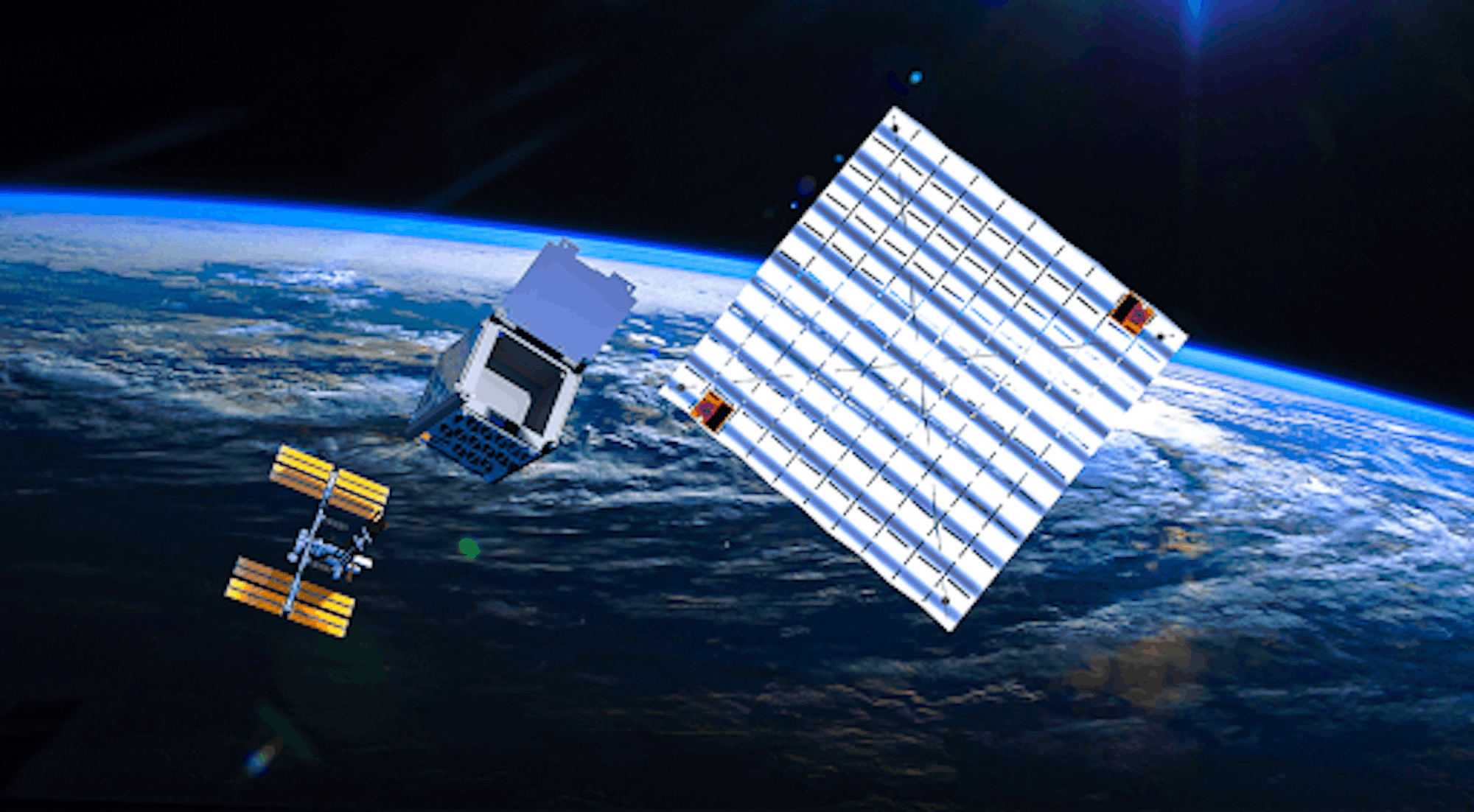
The team designed the Alpha CubeSat to stow and deploy a light sail — a shimmering silver square that harnesses not wind but the momentum of sunlight. When light particles bounce off its super-reflective surface, their tiny pushes accumulate, accelerating the sail to provide an alternative to fuel-based propulsion.
“[The mission] definitely has been an inspiration to so many undergrads that have worked on this project in so many years,” said the team’s integration and testing lead Apurva Hanwadikar ’27. “Most undergrads never get to touch anything going to space, so I think [this mission] has given so many undergrads the opportunity to do so when they never would otherwise.”
Astronauts used a robotic arm to release the Alpha CubeSat from the International Space Station into Earth’s orbit early Tuesday morning. After the team established contact with the satellite, they sent a command to open a spring-latched door, releasing the light sail.
Unlike previous light sails, the Alpha light sail detached completely from the CubeSat, becoming an independent, free-flying spacecraft. Its ChipSats — tiny satellites small enough to fit in a wallet — provide solar power, computing, sensors and radio communication with Earth.
Because it functions independently from the CubeSat, the Alpha light sail is small compared to other light sails — about half a meter across and weighing under 100 grams including the ChipSats. This enables the sail to unfurl rapidly and accelerate much faster than larger, heavier sails. The Alpha light sail also costs a fraction of traditional spacecraft missions, according to team lead graduate student Joshua Umansky-Castro. The cost efficiency means future missions could launch fleets of light sails into space.
“The light sail is probably the coolest thing for me,” Hanwadikar said. “It feels like how cool normal wind sails are, but now we're bringing them to space — it's like a whole new exciting field to get into.”
The light sail’s success capped a tense and exciting week for the Alpha team. After watching the CubeSat leave the ISS, the team waited to receive initial data when it made contact with Earth.
“It’s been a crazy night. There’s been a lot of lead-up to this, all the testing and coding. All that testing comes down to today,” said software lead Jonathan Ma ’26. "It was kind of a surreal experience seeing [the Alpha CubeSat] whisk by on screen as the astronauts released it.”
After a few messages, the CubeSat unexpectedly went silent. For 34 hours, the team heard nothing.
Although a concerning development, the Alpha team prepared the CubeSat with several modes to respond to possible scenarios, such as low battery states, backup plans and multiple sequences to deploy the light sail. Space missions demand this foresight, according to Ma.
"You're writing code for a spacecraft in space, and once you ship it off and it gets launched, you can't really change it anymore,” Ma said. “You have to think more carefully, do a lot more rigorous testing to make sure what you're going to do is gonna work, and simulate everything.”
After reviewing the initial data received by the CubeSat, the team chose the simplest light sail deployment once contact returned, skipping the optional spin sequence before releasing the light sail — a step that might stabilize it but added unnecessary complexity.
Finally, the team received another message from the CubeSat at 8:47 p.m. on Wednesday. Although the message confirmed the onboard computer processed the command, the team had no way to know whether the deployment had succeeded until the next downlink.
Then, a ground station in the Canary Islands received a signal from one of the light sail’s ChipSats at 5:06 a.m. on Thursday. Since this first signal, light sail data continued to stream into various ground stations around the world.
“CubeSat mission operations can often be chaotic, and Alpha is no exception,” wrote Umansky-Castro in an email to The Sun. “The first two days have been full of highs celebrating initial success, worrisome lows when things became problematic, and then pure shock, disbelief, and tears of joy when we reached our mission goals.”
The team will continue to collect and analyze the light sail’s data until it falls back to Earth, burning up in the atmosphere. The new information sets the stage for developing free-flying light sails that can steer and maneuver away from Earth using sunlight alone. Someday, these light sails may reach the Moon or Mars and could even help ChipSats survive atmospheric entry, according to Umansky-Castro.
Beyond the technical accomplishments, the Alpha CubeSat team celebrates how much they have learned.
“Going from never building a spacecraft before to being an expert on how to build one, I'm going to take that with me wherever I go,” Umansky-Castro said. “This has been an amazingly impactful project.”
Laine Havens can be reached at lfh36@cornell.edu.