Maxton Hall has wrapped up season two with a smashing cliffhanger, leaving viewers reeling but intrigued. Though Episode Three was aptly titled "Emotional Rollercoaster," Episode Four is where the real roller coaster begins. Between the ever-increasing family drama, the tightening of James and Lydia's bond and the rekindling of James and Ruby's romance, Season Two, Part Two certainly kept this viewer entertained.
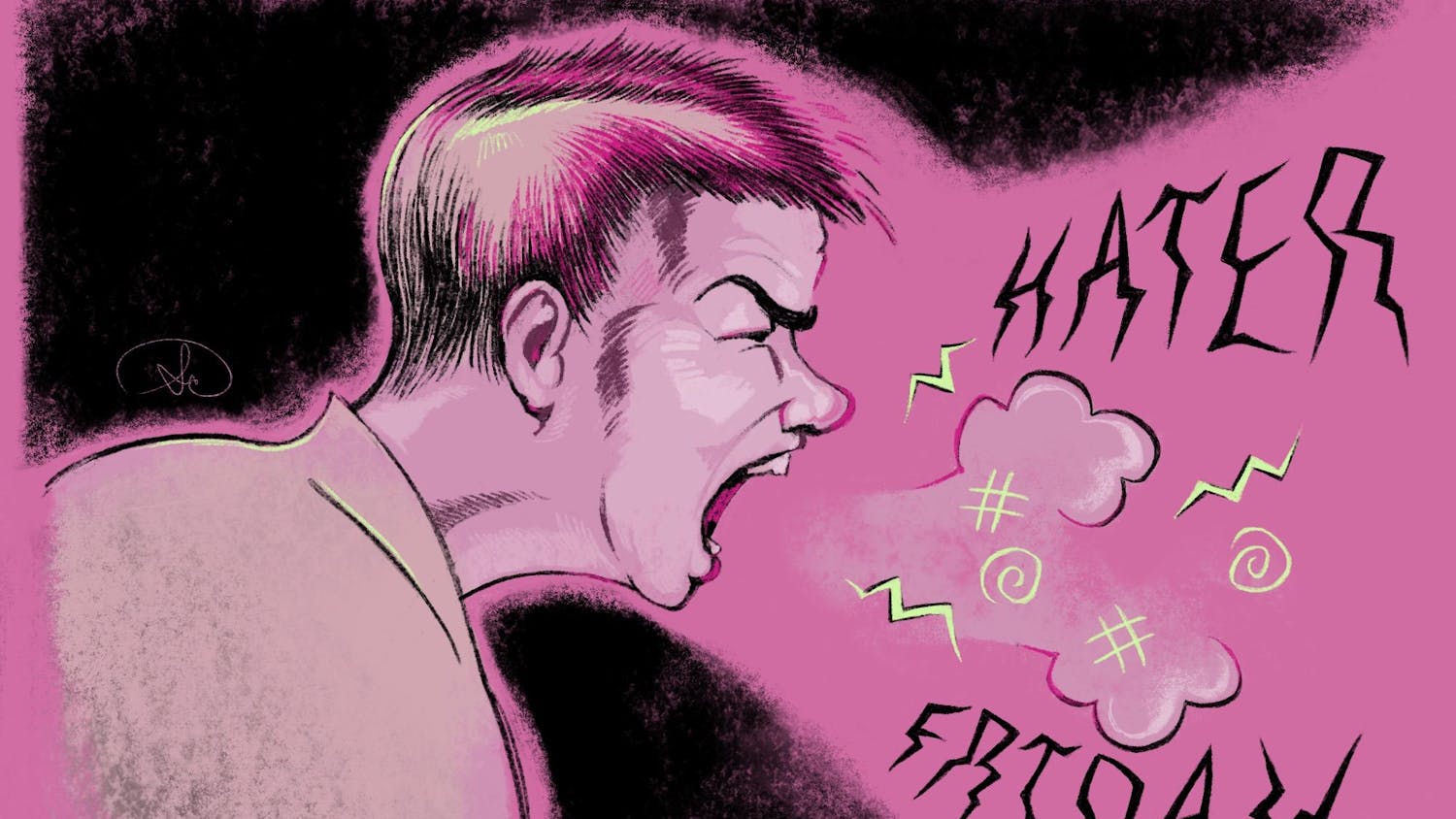
Having released three more episodes since my last article, Maxton Hall was quick to address one of my biggest critiques: the lack of character development for Mortimer Beaufort. Going from a more passive, toxic and condescending side character, Mortimer has taken center stage (or should I say, screen) as Maxton Hall's new villain. When Ruby and James reveal their 'secret' relationship, Mortimer reacts with predictable rage. Still, when the Beaufort family and Ruby sit down to tea, he remains oddly civil; at Ruby's recollection of her time with her father at Oxford, though, he abruptly leaves. Then, in arguably the most powerful scene of this season, the twins find him having a complete breakdown, hurling glasses at the wall and sobbing hysterically. Clearly, Mortimer has been burying his grief over Cordelia's death beneath his work life, refusing to get in touch with it as James did. In fact, he continues to publicly and privately shame his son for his "outburst" at Ruby's gala, reflecting an unwillingness to change his mind. Once again, Maxton Hall broaches the topic of mental health by offering a character who clearly cannot or will not accept outside help and instead bottles his hurt and hatred until it explodes. For a glimmering moment after their tea chat, it seems like Mortimer might take kindly to Ruby, but then everything changes. He forces donor Alice Campbell to withdraw Ruby's scholarship, takes over her family's job, leaving her mother jobless, and in the final shocking moments, twists his daughter's affair with her professor to frame Ruby.
Mortimer's power abuse certainly ties into Maxton Hall's commentary on socio-economic boundaries, as James tries to save Ruby only to find that, without his father's connections, he too is relatively powerless. As viewers, can we find it in ourselves to forgive him, given the death of his wife and the subsequent loss of funding for his business by angry investors who claim he 'can't even control his own son'? Not to mention that the aforementioned angry investor is Elaine's father, whom James was supposed to marry. Maxton Hall forces viewers to question how a person can fight for justice in the face of a system as corrupt as Mortimer's, one further complicated by his off-and-on claims to love the very children whose lives he seeks to destroy.
Furthermore, Mortimer is not the only one claiming to have people's best intentions at heart. What about Cyril and Lydia? Lydia and Professor Sutton reunite amidst a whimsical fairytale photo shoot, and Cyril, chasing Lydia after a failed almost-kiss with her, discovers them. When he is subsequently found by Elaine, she demands that he snap a photo, which she then sends to the headmaster. Though certainly a crucial plot point, the moment also makes us question where Cyril's loyalties really lie. Maxton Hall shows viewers that corruption can spread outside of the world of business, poisoning relationships, too. I have to wonder about Lydia's storyline though; where Lydia has the potential to serve as a positive role model for business-driven young women, instead, the author has engaged her in an ethically questionable affair with her professor. At the same time, Maxton Hall delicately questions the limits of love, pushes viewers to remain empathetic. With Lydia's story, the show represents the difficulties of taking responsibility and facing an often unideal reality. If Lydia and Sutton are really in love, how will they fight for that love?
But wait — amidst all these blossoming love stories and questions of corruption, let's take a minute to talk about loose ends. Whatever happened to Ophelia? That, to me, is a huge loose end. I am frustrated by how dramatically the directors introduced her, only to have her largely disappear. In Episode Six, at the reading of the will, Ophelia reappears to reaffirm her support of Lydia. In an unfortunate but predictable turn of events, the reading of Cordelia's will reveals that everything has been left to Mortimer. However, there's a strong insinuation that Mortimer has tampered with the will. She swears to fight for the twins– but where has she been the rest of this season? Why hasn't she taken action against Mortimer sooner? Color me unimpressed. And James' therapy that has supposedly changed him and saved his relationship with Ruby? We never see it again. Maxton Hall, for all its positive messaging around mental health, finds depiction of actual therapy sessions either unimportant or taboo. I cannot imagine that two therapy sessions changed his whole worldview; that being said, it was nice to see a new side of James wherein he began prioritizing himself, his own friendships, and his sister's well-being, coming fully in touch with his truest identity.
While the show might seem like a fluffy drama at first, Maxton Hall has, without a doubt, taken a thought-provoking turn. Though it remains technically centered on the various romances, Maxton Hall has begun increasingly tackling the complications of power politics, mental health in relation to familial relations, and questions of ethics. At the same time, it doesn't lose the twisting and turning plot, which keeps viewers hooked, waiting with bated breath for the release of Season 3. Will Lydia and Sutton get their happy ending? Will James save Ruby from his father's wrath? What is the fate of Ophelia? I, for one, have the utmost respect for the new direction Maxton Hall is taking, and cannot wait to see what comes next.
Emily Federovitch is a freshman in the College of Arts and Sciences. She can be reached at eaf258@cornell.edu.
Emily Federovitch is a member of the Class of 2029 in the College of Arts and Sciences. She is a contributor for the Arts & Culture department and can be reached at eaf258@cornell.edu.