Following the U. S. Supreme Court’s June 2023 decision to overturn affirmative action, enrollment for Black, Hispanic and Indigenous students at Cornell remains below fall 2023 levels, despite a slight increase in 2025. This decline has raised long-term concerns among indigenous organizations on campus, who rely on diverse incoming classes to sustain their membership.
While cultural organizations have existed at Cornell for over a century, starting with Club Brasilerio in 1873, the expansion of cultural clubs and resource centers only accelerated in the late 1960s. This was accompanied by the introduction of affirmative action policies across the country, according to the Cornell Law School Legal Information Institute.
More than five decades later, that landscape shifted when the 2023 Supreme Court ruling ended the use of affirmative action in college admissions. This marked a turning point nationwide, requiring colleges to remove race conscious criteria from their application review processes.
Data released from Cornell Institutional Research and Planning shows a second straight year of lower first-time freshman American Indian enrollment compared to the years before the affirmative action ban. In 2023, 10 first-time freshman American Indian students enrolled at Cornell. Following the affirmative action ruling, that number dropped to two in 2024. In 2025, four American Indian students were enrolled in the incoming Class of 2029.
Native American and Indigenous Students at Cornell Co-Chair Krissia Tuzroyluk ’26 has seen the effects of lower indigenous admissions in her organization.
“It was so hard to find our Indigenous first-year students [this year], just because of how rapidly the numbers declined, and there has been an extreme loss in the sense of community in NAISAC because of that,” Tuzroyluk said.
According to Director of Undergraduate Admissions Pamela Tan, Cornell makes an effort to reach out to indigenous groups across America. In a statement to The Sun Tan wrote that “[Cornell] Undergraduate Admissions attends Indigenous college fairs, such as the Native American College Fair in St. Paul and the Rocky Mountain Association for College Admissions Counselors Fair in New Mexico.”
Tan also wrote that Cornell Undergraduate Admissions “participate[s] in Indigenous college access programs like College Horizons” and “advise[s] AIISP student ambassadors, who reach out to prospective and admitted students and table at community events.”
The Cornell American Indian and Indigenous Studies Program provides academic courses and student engagement related to indigenous cultures at the University.
Now a senior, Tuzroyluk believes she has seen the effects of the affirmative action ruling play out across her four years at Cornell. Each spring, AIISP hosts a phone-a-thon, where current members like Tuzrolyuk call admitted indigenous students to welcome them and answer questions about campus life.
“In my sophomore year, I called upwards of 10 to 15 admitted students,” Tuzroyluk said. “In my junior year, for the same event, I only called four.”
Shania Flores ’28 said that the phone-a-thon was “something that was very reassuring to some of [her] peers,” being the first class admitted post-affirmative action.
“Our class is tiny … a lot of people are graduating this year, and then more people will graduate … so we are at a crossroads where we just don't have enough people,” Flores said. “We're not at the point yet where we're disappearing, but it is a noticeable difference.”
In spring 2025, Tuzroyluk was told that her job as a student ambassador of AIISP was ending. Tuzroyluk said the reasoning behind the change was unclear, later writing to The Sun that the ambassadors “didn’t get too much into the details about why we needed to stop.”
AIISP Student Support Specialist Sarah Buffett clarified the status of the program in a statement to The Sun.
“The AIISP ambassadors program is currently in stages of organization," Buffett said, and “the program is not ending.”
According to Buffett, the AIISP Ambassadors program has been placed on hold since mid 2025. There have been efforts to move these admissions programs to be run by the Cornell Undergraduate Admissions Office instead of AIISP.
Buffett noted that the drop in ambassador activity was likely not a direct consequence of the Supreme Court’s affirmative action decision. Rather, the University has been consolidating admissions related programs, including AIISP’s ambassador work, under a centralized structure within the UAO.
“AIISP’s deepening partnerships with the Undergraduate Admissions Office around recruitment, and with Housing & Residential Life for support of Akwe:kon, have led to shifts in alignment that coincided with timing of the ruling but were not caused by it,” Buffett wrote in a statement to The Sun. As admissions processes evolve, Buffet stated that AIISP is working to refine their outreach methods so indigenous students can connect and feel supported in their communities.
Additionally, fluctuations in enrollment may appear more dramatic in smaller cohorts. While the posted data lists four students as American Indian in the class of 2029, that figure does not include Pacific Islander or multiracial students.
“With only two admissions cycles since the ruling, the data do not yet show a long-term pattern. Enrollment may ebb and flow, but day-to-day we see a committed and active AIISP-affiliated student community.” Buffett wrote. Buffet wrote that approximately 14 first-year students are currently engaged with AIISP, compared to the posted data which lists only four students enrolled.
One reason for the perceived difference in indigenous enrollment at Cornell may be the stricter race related guidelines on student data following the court ruling, according to Tuzroyluk.
“Admissions can’t see race or ethnicity on applications anymore,” Tuzroyluk said “The only data we had was from students who directly gave it, like if they signed up for a virtual event. That’s part of why our list was so low.”
She added that this loss of information has made outreach efforts unpredictable, since NAISAC can no longer reliably identify or contact many of the students who would normally hear from them.
As these guidelines may potentially cause club membership to shrink, some student leaders worry about how reduced participation will affect access to resources and funding. These concerns intersect with the broader funding landscape at Cornell, which is governed by the Student Assembly.
The Assembly manages over $4 million in student activity fees and plays a central role in determining which organizations receive funding, according to Assembly Vice President of Diversity, Equity and Inclusion and Finance Committee member Kennedy Young ’28.
“Students pay into the student activity fee as part of our tuition. Every two years, the Finance Committee decides how that money is allocated to organizations,” Young said.
Young stated that she’s “seen a difference in the way organizations are funded this year versus in the previous byline season,” as there’s a push to reduce allocations to keep the student activity fee from rising. According to Young, there have not been any targeted funding changes to cultural affinity groups like NAISAC. While the Finance Committee had initially recommended reducing funding to the ALANA Intercultural Board, it later revised its decision due to backlash and instead approved a 12.9 percent increase to funding.
Cornell NAISAC Ivy Native Conference Chair Shantel Lavender ’27 also shared her opinion on the low rate of indigenous enrollment at Cornell.
“Over time, I’ve noticed that the number has decreased in both NAISAC and Akwe:kon,” Lavender said. “They keep on over-enrolling students, taking up the space of Akwe:kon, and meanwhile they only enroll like four Native students, which is crazy.”
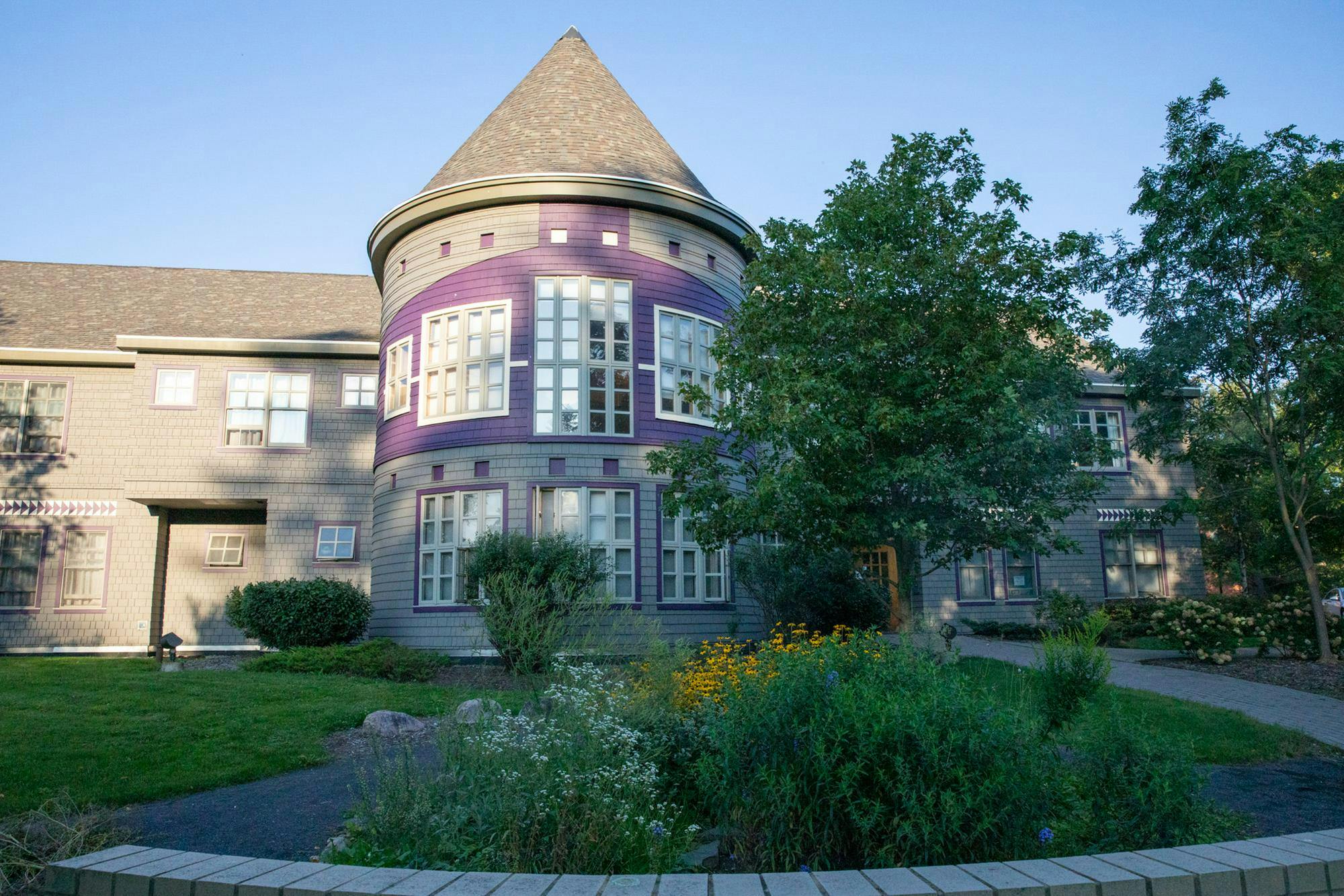
Akwe:kon is Cornell University’s indigenous residential program house. It is one of the first University residence halls in the nation intentionally built to honor and celebrate North American indigenous heritage, originally created to serve as a cultural home for these students.
However, increasing class sizes have led to housing overflow of non-indigenous students into Akwe:kon, according to Lavender. “It’s become more like general housing,” she said.
Further, Tuzroyluk explained how this overflow has affected amenities in Akwe:kon.
“Akwekon used to have two guestrooms for visiting scholars, and a TV room.” Tuzroyluk wrote in a message sent to The Sun. “This year, all three of those rooms are now student dorms.”
In a statement to The Sun, Cornell Housing and Residential Life wrote that “there are times when vacancies remain and housing accommodations must be provided to meet overall student needs” and that “living in Akwe:kon is not limited to those identities.”
According to HRL, the Akwe:kon community is open to any student who wishes to learn about and celebrate indigenous culture and its impact. HRL did not respond to the question of whether the former TV room had been converted into additional housing space.
As Cornell prepares to host the Ivy Native Conference this spring, Lavender said her job has grown more demanding as INC Chair.
“This year I have a lot of work,” she said. “We’re trying to keep events going, to hold community, even when our numbers are smaller.”
The Ivy Native Conference is an annual event connecting indigenous students across Ivy League schools. Last year, Brown hosted the conference, which Lavender described as “such a fun experience, just driving down to Providence with my friends, all of us coming together for the same purpose.”
In the face of low numbers, leaders of affinity groups like NAISAC hope to host more events and collaborate with other groups to boost student engagement.
“Even if our numbers are lower, we’re still here and we're going to continue to be active on campus,” Tuzroyluk said. “Indigenous students deserve to feel like they belong in these spaces, and we’re going to keep fighting for that.”

Svetlana Gupta is a member of the Class of 2029 in the College of Engineering. She is a contributor for the News department and can be reached at sg2622@cornell.edu.