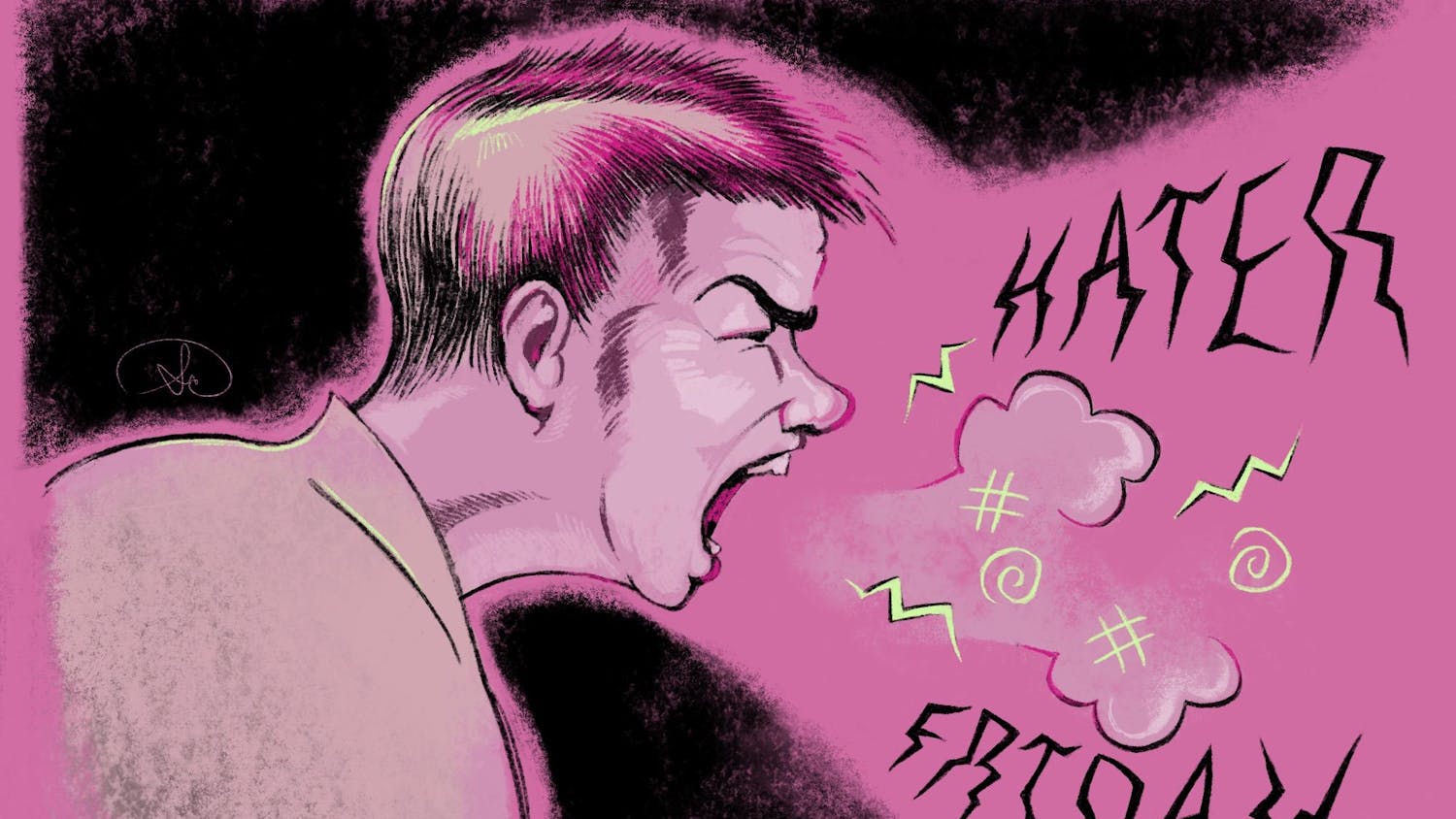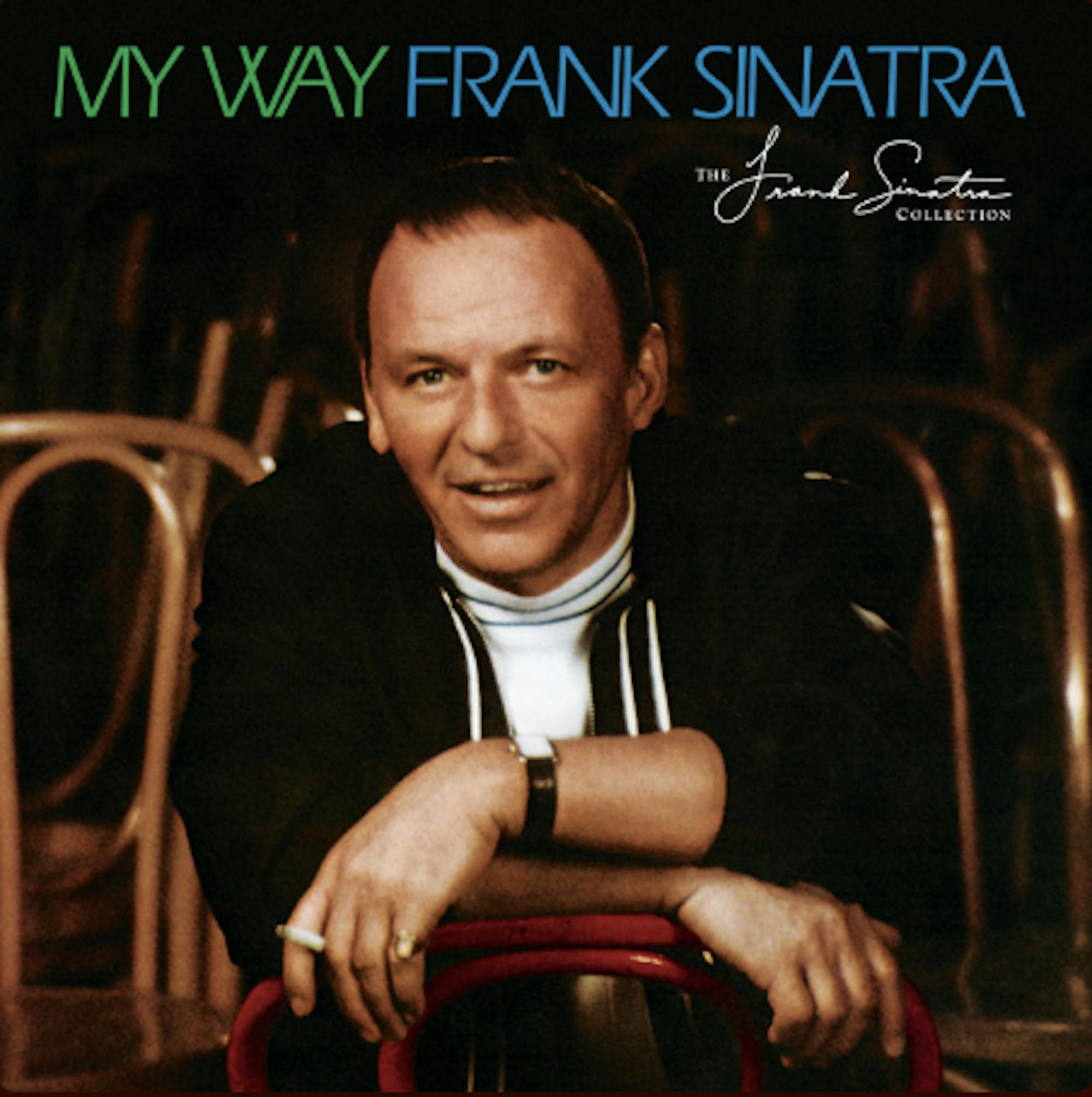
On Oct. 22, Misty Copeland (the keynote speaker at Senior Convocation last year) took her final bow after 25 years with the American Ballet Theatre. For her last dance, she performed “Romeo and Juliet,” Kyle Abraham’s “Wrecka Stow” and Twyla Tharp’s “Sinatra Suite.” Copeland’s standout career warranted a showstopping conclusion, and that is exactly what she provided with this performance. But the part that took social media by storm and struck me in particular was her dance to “My Way” as part of the “Sinatra Suite.” I truly cannot think of a more badass song to close out such a storied career with. Now, I must concede that Frank Sinatra’s whole discography is a masterclass in melodrama, so “My Way” does not exactly distinguish itself in this way; however, for a song written for Sinatra by someone else, it seems — and feels — tremendously personal. Sinatra himself thought the song was “self-serving and self-indulgent,” but I beg to differ. It’s honest, vulnerable and the ultimate song for self-reflection, hence why it brought on such an emotional reaction at the ballet and made for the perfect sign-off for Copeland. So, this week, in honor of Copeland and her final bow, I’ll be revisiting Sinatra’s 1969 record My Way.
The album opens with “Watch What Happens,” where Sinatra croons about what happens when you let love into your life. It’s a knockout from top to bottom, featuring a gorgeous, classic build in the first verse that pulls you right in. “Didn’t We” is a pensive and stirring ballad, and the stunning clarity to Sinatra’s voice grabs your attention from the very first word as he laments, “This time we almost made it to the moon, didn’t we? / This time, we almost made, almost made our poem rhyme / And this time we almost made that long hard climb / Didn’t we almost make it this time?”
Ray Charles’s “Hallelujah, I Love Her So” turns big band in Sinatra’s version. It’s a solid track, though not a vocal standout, with sharp trumpets serving as the exclamation point. Next, Sinatra covers the Beatles’s hit “Yesterday,” and while it is undeniably a sweeping, somehow wholly original cover, it’s difficult to contend with the original. It is softer and the orchestral accompaniments are capable of bringing a tear to the eye, but it’s a tall order to try to compete with the Beatles version. “All My Tomorrows” is dreamy and romantic, and Sinatra promises, “Right now it may not seem like spring at all / We’re drifting and the laughs are few / But I’ve got rainbows planned for tomorrow / And all my tomorrows belong to you.” Originally made for the 1959 film A Hole in the Head, it was re-recorded for this album after its initial release as part of the 1961 album All the Way.
As expected, “My Way” is the undeniable belle of the ball. With its slow, aching, deliberate build and some of Sinatra’s all-time best vocals bringing life to Paul Anka’s words, it’s impossible not to get chills listening to this song. The chorus has appeared all over social media, but it takes on a whole new meaning when you learn that this was recorded in the first take — the emotion in his voice feels all the more genuine as he sings, “For what is a man, what has he got? / If not himself, then he has naught / To say the things he truly feels / And not the words of one who kneels / The record shows I took the blows / And did it my way.” “A Day in the Life of a Fool,” composed by Luis Bonfá and originally released by Jack Jones in 1966, appeared in the 1959 movie Black Orpheus and is appropriately cinematic.
“For Once in My Life,” recorded by big names ranging from the Temptations to Diana Ross & the Supremes to Stevie Wonder, is clearly the story of a man on the up: “For once in my life I won’t let sorrow hurt me / Not like it’s hurt me before / For once I have someone I know won’t desert me / I’m not alone anymore.” “If You Go Away” is a turn for the melancholy and an English adaptation of (surprise!) Nina Simone’s “Ne me quitte pas.” The lyrics are slightly less filled with despair and a tad more infused with hope, but sorrowful nevertheless. “Mrs. Robinson” tops off My Way — Sinatra’s swing rendition of the Simon and Garfunkel classic. I found this to be a peculiar way to close out the record; it felt the furthest from a true Sinatra song, lacking the signature elements of his music, cover or otherwise.
My Way is, all in all, a perfect snapshot of Sinatra’s work and his image, but even more so is its title track. When Anka was writing the song, Sinatra had recently told him, “I’m quitting the business. I’m sick of it; I’m getting the hell out.” Anka said of the writing process, “I sat down at an old IBM electric typewriter and said, 'If Frank were writing this, what would he say?' And I started, metaphorically, 'And now the end is near.' I read a lot of periodicals, and I noticed everything was 'my this' and 'my that'. We were in the 'me generation' and Frank became the guy for me to use to say that.” So maybe “My Way” is “self-serving” in its brutal honesty; it speaks of a society concerned with the individual instead of the group. But sometimes we’re entitled to a moment of proud self-reflection, and Copeland is the ultimate example of that.
Test Spins is a fortnightly throwback column reviewing and recommending classic and underrated albums from the past. It runs every other Friday.
Sydney Levinton is a junior in the College of Arts and Sciences. She can be reached at slevinton@cornellsun.com.
Sydney Levinton is a member of the Class of 2027 in the College of Arts and Sciences. She is a senior editor specializing in music and was the arts and culture editor on the 142nd and 143rd Editorial Boards. She can be reached at slevinton@cornellsun.com.