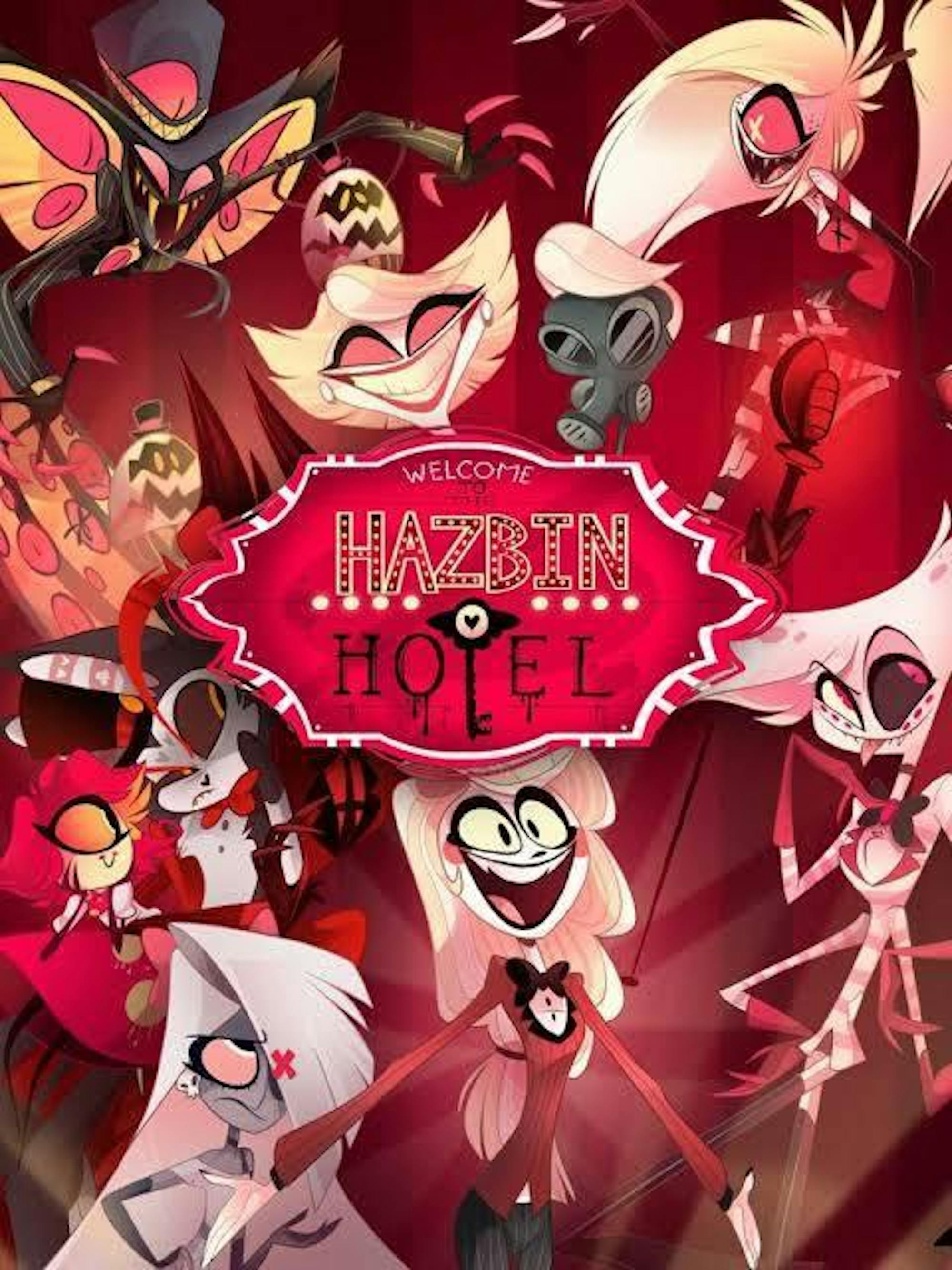
Nov. 19 marked the season two finale of Hazbin Hotel and I had the time of my life being fed the biweekly episode releases between quizzes and prelims. There were so many sonically infectious songs in this musical, all of which were produced by Sam Haft and Andrew Underberg, and I thought the plot thickened quite satisfyingly despite the eight-episode limit. I believe this season to be stronger than the first and, despite its mainstream penetration, yet another victory for the realm of indie animation.
Like I mentioned in my last Hazbin Hotel article, the animation this time around is phenomenal and even better than season one. Smoother and more refined, I still remember a handful of moments with gorgeously crafted set pieces and sprite movements. Even as early as episode two, the viewer can tell how much the budget has increased in the last couple of years. As much as I want to appreciate the art of the Hellaverse, there is more to say about the characters and the trajectory of their development over time.
I couldn't stand our protagonist this time around. Charlie's character regressed noticeably from the last season into an insufferable child that refused to listen to her friends, whom she’d then endanger with her impulsive decisions. Particularly in episode three, she came across as both selfish and foolish in a half-baked and forceful effort to get Angel to redeem himself in front of the Vees. We witness a lot of Charlie souring her relationships, each time more egregiously than the last, so she definitely descended on my Hellaverse character tier list. Some fans refer to her behavior this season as a necessary “character flaw,” but I believe these lessons transcend plot development in an unnecessarily tone deaf way.
At times, this season actually had me rooting for the villains over Charlie. Vox was an excellently written antagonist with clear motivations and memorable motifs that checked all my boxes for what a “bad guy” should be: a Machiavellian with delusions of grandeur. Once a beloved TV weatherman who would murder others in his field just to eliminate competition, Vox is now up to similar trouble in the afterlife — but on a more existential scale. His anthem, “Brighter,” has been growing on me over time, and I still adore the montage of his backstory involving marine imagery similar to his interests in the afterlife. I love how insecure he is despite his successes, as though that little voice in his ear knows just how powerless he’d be without those he takes advantage of.
I can’t holistically discuss Hazbin Hotel without taking a moment to fanboy over the greatest character of all time, Lucifer. Jeremy Jordan’s vocal deliveries this season were so playful and diverse all throughout, especially in episode five, in which Lucifer displayed his full range of personality from the adorable musical theater dork to the menacing, aura-farming ruler of Hell. His part in “Vox Populi” is an earful of molten caramel that I can’t help but replay over and over; the electric guitar fits him so perfectly. Speaking of, Lute deserved much more screentime this season. After going full Joan of Arc in episode one with “Gravity,” I expected her character to be more involved in the peril our heroes would face. Abel was an endearing addition to the Heaven squad this season; he’s a necessary foil to Lute that has somehow managed to flutter his way near the top of my character tier list for being such a helpless goofball.
Reviewing my own review, I notice that my favorite elements of Hazbin Hotel have everything to do with the psyches of the characters and how they interact with each other. As Jean-Paul Sarte once wrote, “hell is other people,” and watching the humor and treachery of the plot unfold with the entanglement of everyone’s narrative arcs painted a dastardly image of how people change under the weight of others. The writing for the series itself contains a few more plotholes than desirable but, at least for me, that’s not where most of my attention on this show is focused. I just hope I won’t have to wait another year and a half to watch the next season.
Marc Staiano is a junior in the College of Arts and Sciences. He can be reached at mcs382@cornell.edu.
Marc Staiano is a member of the Class of 2027 in the College of Arts and Sciences. He is an assistant arts editor for the 144th Editorial Board and can be reached at mstaiano@cornellsun.com.