Spoiler Warning: This article contains details from the plot of A Separation.
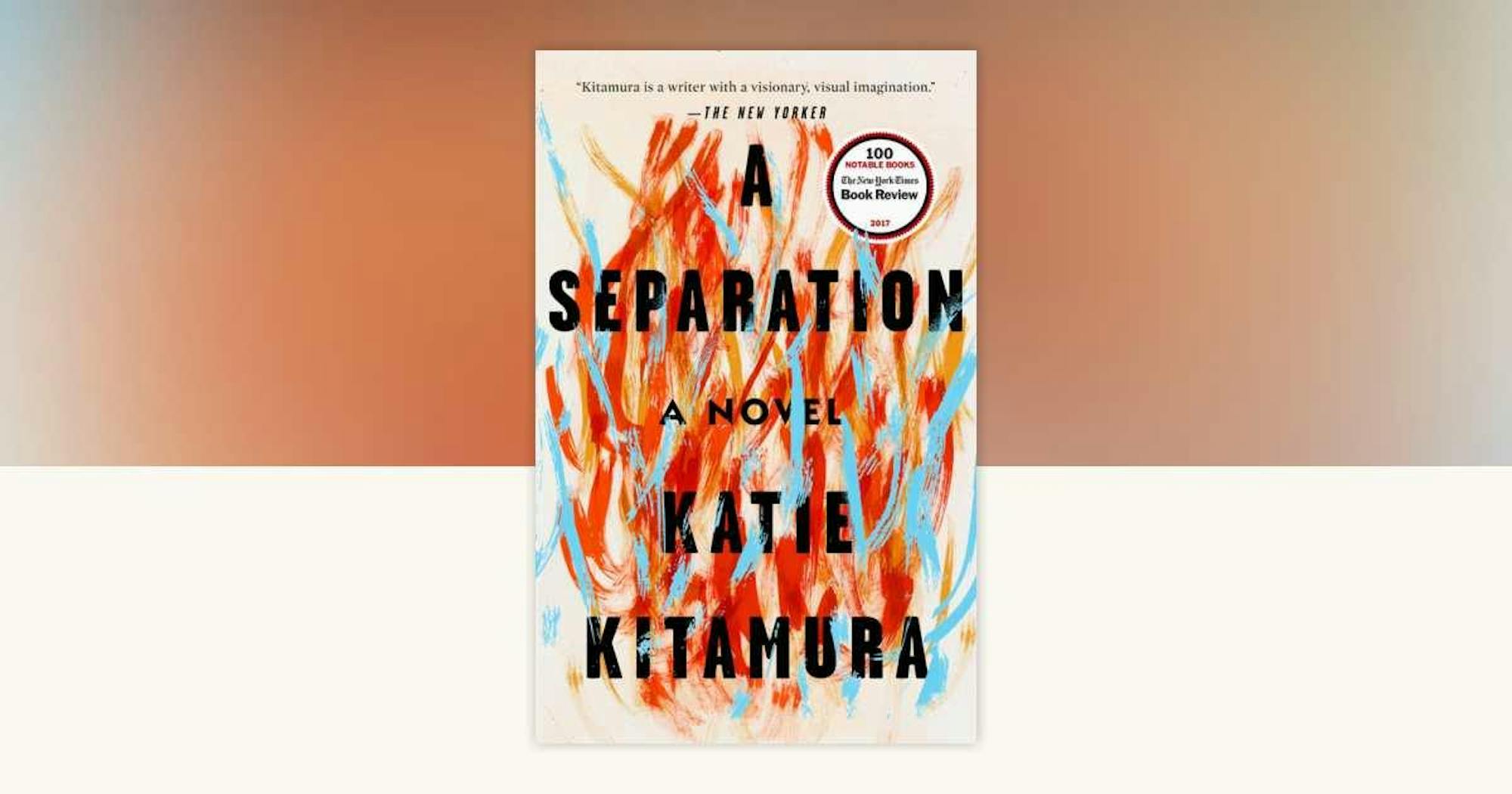
Above all else, I love a book filled with commas and poetic prose. Discovering the writing of Katie Kitamura was, then, a wonderful gift; her novel A Separation excels at capturing both the mundane and the shocking with beauty.
Last fall, Kitamura held a reading at Cornell as part of the Zalaznick Reading Series. Struck by her writing’s unique and vibrant voice, I read A Separation shortly thereafter, and was not disappointed. Kitamura’s style is consistent and vivid, such that I found myself reading in the distinct cadence with which she spoke.
The novel follows an unnamed woman in search of her missing husband, Christopher, with whom she has a hushed separation. He disappeared while researching his new book in Greece, and at the behest of his mother (who knows nothing of the impending divorce) the narrator traces his footsteps. Her plan is to locate Christopher, hand him the divorce papers and fly home to her new partner, Yvan. Instead, after a prolonged stay with little progress, her husband is found on the side of a road, robbed and murdered.
The book portrays two types of grief: that for a failed marriage, and that for a lost life. The first portion is a woman who has processed her separation and is ready to move on. Among her most memorable moments is a scene at the house of a weeper, a dying profession of women who sing at funerals. It is one of many poignant images of grief which Kitamura offers, and grows stronger as the book continues; the narrator learns only later what new mourning she’ll face.
Once Christopher is dead, the narrator’s world changes tone. Kitamura presents the reader with the struggle of moving on, the ways in which our own hearts can be so difficult to understand. His death is a loss which the narrator can’t simply overcome, not even after his body is in the ground, not even when her new partner says enough time has passed. Distance from tragedy isn’t always a cure, and the more it grows, the more sympathy and understanding from others dwindles. Kitamura’s take on grief was compelling, while necessarily quiet and slow.
I found A Separation to be largely devoid of action and excitement, even the murder of Christopher is surprisingly matter-of-fact. It’s a story that lives in characters’ emotions first and foremost, and there are times when this can feel repetitive. Certain facets of Christopher, particularly his eye for other women, were picked clean, thought over so many times that I found they lost interest. I expect there are readers who would find the book overly indulgent in its constant reminiscing and unrewarding in its lack of movement. While I found Kitamura successful in not crossing those lines, the criticism wouldn’t be unfounded, and I don’t recommend the novel to those who don’t enjoy books without action.
If, however, you are content to live in the mind of a peaceful, introspective character, Kitamura’s world is wonderful. I found even the side characters to be memorable; their roles were primarily in bringing the narrator to Christopher, but they were in themselves fascinating and alive. The highly observant nature of the narrator allows her to pick apart the relationships of characters around her, notice the minutiae in their expressions to bring us into their worlds without ever overstepping with a personal question.
The fact that I finished A Separation so content with the story is a testament to Kitamura’s writing and characters, who felt so real that I neither wanted nor expected a fairytale ending. Christopher’s murder was disturbingly casual, devastating to a few but otherwise unexceptional. From the first meeting the police caution that crimes like his are unlikely to be solved, and this case proves no exception. He was robbed and murdered, and that is all they will ever know. Such an ending was at risk of being unsatisfying, but instead it crafted the impression that there is not always an explanation in life. We can’t count on a dramatic solution; a detective picking clues from the wind, a grand speech that ties it all together, is neither assured nor likely. Things happen simply because they do, tragedy strikes just because it can. Ultimately the story is darkly real and its lack of a conclusion feels only fitting.
Kitamura’s A Separation is a mesmerizing look into the mind of a life in limbo. Its primary strengths lie in well thought-out characters and the author’s distinctive voice which brings the world to life. It was a thoroughly captivating read which I highly recommend.
Rye Blizzard is a junior in the College of Arts and Sciences. She can be reached at rab538@cornell.edu.

Rye Blizzard is a member of the Class of 2027 in the College of Arts and Sciences. She is a contributor for the Arts & Culture department and can be reached at rab538@cornell.edu.