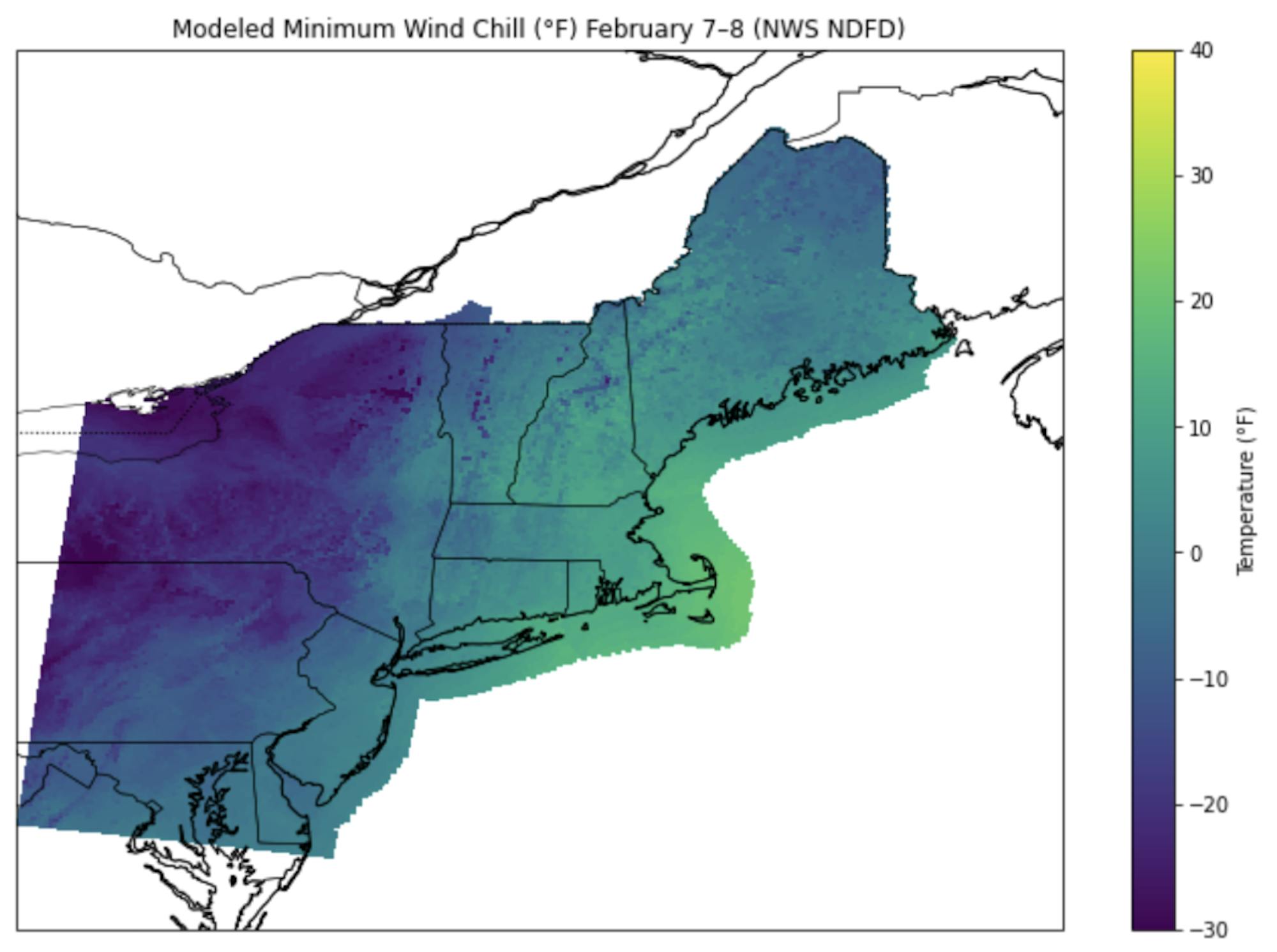
The coldest air of the winter so far is on the way for the weekend, with the potential for record low maximum temperatures, subzero overnight lows and feel-like temperatures as cold as negative 30 degrees Fahrenheit.
Ahead of the cold snap, a clipper system — a fast-moving low-pressure system that brings snow, strong winds and freezing temperatures — will swing a cold front through the area on Friday evening. Snow showers, potentially accumulating up to one or two inches, along with wind gusts as high as 40 mph are expected with the passage of the front.
Cold air will rush in behind the front, and temperatures will bottom out below zero degrees overnight. Subzero overnight low temperatures are forecasted for the next two nights as well.
The National Weather Service in Binghamton has issued an Extreme Cold Watch, likely to be upgraded to an Extreme Cold Warning, for Tompkins County valid from late Friday night through Sunday afternoon, with wind chill temperatures as low as negative 30 degrees Fahrenheit expected. In these temperatures, frostbite can occur in as little as 30 minutes on exposed skin.
Arctic high pressure moves into the Great Lakes region on Saturday, resulting in persistent northwesterly flow into Ithaca through the weekend. Temperatures will remain below 10 degrees on both Saturday and Sunday, potentially setting daily low maximum temperature records on both days, before the high pressure finally weakens and temperatures rebound into the low 20s by Monday afternoon.
Women’s hockey hosts Rensselaer Polytechnic Institute at 5 p.m. on Friday and Union at 3 p.m. on Saturday in key conference matchups at Lynah Rink. Men’s hockey faces Colgate in a rivalry game at 7 p.m. on Saturday, also at Lynah Rink. With the frigid temperatures forecasted, Friday and Saturday will be best spent attending these or other indoor sports. As for Sunday, consider tuning into the Super Bowl indoors. Limit outdoor exposure to 15 minutes or less at a time.
Temperatures have been anomalously cold in Ithaca since the beginning of the spring semester. Since classes began on Jan. 20, only one day, Jan. 23, recorded a temperature above historic daily averages, and did so only by 1.6 degrees Fahrenheit. It was followed by 11 consecutive days that were over 10 degrees colder than the 1991 to 2020 normal. Six of those days were over 15 degrees colder than normal.
Because late January is already the coldest time of the year climatologically, these abnormally frigid days translated to average temperatures in the single digits for nine consecutive days.
For warm weather lovers, there is hope yet. The month of February began with some moderation, with high temperatures in the 20s as opposed to teens for most of the first week of the month. Expect this trend to resume after the brief cold shot over the weekend, with temperatures rebounding into the 20s by Monday and potentially surpassing the freezing mark for the first time since Jan. 23 later in the week.
Looking further ahead, there is a strong signal on all the major model ensembles for a shift in the North American weather pattern heading into the second half of the month. It is appearing increasingly likely that upper-level ridging will develop over the eastern U.S. and replace the upper-level troughing that has plagued the region since the middle of January. This could result in above-normal temperatures to close out the month in Ithaca, contrary to Punxsutawney Phil’s prediction that winter would continue for six more weeks.