Ramadan, the holiest month of the Islamic calendar, begins at sundown on Wednesday, Feb. 18 and is expected to continue until March 19. Muslims observe the holy period through community, prayers, reflections and fasting — the act of abstaining from eating or drinking from sunrise to sunset.
For Cornellians observing Ramadan, Muslim student organizations and the Diwan Center for Muslim Life have prepared resources for those celebrating on campus. From daily Taraweeh prayers — voluntary, nightly prayers performed by Muslims during Ramadan — to suhoor meal boxes — the essential pre-dawn meal consumed by Muslims before starting their daily fast — held for Ramadan, a variety of resources are made available for students during Ramadan on campus.
The Sun detailed some of the resources available to Muslims this Ramadan around campus.
The Diwan Center
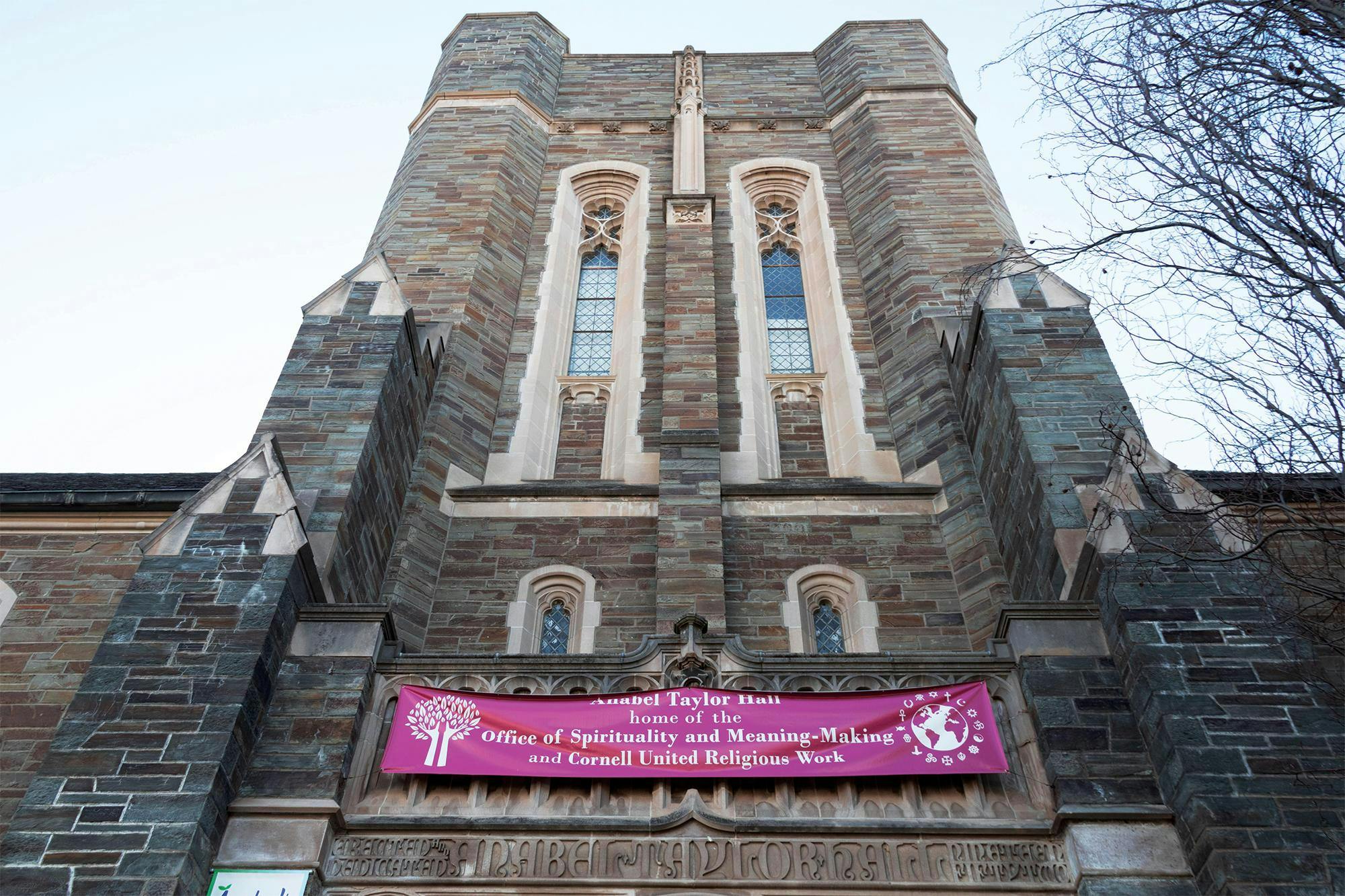
The Diwan Center for Muslim Life is a nonprofit organization funded by alumni, founded to support Muslim life on campus. Located on the third floor of Anabel Taylor Hall, the Diwan Center encompasses the Diwan lounge, prayer rooms and the Chaplain’s office.
The center will provide iftar, the post fast meal, Monday through Fridays during Ramadan as well as Saturday and Sunday during the final 10 days of the Islamic month, aligning the meal schedule with the breaking of a fast, for anyone to come and eat a halal meal.
According to the Chaplain, spiritual programs are also available on Monday, Wednesday and Thursday evenings right after iftar is served. The Chaplain also explained the events are meant to serve as a “discussion on matters of spirituality and deeper connection with God and faith” and that the best way to stay in touch with the programming is through the Diwan Center's Instagram.
These resources and community had not always been present on campus. According to Minhaj Fahad ’26, a student fellow at the Diwan Center for Muslim Life, there was no Muslim Chaplain on campus his freshman year, creating a lack of leadership in the Muslim community.
“There is very little help that Cornell themselves give, so the chaplaincy is entirely dependent on alumni donations,” said Fahad . “Having a religious leader is really important, especially if you're away from home because he’s our spiritual leader and he’s there to guide us.”
For Fahad, planning Ramadan and iftar logistics for the Muslim community began six months ago. Fahad and Muslim student organizations have planned 24 iftars for approximately 250 people, which involved contacting local halal restaurants like Komonz Grill and obtaining funding from Muslim identity clubs.
Fahad also helped create a documentary on behalf of the Diwan center, which details the growth of the Muslim community on campus. Interviewing 20 students on campus, including Ph.D., graduate and undergraduate students, Fahad captured the opinions of Muslim students — in part for alumni to see how their donations have been used.
Halal Food and Suhoor Boxes
According to Fahad, one of the logistics he was faced with when planning for Ramadan was the “lack” of halal food, or food prepared according to Islamic methods, on campus and around Ithaca.
“There’s a few places you can get halal food [on campus] …but it’s difficult to do that when it’s prelim season, for example,” Fahad told The Sun. “The great thing about iftar is that it’s free for everyone, and that it’s open to even grad students and Ph.D. students who don’t have a meal plan and are not able to access some dining halls.”
Currently, Morrison Dining, Keeton House Dining Room and Okenshields are the only dining halls on campus — out of ten total halls — that offer halal food in exchange for meal swipes.
Cornell Dining is also providing resources for Muslim students, including “pre-fast” meal boxes for students to have for suhoor, the essential pre-dawn meal consumed by Muslims before starting their daily fast.
“‘Pre-fast’ meal boxes are available for pickup the night before for those who would like to eat before sunrise, before their daily fast begins,” the Cornell Dining website states. “Pre-fast meals are available at Cook House Dining Room, Okenshields (on weekdays), and Morrison Dining.”
Community and Taraweeh Prayers
According to Chaplain Numan Dugmeoglu, the Muslim Chaplain at Cornell, creating an environment during Ramadan where Muslim students can break fast not only helps foster a sense of community in Ithaca, but also opens spaces up for discussions on spirituality.
“The idea is that [Ramadan] becomes a time of community for us to share that meal together, so people can come and have dinner with us, free of charge,” the Chaplain told The Sun.
During the month of Ramadan, the Diwan Center will also offer the taraweeh prayer, special voluntary night prayers performed by Muslims during Ramadan. Additionally, according to the Chaplain, the last 10 nights of Ramadan will be the most spiritually significant for Muslim students on campus. The last 10 ten nights is when Laylatul Qadr, also known as the night of power, occurs. On this night, many students stay up until dawn to pray and perform acts of worship.
“You’ll find people in [Anabel Taylor Hall] overnight until sunrise,” the Chaplain said. “People break fast, hang out, do some homework, do some extra devotional practices, all the way until they have their next meal before they start their fast. Ramadan becomes a time of less sleep, less food, but more connection, more community.”
Similarly, Ayah El-Hardan ’27, president of the Muslim Educational and Cultural Association, has felt the sense of community from Ramadan and Muslim cultural organizations on campus growing throughout the years.
She explained that MECA’s events have been more “organized” and “larger scale” which has resulted in the group being able to “accommodate” more iftars and people.
“We've grown our community from like 20 people to more than 200 people,” El-Hardan said. “I met my community through MECA and it’s helped me feel less isolated on campus.”
According to El-Hardan, the Muslim community has visibly grown on campus, allowing them to move from the basement of Anabel Taylor Hall to the second floor auditorium. Even so, it is still difficult for Muslim organizations to accommodate space, given the large number of people who come together for prayers, events and iftars.
For individuals celebrating Ramadan on campus, the Chaplain, Muslim identity student organizations and Muslim student associations have been working to obtain more resources on campus and to create a stronger sense of community.
“For a lot of Muslims, Ramadan becomes an opportunity for Muslims to really hone in on themselves, but also in doing so, becoming aware of the values of others around us, and so begin to live in what we call community and fellowship, that we begin to live with others from the standpoint of brotherhood and sisterhood, not as potential opponents or obstacles,” the Chaplain said.
Correction, Feb. 19, 11:10 a.m.: A previous version of this article incorrectly spelled Minhaj Fahad's name.
Zeinab Faraj is a member of the Class of 2028 in the College of Arts and Sciences and a senior editor on the 144th Editorial Board. She was a features editor and assistant sports editor on the 143rd Editorial Board and can be reached at zfaraj@cornellsun.com.

Ashley Lee is a member of the Class of 2028 in the School of Industrial and Labor Relations. She is a senior writer for the News department and can be reached at alee@cornellsun.com.