

In 2024, former Ward 1 Alderperson Phoebe Brown and Kayla Matos (D-1st Ward) co-sponsored and passed a proposal allocating $50,000 of Ithaca’s 2025 budget to funding a study on reparations for Black residents. The proposal was a part of ongoing reparations efforts in New York state, which groups across the state continue to advocate for.
According to Brown, the reparations movement addresses “the damage[s] done to Black people … throughout history,” through monetary, systemic and structural amends.
“What I envision is [money] being placed in institutions that are Black-led [and] helping educational systems,” Brown said in an interview with The Sun. “To this day, we're still being traumatized. The damage is still hurting us.”
As part of the amendment, the City of Ithaca will appoint a research committee, hire a consultant or research firm and then define the study’s objectives. The working group — formed in November — will propose recommendations to the city council. The members will then review the recommendations and make adjustments. The city will then issue a Request for Proposals, which entails Ithaca soliciting bids from companies or organizations to cover the study’s costs.
Although she said she wishes the process could be quicker, Brown hopes the study clarifies how reparations can be best enacted in Ithaca. The budget amendment followed the establishment of the New York State Community Commission on Reparations Remedies in 2023 by Senate Bill S1163A.
Signed into law by Governor Kathy Hochul, the reparation commission’s goal is to make “recommendations for reparations after examining the legacy of slavery and subsequent racial and economic discrimination against Black Americans.” Through public hearings, research and consultations with experts in relevant fields, NYSCCR will culminate in January 2027 with a final report detailing potential policy for state-level legislative actions.
Brown and Matos’ proposal similarly established a framework for appointing such a committee locally, emphasizing the importance of research in understanding injustice and making effective policies.
In September, The Sun previously reported that Brown disagreed with the research efforts surrounding the reparations.
“Why are we researching what we know Black people deserve? They worked for free,” Brown previously stated at the New York State Community Commission on Reparations Remedies public hearing in September.
Such reparations efforts, however, are not unique to New York.
Evanston, Illinois, passed Resolution 58-R-19 in 2019, which elicited the city’s Equity and Empowerment Commission to seek effective reparations policies. Currently, Evanston has dedicated $10 million to housing and economic development programs for Black residents. This coming summer, Evanston’s Reparations Committee will issue payments of $25,000 to 44 descendants of Black residents who experienced housing discrimination between 1919 and 1969 in the city. Reparations, however, are not limited to direct monetary payments. Evanston’s Restorative Housing Program, for example, seeks to reform past discriminatory housing practices by helping out with housing costs.
Nkechi Taifa, author and founding member of the National Coalition of Blacks for Reparations in America, said in an interview with The Sun that Evanston’s program is a result of decades of pressure activists have put on legislators to pass resolutions in support of H.R.40, which would establish a commission comparable to NYSCCR on the federal level. The legislation was originally introduced in 1989 but reintroduced in every Congress since.
Like Brown, Taifa expressed excitement about reparations being talked about “seriously.” Taifa said people used to consider reparations “a joke,” but that she always felt strongly about the importance of the issue. She said if it were not for “the legacies of the enslavement era,” her life trajectory would have been different.
“My mother received a tuition scholarship to Cornell University,” Taifa said. “This was in the early ‘40s. She was informed that she would be unable to find work in Ithaca, specifically because of her race. Unemployment in upstate New York would make it impossible for her to afford room and board. So as a result, she was not able to accept that scholarship to Cornell.”
If it weren’t for the racial discrimination Taifa’s mother faced in New York, Taifa said she would have grown up in New York instead of Washington, D.C. Influenced strongly by this situation, Taifa has spent the last 50 years as a vocal activist for reparations.
She and Brown both said that people often consider reparations for Black Americans a foreign concept, although other groups in the U.S. have received them. For example, the Civil Liberties Act of 1988 gave surviving Japanese Americans forced into internment camps during World War II reparations and a formal apology by President Ronald Reagan, the only federal reparations proposal to ever pass.
New York-based groups such as New Yorkers for Reparations, a grassroots organization focused on ensuring recommendations from the NYSCCR turn into policy, and Get Free, a youth-led movement with the goal to make reparations “a public and political priority,” organize to further the state reparations movement. According to its interest form, Get Free has active chapters in Philadelphia, Baltimore, the Bay Area and Washington, D.C.
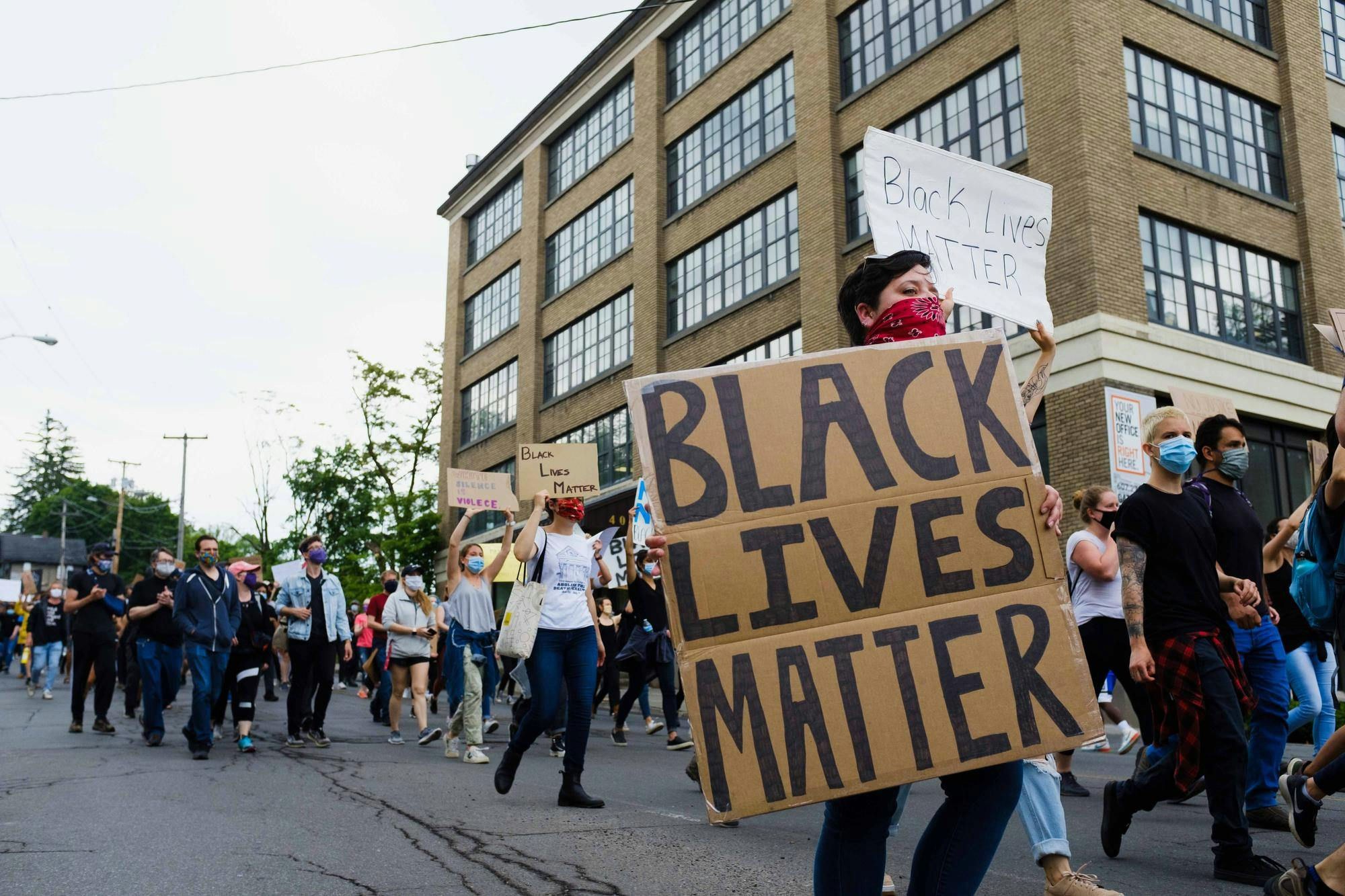
Anthony Torres, communications director for Get Free, said to The Sun that the group helped push for the formation of the NYSCCR through protests and social media.
According to Get Free’s New York campaign description, which focuses on ensuring NYSCCR’s recommendations are enacted as legislation, the group believes that the Trump administration, “relies on dehumanizing Black people so they can rule over anyone who doesn’t look, live or love like the wealthy, white few.”
Enacting reparations would combat this notion, according to the organization, and Torres said that reparations for Black Americans would result in greater equality across racial groups.
“It's been true throughout our history that when Black people get free, we all get free,” Torres said.
According to Torres, NYSCCR “has the expertise” to evaluate historic and ongoing harms, along with barriers, to equality in New York. He said Get Free continues to mobilize young people in the state to help pressure elected officials, campus leaders and corporations to support reparations efforts.
“We're going to have to ensure that the legislature and the governor follow through on those recommendations,” Torres said.
This past fall, Torres said Get Free focused primarily on New York City’s mayoral race. According to him, the group got mayor Zohran Mamdani to pledge to follow through and support the reparations efforts of the NYC Commission on Racial Equity, which is leading a reparations study similar to Ithaca’s.
Taifa said even though the current national political climate may appear precarious, the group has “never had ideal conditions” for the reparations movement. She said it is important to continue to “agitate, educate and organize” for reparations, as work done today will affect future generations.
Although she said reparations can never completely account for historical injustices perpetrated against Black Americans, Taifa said they can be comprehensive.
“My old mantra has always been that the harms from the enslavement era and beyond were multifaceted, [so] the remedies must be multifaceted as well,” Taifa said. “A reparation settlement can come in as many forms as necessary to address the immeasurable injuries that we have been inflicted — so it's more than a check.”

Shubha Gautam is a member of the Class of 2028 in the College of Arts and Sciences. She is an assistant news editor for the 144th Editorial Board and can be reached at sgautam@cornellsun.com.


