The sound of unyielding chains rattling against the heavy oak doors of Willard Straight Hall was the first sign that the status quo had expired. Within hours, the Ivy League’s polished veneer had been stripped away, replaced by a standoff that would draw the eyes of the entire nation. The sun had barely crested over Libe Slope on April 19, 1969, when the catalytic 36-hour occupation began; it seethed into an uproar as Black students piled into Willard Straight, refusing to be subjected to the deafening silence of the administration’s passivity toward the growing chasm between the University’s liberal rhetoric and the lived reality of students of color.
High in the dark hours of April 18, the smell of kerosene sliced through the spring air outside of Wari Cooperative. A wooden cross had been hammered into the lawn and set ablaze. For the Black women inside, the crackle of the flames was a message written in fire: Even here, in the supposed safety of an Ivy League institution, you are not welcome.
And so, if the University would not provide a fortress for its students, the students would have to seize one for themselves. Decades later, the same fortress served as a living archive. Sitting in the dimly lit tiered rows of Cornell Cinema, I watched the flickering frames of Agents of Change reconstruct the 1969 occupation on a screen just a few feet away from the very doors the students had once chained shut. The past felt like the present, and as the film faded to black, the lights rose on a panel of alumni — the original “agents” themselves — who sat beneath the vaulted ceilings of the Straight to testify that the battle for the University’s soul didn’t end when the barricades came down.
Before diving into the hills of Ithaca, Agents of Change establishes the stakes at San Francisco State University, where the fight for Black Studies was submerged in systemic state violence. The film documents a campus under siege, showcasing the Black Students Union and the Third World Liberation Front who stood on the relentless picket lines that turned a college into a battlefield. This West Coast upheaval served as the ideological precursor to the events at Cornell; it proved that representation could no longer be treated as a peripheral matter. By the time the film’s focus shifts to the East Coast, the viewer understands that the seizing of Willard Straight Hall was a calculated response to a world that had already proven how far it would go to silence them.
The documentary provided the ‘why,’ but the alumni panel provided the ‘what now.’ The discussion shifted from visceral images of the takeover toward the permanent architecture of institutional reform. This 36-hour stand forced a systemic evolution, yielding a resolution that redrew Cornell’s power dynamics. These negotiated terms influenced the birth of the University Senate, necessitated sweeping changes to the Board of Trustees and established an entirely new judicial system. The creation of the Africana Studies and Research Center stood as the definitive victory of this defiance — a fact that Frank Dawson ’72 articulated with the unique perspective of someone who had first lived the history as a participant before later capturing it as a filmmaker. Hearing Kofi Acree, the current steward of that hard-won legacy, discuss these milestones in the shadow of the occupation’s anniversary made one thing certain: The ‘uproar’ of 1969 served as the foundational blueprint for our current University.
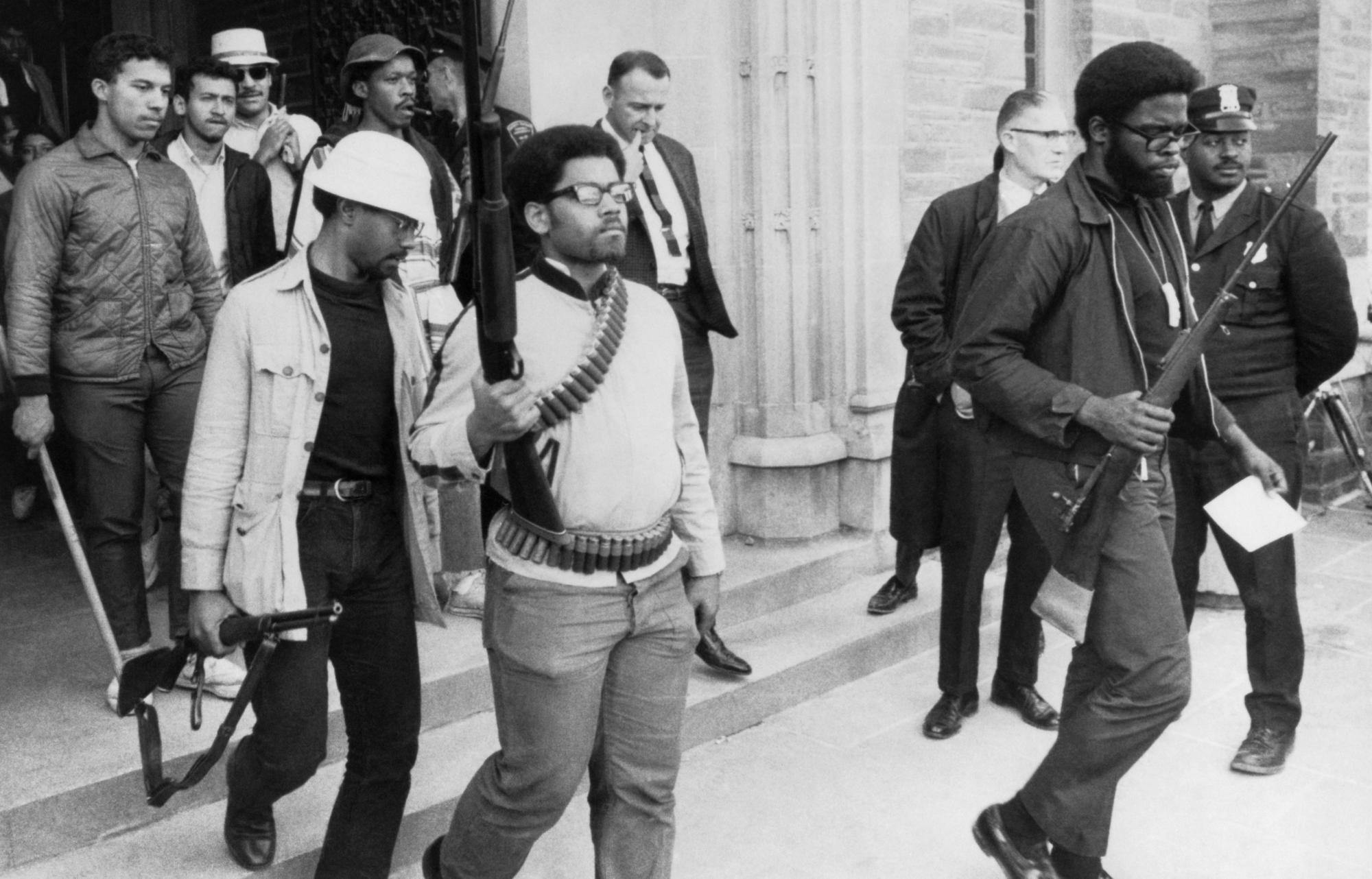
As Dawson and Acree discussed these systemic shifts, the conversation inevitably turned toward the moment the fortress was finally tested. While the resolution secured the future of Africana Studies, the road to that agreement was paved with the immediate, physical threat of violence. When white fraternity members attempted to breach the building — threatening to clear the hall by force — the students’ strategic sit-in evolved into a desperate stand for survival. The decision to arm themselves was a direct result of this looming aggression, a move that transformed the Cornell campus into a theater of national consequence. When the doors finally opened, the students marched out through a gauntlet of around 300 patrolling sheriffs, making their power — and their rifles — unapologetically visible to the world. It was this image of grim, disciplined defiance that was captured in the iconic photograph that would go on to win the Pulitzer Prize, immortalizing the moment the University’s liberal rhetoric was finally met with the unyielding reality of Black self-determination.
The legacy of 1969 continues to be a restless heartbeat that pulses through campus today. University walls cannot insulate scholarship; the world does not stop at the campus gates, rather, it pours through them. As we sat in the very room where the barricades once stood, the parallels to our own era felt impossible to ignore. Stepping away from the Straight and back into the cool Ithaca night, the echoes of the occupation felt immediate and alive. Agents of Change closed off with a powerful end-credits declaration that the soul of the campus resided in the courage of those who demanded to be seen, finally claiming their place with a simple, definitive decree:
I, TOO, AM CORNELL.
Aima Raza is a member of the Class of 2027 in the School of Industrial and Labor Relations. She is a staff writer for the Arts & Culture department and can be reached at araza@cornellsun.com.