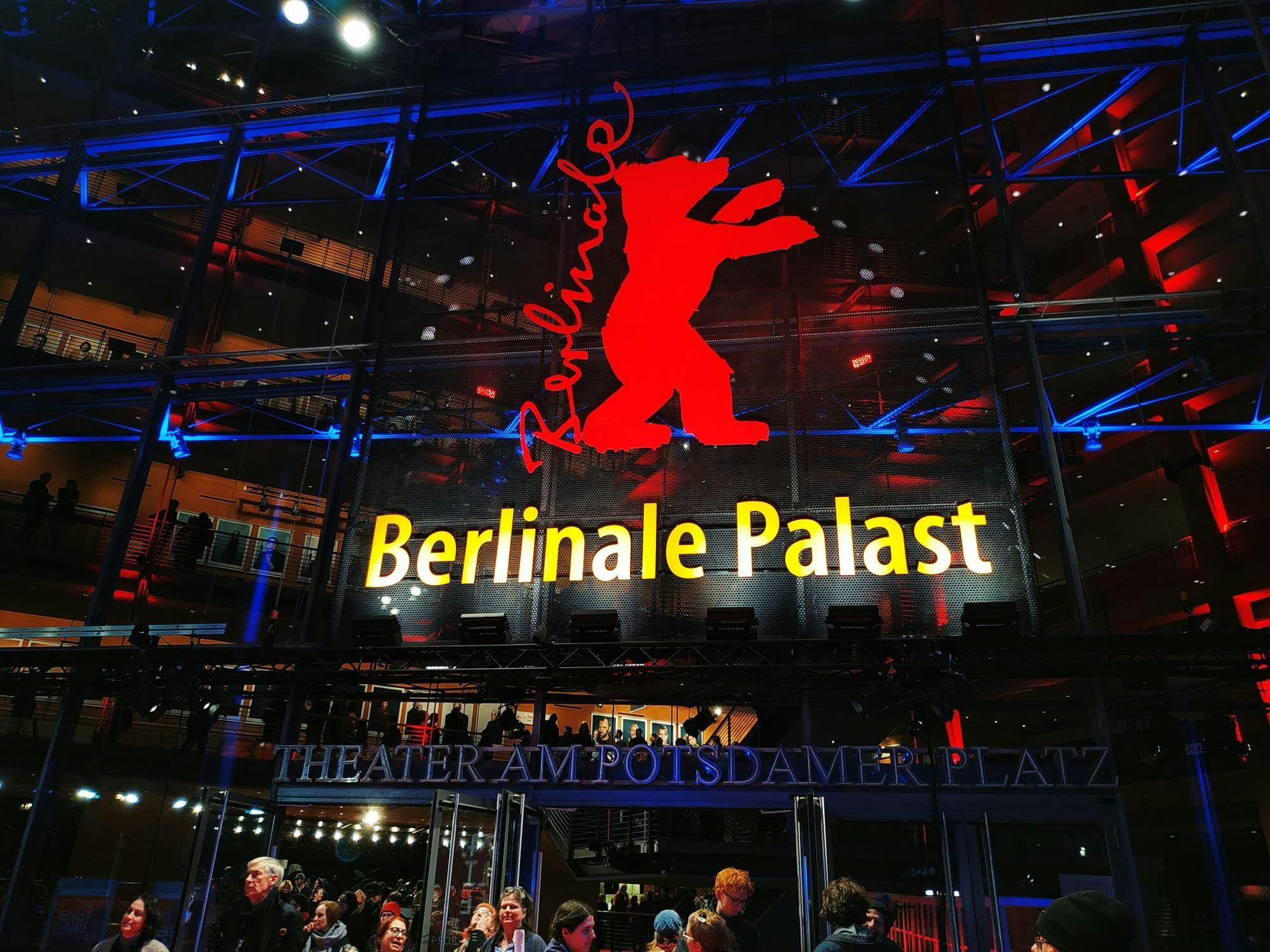
“Every film is political. Most political of all are those that pretend not to be: ‘entertainment’ movies.” These are the words of renowned German filmmaker Wim Wenders in his 1988 book The Logic of Images. Yet, at the 2026 Berlin Film Festival (Berlinale), Wenders seems to have walked this back: “We [filmmakers] have to stay out of politics because if we make movies that are dedicatedly political, we enter the field of politics. But we are the counterweight of politics, we are the opposite of politics. We have to do the work of people, not the work of politicians.”
Wenders’ comment about filmmakers staying out of politics came after political journalist Tilo Jung asked the jury about the Berlinale’s,and German government’s, selective stance on human rights with regards to the genocide in Gaza, since “the Berlinale as an institution has famously shown solidarity with people in Iran and Ukraine, but never with Palestine, even today.” The Berlinale’s livestream was also cut off while Jung was speaking, which the festival attributed to a technical error.
There was a significant amount of storm surrounding these comments. Renowned Indian author Arundhati Roy pulled out of the festival after being “shocked and disgusted” by Wenders’ comments, stating that the jury was stifling discussion “about a crime against humanity.” Festival director Tricia Tuttle issued a long statement defending Wenders, arguing that artists should be able to “exercise their right of free speech in whatever way they choose” and “should [not] be expected to speak on every political issue raised to them unless they want to.” Days after Wenders’ comments, a letter signed by over 80 industry members was published criticizing the Berlinale’s silence on the genocide in Gaza and the industry’s complicity in the Israeli genocide of Palestinians.
Prior to this comment, Wenders had also said: “Movies can change the world” but “not in a political way. No movie has really changed any politician’s idea. But we can change the idea people have of how they should live.” This claim is just ahistorical. D.W. Griffith’s The Birth of a Nation, hailed as a landmark of film history and credited with pioneering major techniques in narrative filmmaking, infamously inspired the rebirth of the KKK. It was also the first film to be shown inside the White House, with then-president Woodrow Wilson being moved by it. What is this if not films and art changing the world in a political way, including changing politician’s ideas?
Of course, Wenders’ take seems to ignore the plethora of explicitly political filmmakers that exist. What does he make of François Truffaut and Jean-Luc Godard leading a shutdown of the Cannes Film Festival in May of 1968, for example? Or any filmmaker with an explicit ideological bent? Just days after Wenders posited that filmmakers should not be involved in politics, Hamdan Ballal, the co-director of Oscar-winning documentary No Other Land, was attacked by Israeli settlers in the occupied West Bank again. What do you mean filmmakers should stay out of politics or that film/art and politics are separate? What kind of detachment do you need to achieve to believe that? Do you not see how ignorant and potentially dangerous that notion is? To pretend that art and politics are separate is to ignore the real impacts, including violence and harm, that art can and does have on people’s lives.
Part of me is reluctant to give Wenders any attention. My take that all art is political feels milquetoast at this point. Of course all art is political — every artist, every person exists within and interacts with this world. Still, clearly I’m frustrated, otherwise I wouldn’t be writing this. Why do the goalposts always shift when it comes to Palestine? Why is it “every film is political” until the jury is asked about Palestine, and then suddenly filmmakers should not be political? Wenders’ comments feel particularly ridiculous when he has praised past political actions the Berlinale has taken (such as disinviting far-right politicians).
Ultimately, Wenders can say (or not say) whatever he wants. Being apolitical doesn’t free him from critique. Yet, when the Berlinale bends over backwards to defend his opinions, it feels like the institution is trying to shut down criticism of him. But the choice to not speak is as much a political decision as the choice to speak, and neither should be positioned as above critique.
It is absurd to act like there is some moral high ground to being apolitical, especially when you can’t even condemn a genocide. Silence is complicity, and being apolitical does not sever you from the moral repercussions of your choices. And really, we need to stop pretending that being apolitical is a thing: You are a reflection of your positionality in the world, and how you approach the world, including the art you create, certainly reflects that. Moreover, I’m tired of the idea that engaging with politics is somehow a bad thing or a thing that shouldn’t be done, or that art/people and politics/politicians are mutually exclusive somehow. All it does is create a disregard for how one’s actions impact the world.
To believe or even propose film (and art writ large) cannot change the world politically is ignorant at best and dangerous at worst. Maybe it’s cynicism — there are plenty of cases where films and art fail to achieve what they set out to do politically, but that doesn’t mean art cannot impact the material conditions of the world. But cynicism without action and apathy are cop-outs, an excuse to disengage with politics and the real effects you can have on the world you live in. No matter the reason, it is dangerous to disregard how art can and does tangibly influence people.
Pen Fang is a member of the Class of 2028 in the College of Arts and Sciences. They are a staff writer for the Arts & Culture department and can be reached at pfang@cornellsun.com.