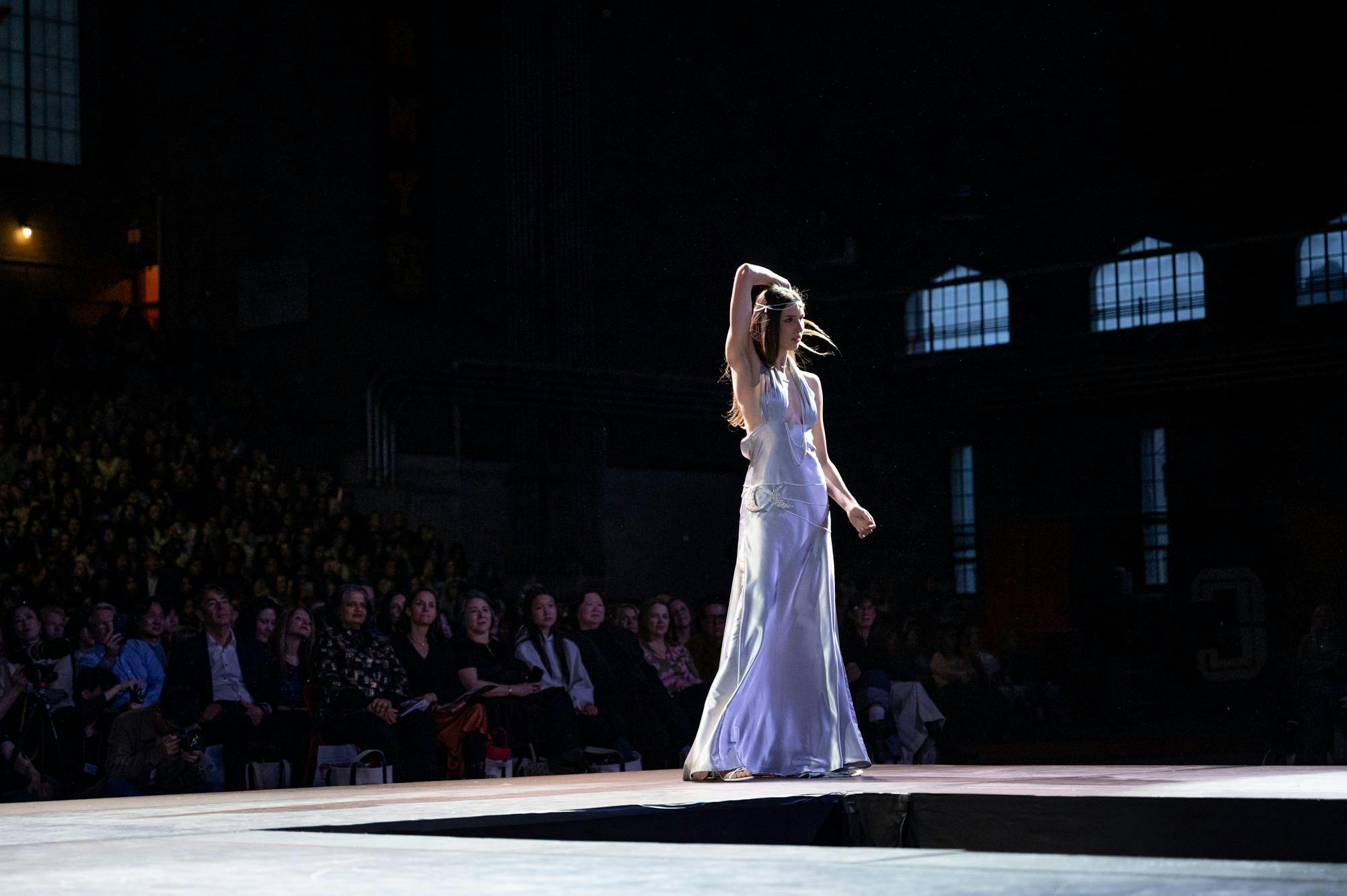
After being swept along by the crowd of students wandering to and from Barton Hall, you finally find a place to sit on the jam-packed bleachers. The murmur of attendees surround you on the stands, and even more onlookers squabble about below, all fighting for the best view of the center stage. As your eyes adjust to the shining lights above, they focus on the runway, adorned with red curtains and glowing cameras ready for the night ahead. The blasting music begins to subside as you settle in, and the crowd hushes as the cameras start rolling. Let the Cornell Fashion Collective 42nd Annual Spring Runway begin!
The show started off strong with an introduction from CFC’s Editorial Board, welcoming attendees to the show and briefing the audience on the designer themes that will be showcased. CFC’s designers are split into four levels. The levels correspond with seniority in the club and represent how many years a designer has been in CFC for. Additionally, levels vary in concepts; Levels One and Two represent a specific theme, and Levels Three and Four offer more room for creativity with unique senior collections.
Level One
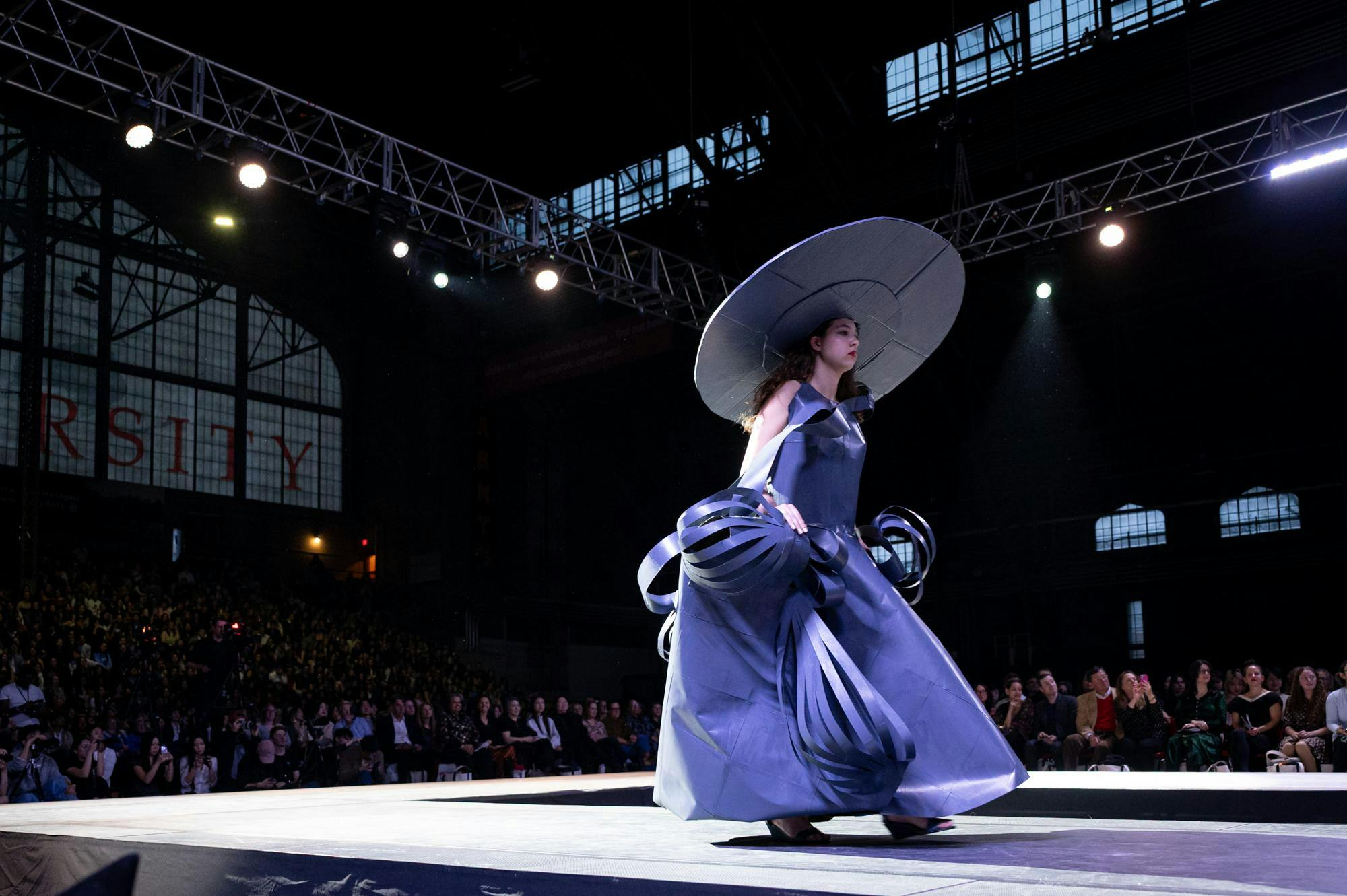
This year, Level One designers followed a grayscale theme, utilizing craftsmanship, texture and overall silhouette to compensate for the lack of colour. The level featured over 20 designers who demonstrated their technical prowess through unique shape and texture combinations. The audience witnessed an unfolding visual gradient — beginning with designs in pure white and gradually deepening to black. While the limited palette restricted how designers could add contrast to their looks, many used interesting accessories to set their designs apart. One design, created by Maggie Sandberg ’29, incorporated a large, circular headpiece that instantly caught my attention — a bold statement piece that, even in a world of gray, elicited gasps from the audience.
Overall, Level One designers showed remarkable prowess in using elements of craftsmanship to supplement the limited colour palettes. That being said, it would have been interesting to see more experimentation with pattern, as most designs appeared to be made from the same plain, sheened fabric. The image of the model present on the Level One page from the pamphlet attendees are given, though in grayscale, displayed an interesting feathered pattern that immediately caught my eye. Unfortunately, that particular design was absent from the fashion show.
Level Two
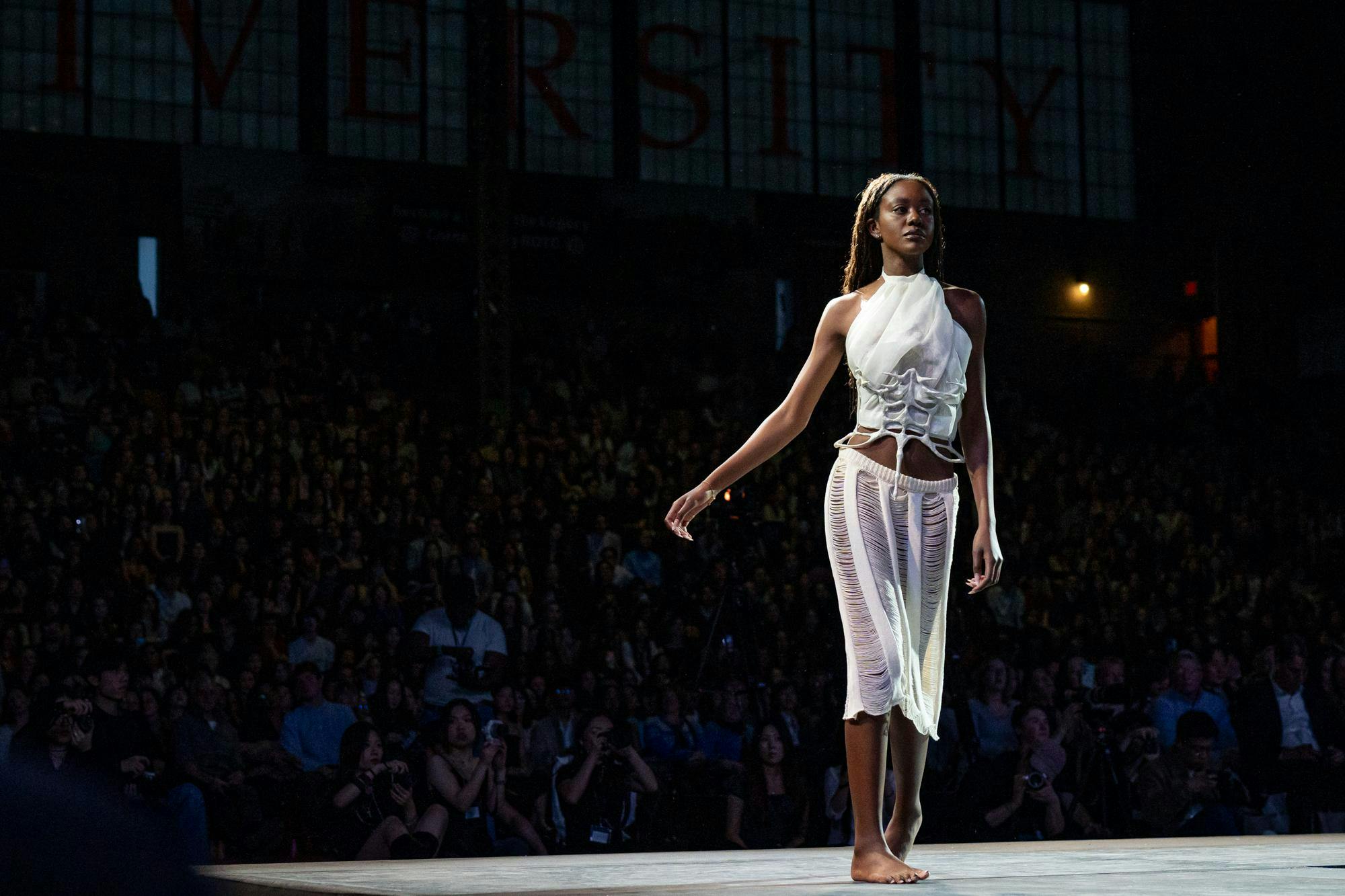
Level Two designers were tasked with the theme “Deus Ex Machina,” exploring the conceptual contrast between creator and creation. Nine designers, each presenting two looks, showcased their unique dialogue between man and machine. Most of the looks on this level were monochrome, primarily white or black, with relatively few exceptions. Standout designs included a beige, layered look that was presented on barefoot models; a set of elegant, blue dresses that were adorned with sparkling decals; and a black and white pair of shining gowns that shimmered with intricate ornamentation.
It would have been engaging if there was more written or verbal commentary on the symbolism of these looks and how they represented the designer’s interpretation of the theme. As a result, it was difficult to identify the elements designers used to convey the boundary between nature and technology, which detracted from my engagement with the level’s theme. If Level Two designers were able to name their pieces — either announced during the show or written in the provided pamphlet — it would have made my experience of the theme more compelling.
Level Three
Level Three introduced three individual collections, each with multiple looks accompanied by short descriptions in the pamphlet detailing the inspiration and thematic elements of the designs. Significantly more colour and pattern language was offered in this level, and the collection descriptions aid in understanding each of the designer’s creative choices. Individually selected music is also played with the presentation of each collection, further immersing viewers into the world of the designer. Of the three, the collection “Ornamentation of an Altar” by Liriana Nezaj ’27, excelled, inspiring feelings of nostalgia through vintage elements of feminine romantic aesthetics. The narrative presented in her collection description augment the idea of an "otherworldly dresser,” evoked throughout her collection with the personification of heirloom drapes and crocheted doilies. While these objects may not hold any functional purpose after being turned into designs, they can be readily admired and held to a different, visually appetitive purpose.
Level Four
For Level Four, nine different designers showcased their full senior collections, each with striking qualities that set them apart. Pattern, texture, shape and colour is elevated to a new level, with each designer incorporating all elements to craft distinct, yet thematically cohesive looks. Two incredibly different collections, “Don’t Let the Pigeon Design a Collection” by Ana Mocklar ’26 and “Mare” by Julia Schanen ’26 were my favourites from the night. While the former inspired playful, chaotic undertones as a light-hearted nod to city-dwelling avians, the latter shrouded itself in a mysterious veil of a forgotten, underwater world. Mocklar’s captivating layering of fabric and swarm of polka dots added to the upbeat, mischievous music accompanying her showcase. Most interestingly, the final design of her collection spelled out “Thank You!” on the back, ending the showcase with a witty and memorable conclusion. Schanen’s “Mare,” by contrast, used thematic elements of aquatic life and debris to emphasize the ethereal nature of her looks. From clothes that seem to be tangled with seaweed to illusions of wet fabric, her designs took us into a fascinating submerged landscape.
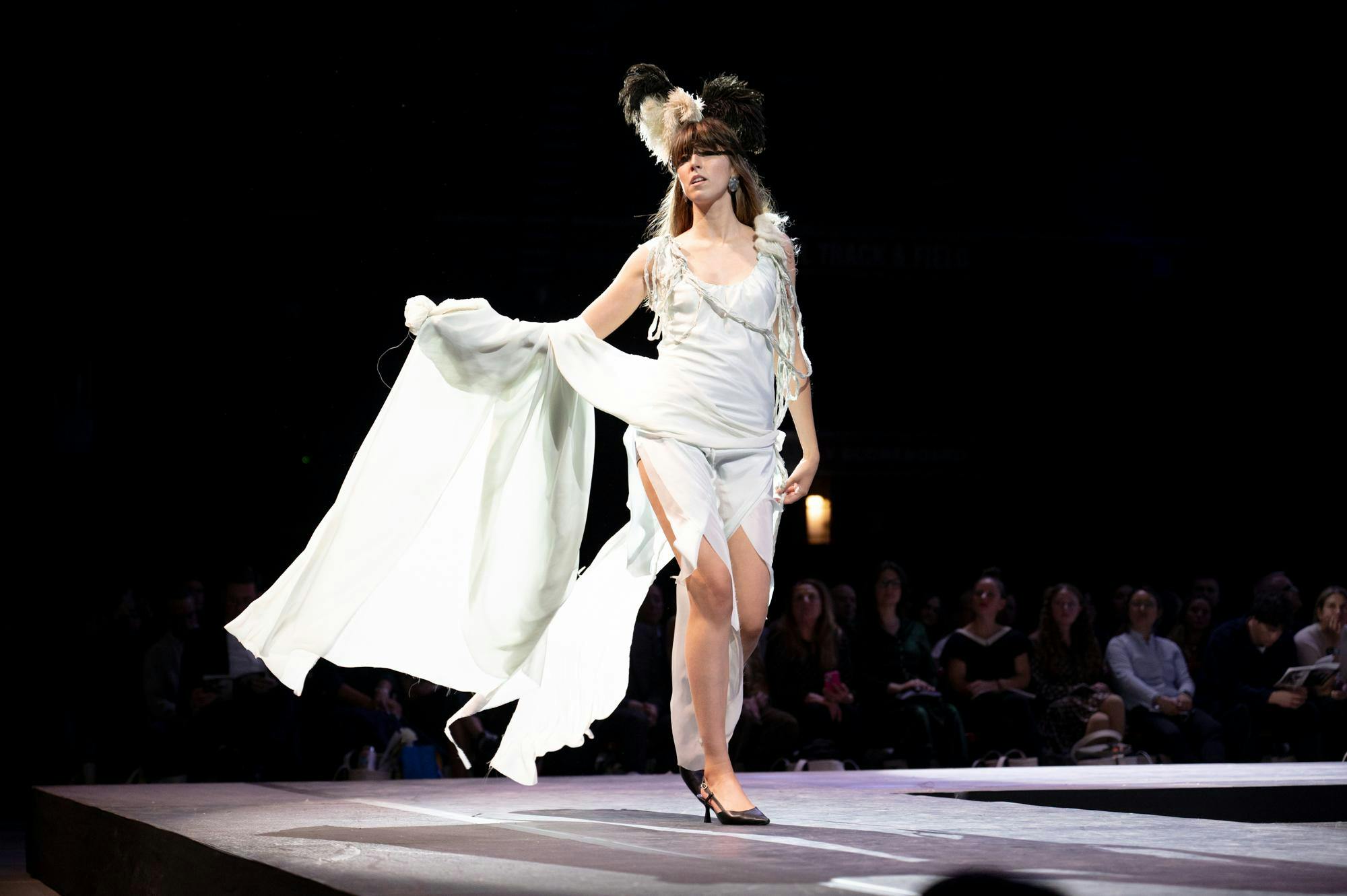
In the end, CFC’s 42nd Annual Spring Runway not only brought together a dynamic and diverse set of looks to the stage, but also reflected the creative breadth of Cornell’s student designers. From the limited and disciplined fashion of Levels One and Two, to the fully realized visions of Levels Three and Four, the artistry displayed at each stage is undeniable. As the final models exited the runway and the applause of the crowd subsided, the night closed in wonder — anticipating what the future of CFC will bring.
Stefanie Chen is a sophomore in the College of Human Ecology. She can be reached at sc3363@cornell.edu.
Stefanie Chen is a sophomore in the College of Human Ecology. She is a staff writer for the Lifestyle department and can be reached at schen@cornellsun.com.