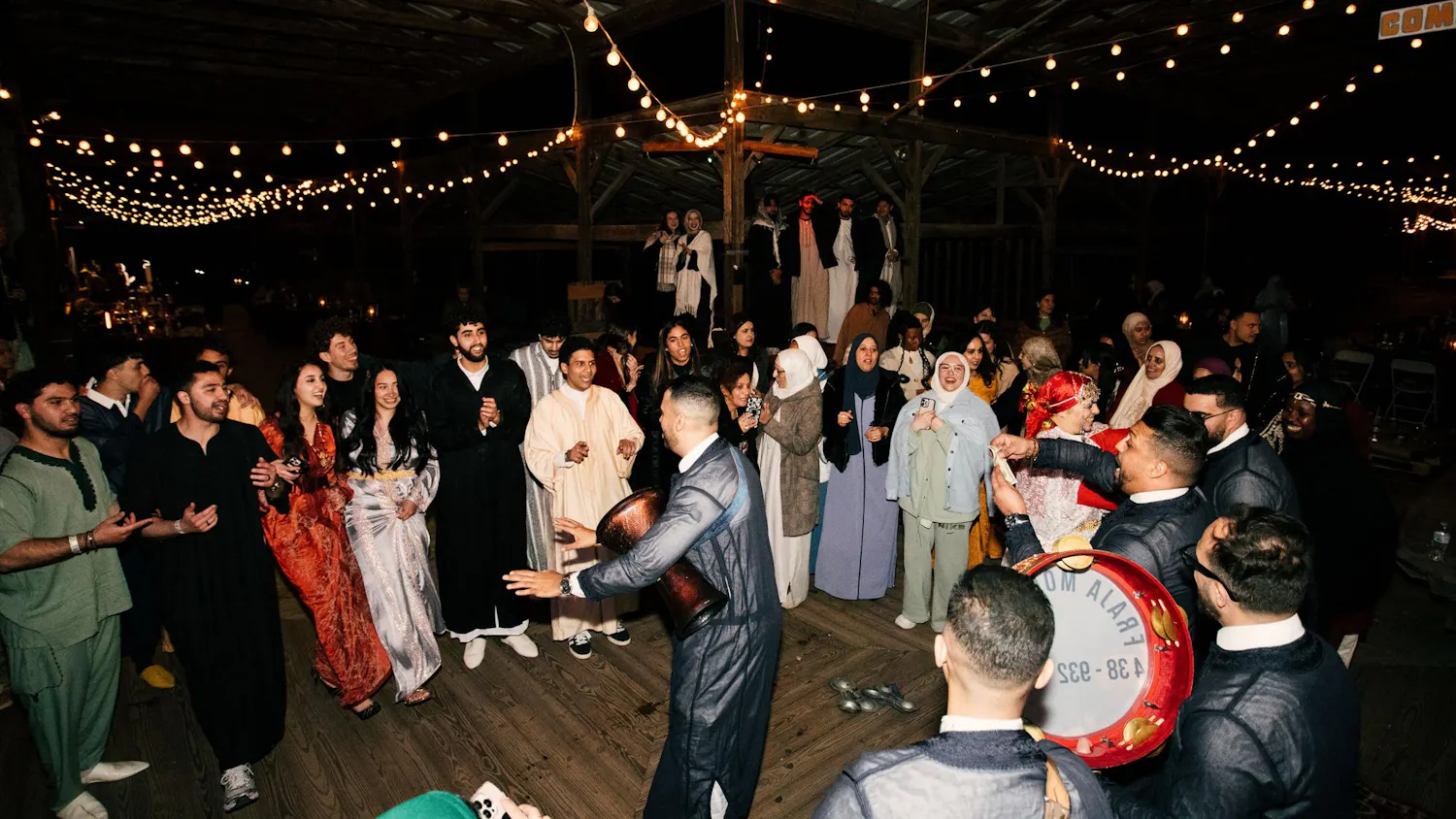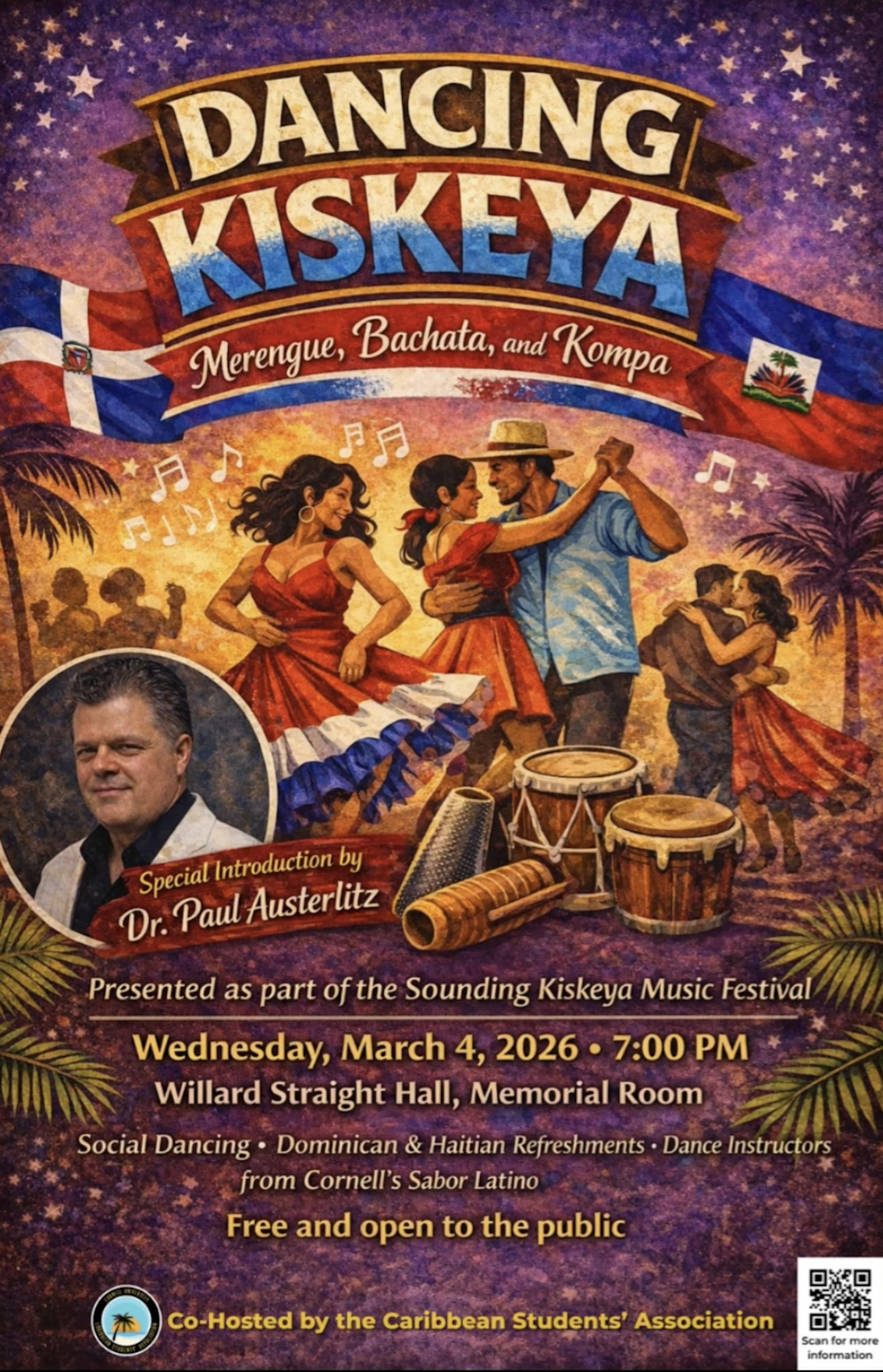
Willard Straight Hall came to life Wednesday evening. The beat of rhythmic feet, echoes of laughter and lively latin dance music — courtesy of a live DJ — breathed energy into the cavernous room as students, faculty and community members alike came together to celebrate Dominican and Haitian dance traditions.
The event, titled “An Island in Dance: Merengue, Bachata, and Kompa,” included a historical and musical introduction by Dr. Paul Austerlitz — ethnomusicologist in Afro-Caribbean music and experienced jazz instrumentalist — followed by an immersive social dance instructional by members of Cornell’s Sabor Latino. There was also an abundance of Dominican and Haitian refreshments in the hall, inviting participants to recharge after sweating it out on the dance floor. As Cornell’s music department hosts the Sounding Kiskeya Music Festival this first week of March, this was only one of the myriad events — ranging from concerts and dance nights to scholarly talks and colloquia — focused on discussing and elevating the interwoven musical and cultural traditions of the two countries representing Kiskeya (Hispaniola). Despite my utter deficit in the art of dancing (my hips certainly do lie!), the night was nothing short of a blast, rewarding both as a learning experience and as a way to let loose and participate in the vibrant, welcoming Latin dance community.
Kicking off the celebration, Dr. Austerlitz’s talk introduced the complex origins of the three Haitian and Dominican dances the night would feature: merengue, kompa and bachata. He centered a majority of his talk around the various cultural influences shaping the style we often think of representing the wider genre of merengue, namely merengue cibaeño. Otherwise referred to as merengue típico, this internationally-popularized Dominican style is infused with both European and African instrumentation and musical conventions. When the European accordion first arrived to the island, it shifted the established merengue sound which had previously been dominated by strings and accompanying drums. Dr. Austerlitz commented on the incorporation of accordion into merengue as a beneficial change; the instrument meshed terrifically with (and ultimately strengthened) the African drum rhythm already present in the genre. In this sense, merengue is a fusion of international musical and dance cultures, and each region — Haiti, the DR, Venezuela, Puerto Rico, etc. — observes the genre with disparate styles and historical influences.
While it is no secret that musical innovations are driven by experimentation with cross-cultural instrumentation and pre-existing practices, Dr. Austerlitz made it a point to emphasize the influence of central African rhythms in merengue. He shared an anecdote of listening to merengue and immediately recognizing the rhythms as Afro-Caribbean but being shocked to pick up a book that denied any African presence. With intermittent digs at our own fall into right-wing extremism, he explained the effect of the mid-20th century Rafael Trujillo dictatorship on Dominican merengue: Musicians were censored and forced into singing his praises through their art. Moreover, Trujillo’s anti-Black sentiment and Eurocentric campaign pervaded his manipulation of musical knowledge. He claimed, for instance, that there were no African roots in merengue. Dr. Austerlitz realized, in hindsight, that the book he picked up so many years ago had fallen victim to this same musical propaganda.
Post-Trujillo merengue flourished, and musicians cashed in on their freedom through songs like “Mataron Al Chivo,” an upbeat celebration of the dictator’s death, referring to him as a chivo, or goat. Dr. Austerlitz remarked that merengue after his rule became very Dominican and much more revered globally. This merengue craze is certainly justified. After briefly playing a rhythmic beat on a drum, he claimed that the genre is “contagious” and “euphoric” and that you have to dance to it.
With that, we assembled into duos and took to the dance floor. Members of Sabor Latino guided us through the three dances, backed by a live DJ. The room was a scene of curiosity and joy, as amateurs threw caution to the wind and professionals flaunted their skills. Our first dance, the jubilant and fast-paced merengue, featured a simple step: right, left, right, left, accompanied with hip movement. The second dance was my favorite. Slower than merengue, the Haitian kompa is much more romantic, with a relaxed sway and close contact to your partner. These social dances transformed strangers into friends, building a community through music and movement. Bachata, the final dance of the night, picked the pace back up in an eight-beat step pattern, split in half with four steps forward and four steps back. As the dance group instructors added decorated spins and complementary encouragement, the once-stale group of participants grew in confidence and ad libbed all sorts of moves. By the end of the lesson, I was sweating and fulfilled. Even the least experienced dancer can find joy in just putting themselves out there, and this event was great practice! Prefacing the dance with its history added a certain gravity to the event, rejecting the socially jaded belief of "l'art pour l'art," or art for art’s sake.
Although the night of dance came to an end, only to exist fondly in the memory of its participants, Cornell’s music festival moves forward well into the weekend. A Friday evening keyboard salon and Saturday morning symposium and evening chamber concert promise even more ways to get involved with this informative and interactive dive into the Haitian and Dominican musical cultures. If the element of dance especially excites you, Sabor Latino opens auditions on Wednesday, March 11, from 6:30 to 8:30 p.m. for anyone interested in joining their latin dance community. And, as a cellist in the Cornell Symphony Orchestra, I would be remiss not to take this opportunity to promote our Young Person’s Concert on Sunday, March 8, closing the curtain on this week of education and festivities. Join the joy, learn something new and celebrate!

Hazel Tjaden is a member of the Class of 2028 in the College of Arts and Sciences. She is an assistant Arts & Culture editor on the 144th Editorial Board and can be reached at htjaden@cornellsun.com.