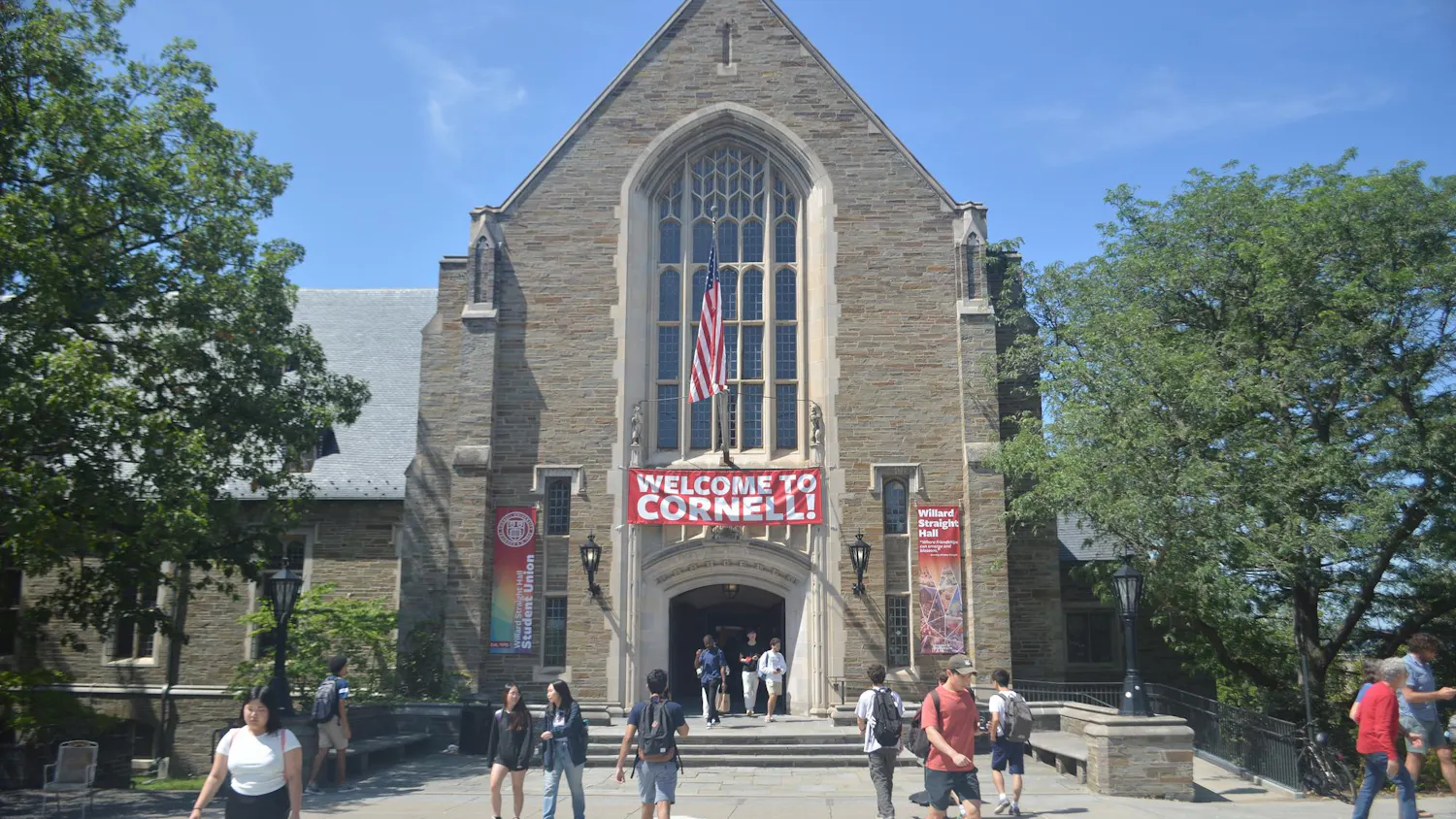
David Duffield’s $371.5 million gift to Cornell University is being celebrated as a triumph of innovation, vision and progress. New laboratories will be built. Nanoscience will advance. Engineering will bear his name for generations. And yet, for all its magnitude, the gift is ultimately irrelevant to the most urgent problem we face: how to keep ourselves from destroying one another.
Science, engineering and technology are extraordinarily good at responding to immediate crises. They help us ease the pain of cancer, streamline work life, optimize payroll systems and slow environmental collapse. These are vital achievements and they often arise out of curiosity, creativity and the desire to better humankind. But because they are fundamentally reactive and deal with the physical world, they address symptoms, not causes. They treat just the surface of a deeper human disorder: our capacity for cruelty, denial, groupthink and moral evasion. What we lack is not intelligence, efficiency or innovation. What we lack is wisdom.
David Duffield’s career — founding PeopleSoft, Workday and Ridgeline — embodies the modern faith in systems. But systems, as the Business Insider critique of Workday reminds us through POSIWID (“the purpose of a system is what it does”), are indifferent to human suffering. Workday may streamline organizations, but it also generates frustration, alienation and bureaucratic absurdity on a massive scale. At the University of Washington, its rollout became a fiasco requiring teams of consultants just to repair the damage caused by software meant to ‘fix’ work. This is not a moral failure of engineering; it is its limitation. Systems optimize processes. They do not cultivate conscience.
The band DEVO understood this decades ago. Their theory of ‘devolution’ warned that technological advancement does not equal moral progress. Formed in the shadow of the Kent State shootings, DEVO saw clearly what many still refuse to confront: human beings regress even as their tools advance. Their song “Beautiful World,” set against images of police violence, the KKK and bombings, insists that optimism without reckoning is a lie. The future promised by mid-century technology did not materialize. What arrived instead was regression with better machines.
Shakespeare said it plainly centuries earlier: “The fault, dear Brutus, is not in our stars, / But in ourselves.” We are endlessly inventive in arguing that STEM research, systems and tools will improve humanity’s lot. And while new discoveries in research can better our immediate lives and short-term future as a species, the relevant, long-term issue goes unaddressed. This evasion is the oldest human reflex.
For 16 years, I have worked with incarcerated individuals through theater. I have witnessed transformations no algorithm could predict and no system could engineer. Men and women discarded by society — labeled irredeemable — have shown me more intelligence, generosity, talent, vulnerability that comes from self-awareness and — perhaps most important — more moral clarity than many people who have never known confinement. Theater does not fix them. It reveals them — to themselves and to one another. It forces responsibility, empathy and imagination into the same room.
That is why the arts, and theater in particular, are not luxuries. They are not ornaments to be funded once the ‘real work’ of science is complete. They are the real work. Theater confronts the duality of human nature that DEVO warned about and Shakespeare dissected. It exposes the stories we tell ourselves to avoid accountability. It makes visible what systems render invisible: suffering, contradiction and moral choice.
Cornell’s celebration of Duffield’s gift is understandable. Universities survive on capital, and engineering drives measurable progress. But if the institution truly wishes “to do the greatest good,” it must answer a harder question: What prepares us not just to build the future, but to inhabit it without destroying one another?
We do not need more proof that we can innovate. We need spaces where we can reckon. Where we can confront violence, power, shame and responsibility without hiding behind efficiency. No amount of nanoscale engineering will teach us how to live together. No enterprise platform will save us from ourselves.
Only the arts ask us to look directly at who we are — and to decide whether we are willing to change.
Professor Bruce Levitt is a professor in the Department of Performing and Media Arts. He can be reached at bal5@cornell.edu.
The Sun is interested in publishing a broad and diverse set of content from the Cornell and greater Ithaca community. We want to hear what you have to say about this topic or any of our pieces. Here are some guidelines on how to submit. And here’s our email: opinion-editor@cornellsun.com.