Once again filling the vast arena of Barton Hall’s indoor track with pulsing music, flashing lights and a packed audience, the performances at PAO Bhangra XXIII were every bit as explosive as the name of the showcase implies. Hosted by Cornell Bhangra, this year’s annual celebration of Punjabi culture featured groups from across the nation: MIT Bhangra, Princeton Bhangra, Buffalo Bhangra, Binghamton Bhangra and Apna Virsa Academy — each with a unique performance, but the same glowing smiles.
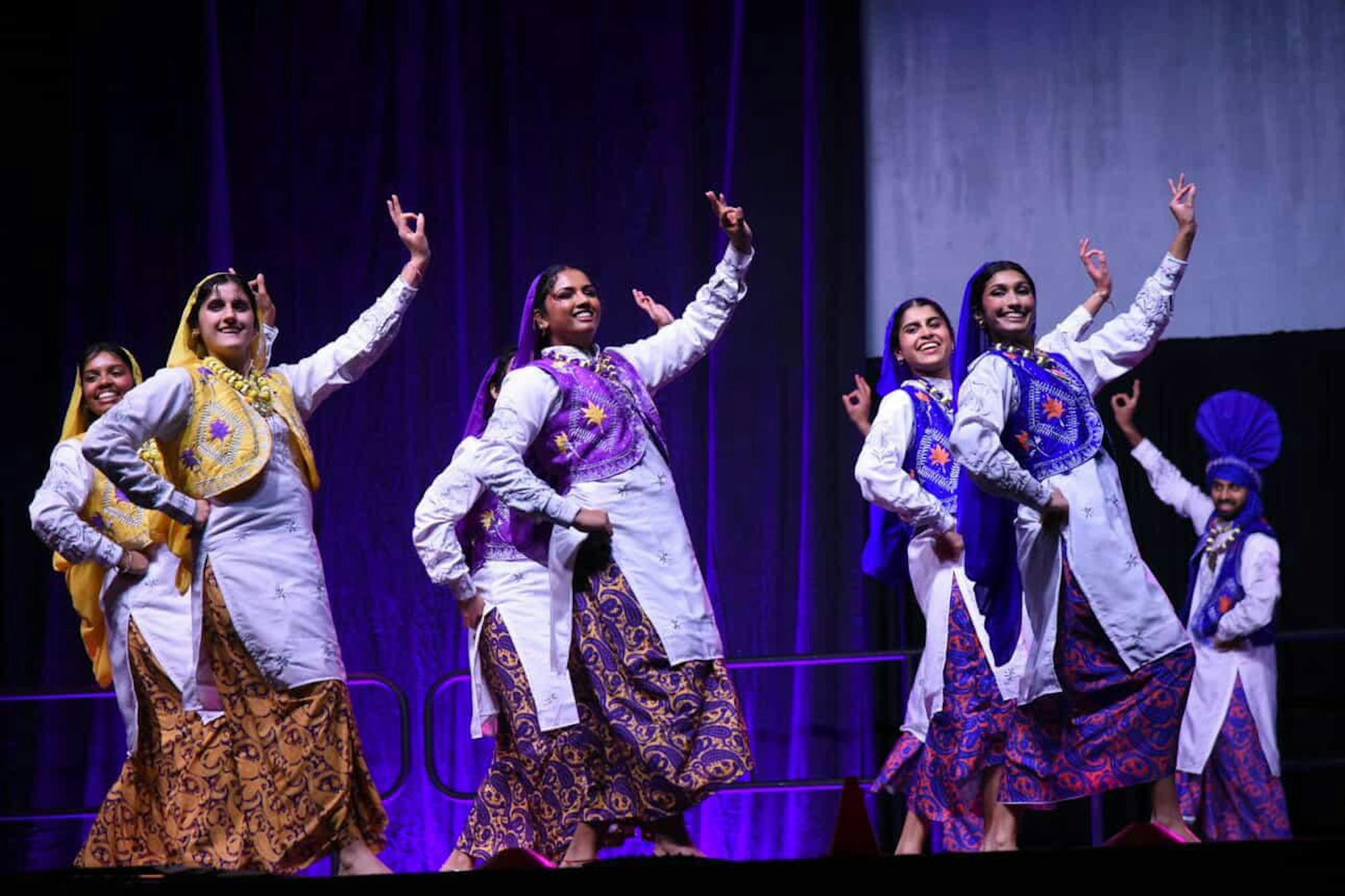
Bhangra comes from the Punjab region in South Asia, which bridges Pakistan and India, and in Punjabi, bhangra means “intoxicated with joy.” The performances featured light bouncing foot taps, kicks and hops with extended arms that projected energy throughout and beyond the stage. Dancers would sometimes pick up khunde — long wooden staffs symbolizing strength — and spin, shoulder or hold them extended to create bolder and more grounded moments. Another prop, saaps — wooden lattice instruments with handles on the ends so they can be rapidly extended and snapped back together — added rhythmic energy and dramatic flair to the performance. Similarly, the dancer’s traditional colorful costumes, known as vardhi, were a vibrant visual celebration of culture, life and light. To top it all off, the music blended a traditional South Asian style with the steady beat of hip-hop and rap, fashioning a sound that never failed to get my head bobbing.
Most of the visiting groups had about eight members who performed a single extended number to the beat of the thrumming music. Each performance drew forth rousing cheers from the audience, but each group concluded their performance with a team cheer of its own before leaving the stage. Cornell Bhangra showcased four spirited numbers: one by the club, one by alumni, one by the Kudiyan (female) members and one by the Mundey (male) members. The program also included guest appearances by hip-hop dance group BASE Productions and South Asian a capella group Tarana.
My favorite performance was by the youth-focused Apna Virsa Academy. As one of the larger groups, Apna Virsa Academy brought all ages to the stage, from adult coaches to elementary school students. The music began, and for a while, the group just bobbed to the music, building anticipation for their performance. Once they dropped the tension and began to dance, their rapid choreography was astounding. Partially, it’s just hard for anything to beat grinning kids who nail move after move in front of a live audience.
PAO XXIII was an incredible event put on by a club now in its 28th year, preserving, celebrating and sharing Punjabi culture through dance. Cornell Bhangra has performed not only around Cornell but also on stages as large as America’s Got Talent and the Macy’s Thanksgiving Day Parade. Not to mention, watching a PAO Bhangra performance holds a spot as #57 on The Cornell Daily Sun’s very own “161 Things Every Cornellian Should Do” list. Yet, despite these accolades and despite PAO being one of the largest Bhangra exhibitions in the U.S., one of Cornell Bhangra’s primary goals remains promoting the joy of performing. PAO Bhangra brings together Cornell University students, faculty, staff and members of the broader Ithaca community for a thrilling night of dance and music. Whether it’s beginners, college students, kids, professionals, Cornell alumni or the audience, everyone at PAO has the chance to smile, cheer and dance, even if it’s just a little bobbing of the head.
In addition, the joy of PAO extends beyond Barton Hall, with all proceeds of the event supporting the Ithaca Welcomes Refugees volunteer organization. Founded in 2015, Ithaca Welcomes Refugees works to foster a fair and welcoming environment for refugees and at-risk immigrants in the Ithaca region and allows the club to give back to the community.
If you didn’t get the chance to attend, there is a recording of the performances posted on YouTube, but I would still highly recommend you take the chance to attend PAO XXIV next spring. From the kids chasing each other around the fringes of the indoor track to the samosas and mango lassi at the concessions stand to one PAO sponsor handing out quarter cards with lollipops, the intoxicating joy of PAO is something that you can’t truly experience unless you’re there for yourself.
Wyatt Tamamoto is a member of the Class of 2029 in the College of Arts and Sciences. He is a contributor for the Arts & Culture department and can be reached at wkt22@cornell.edu.