One is hard. A repeat is harder.
Three consecutive titles?
“It’s hard,” said head coach Casey Jones ’90. “[When] you win in the playoffs, you get a bounce or two or something … there's a lot of things that have to go into it. It’s the playoffs — it’s one-and-done.”
As Cornell prepares to defend its two consecutive ECAC championship titles this weekend, taking on Princeton in the semifinals at 7 p.m. Friday, looming large above this team is a feat very few can say they’ve accomplished.
The three-peat.
“I always say that to the guys — the teams that have won together, they're always the ones that come back,” Jones said. “There's a glue, there's a bond between them. That's what makes it special. That’s what we're talking about this week, that opportunity for this group to do that and have that bond together forever.”
The concept of a three-peat is not floating around the Cornell locker room. For the upperclassmen, it is perhaps a subconscious thought, but not something that is clouding the necessary preparation for Friday’s tough semifinal.
Maybe because, with the nature of today’s game, that accomplishment is so rare. The concept of “blue bloods” in college hockey very much persists — the perennial powerhouses of the games, like Boston University, Minnesota, Boston College, North Dakota, etc — but now, rosters can be built like all-star teams. Coaches at any program can stockpile draft picks and talent so that, in just a year, their teams can win championships.
Gone are the days of developing a team for four years, one built to sustain success and win championships at the turn of the calendar year.
Cornell wants to be — and could be — the exception.
“It's a consistency that’s hard to have,” Jones said. “Your team's peaking at the right time for consecutive years, and you’ve got to win in the playoffs, get a bounce or two … it’s hard.”
Cornell: 1967-1970
BEFORE ANYONE ELSE did it, Cornell did it.
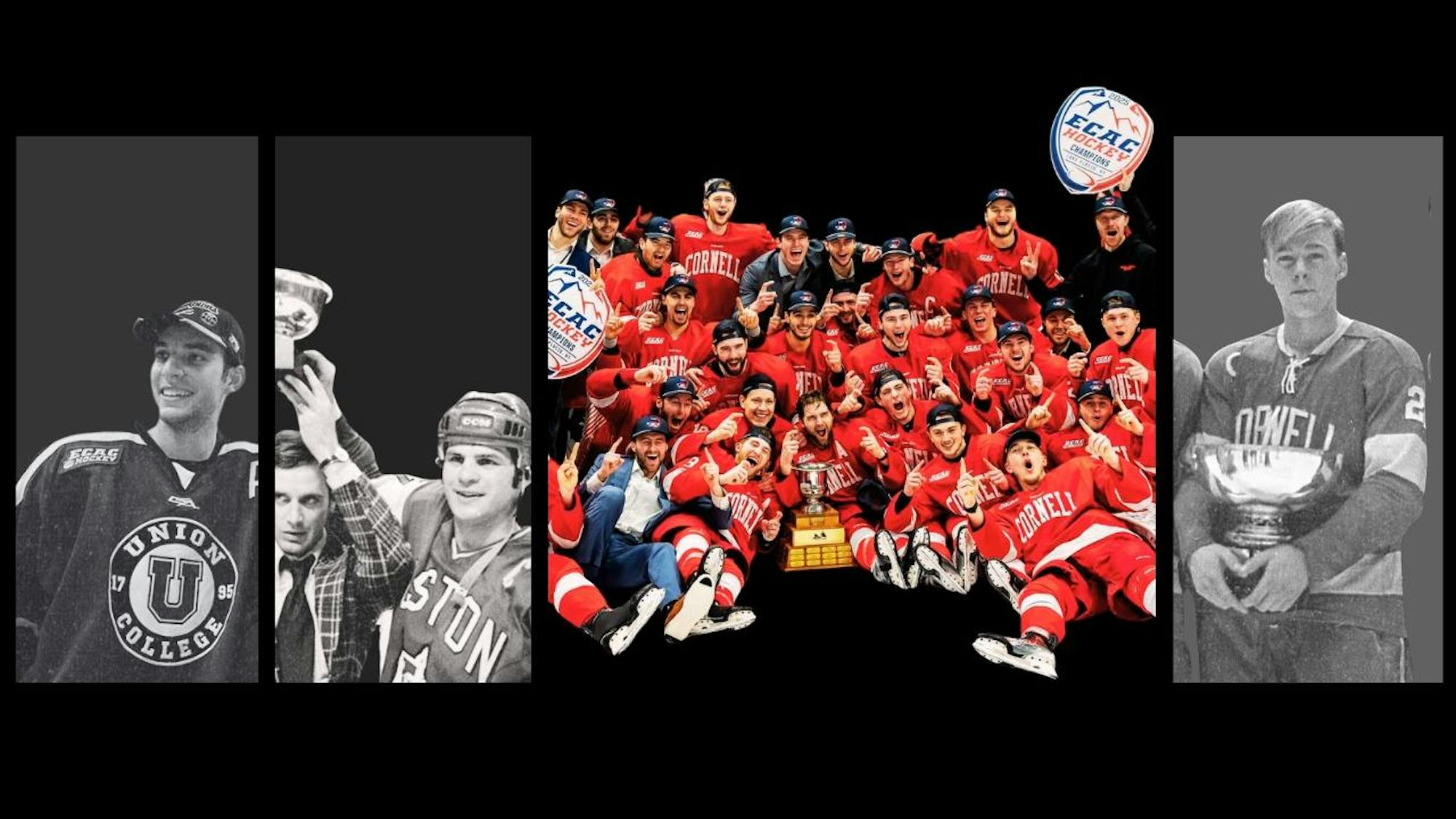
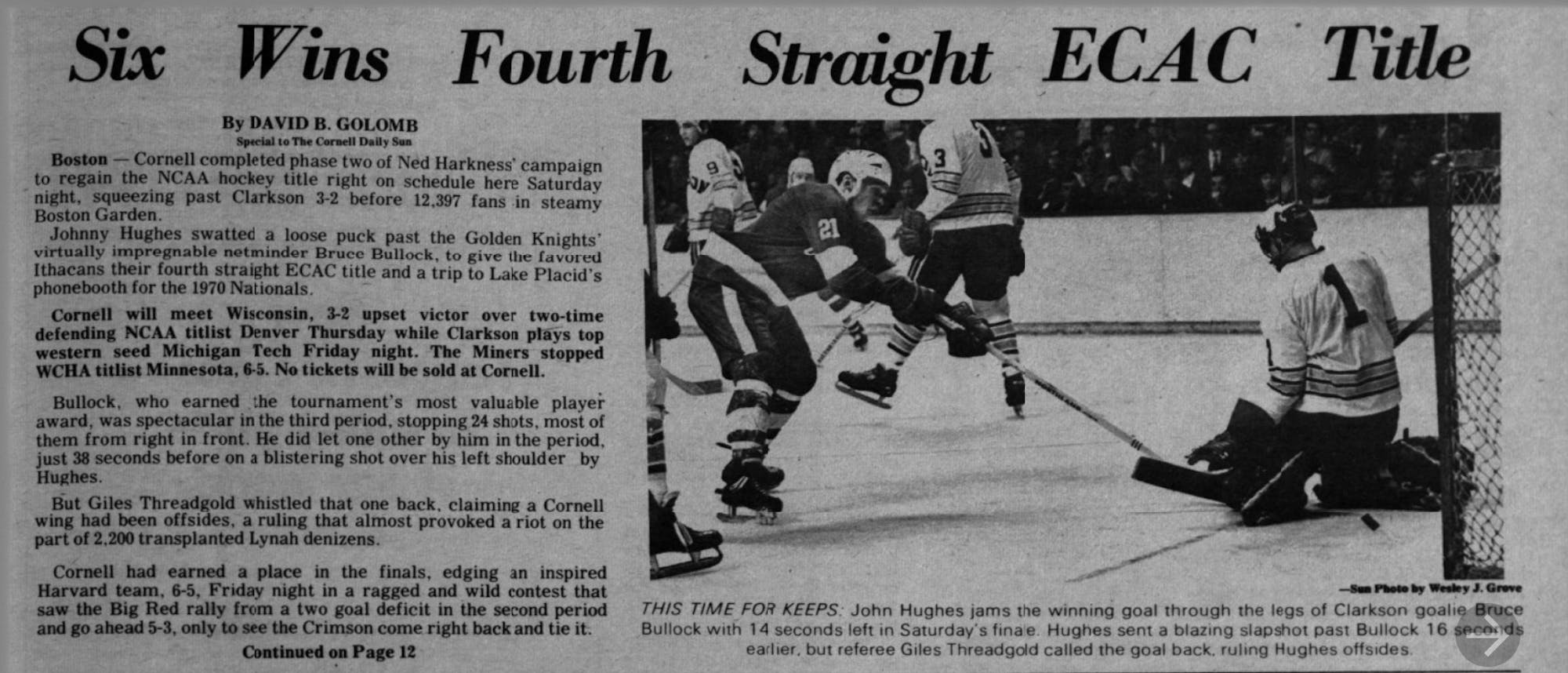
The Red won four consecutive ECAC tournament titles from 1967 to 1970 — the latter part of Cornell’s historic 29-0-0 season, the only season in NCAA history where a hockey team did not lose or tie en route to a national championship.
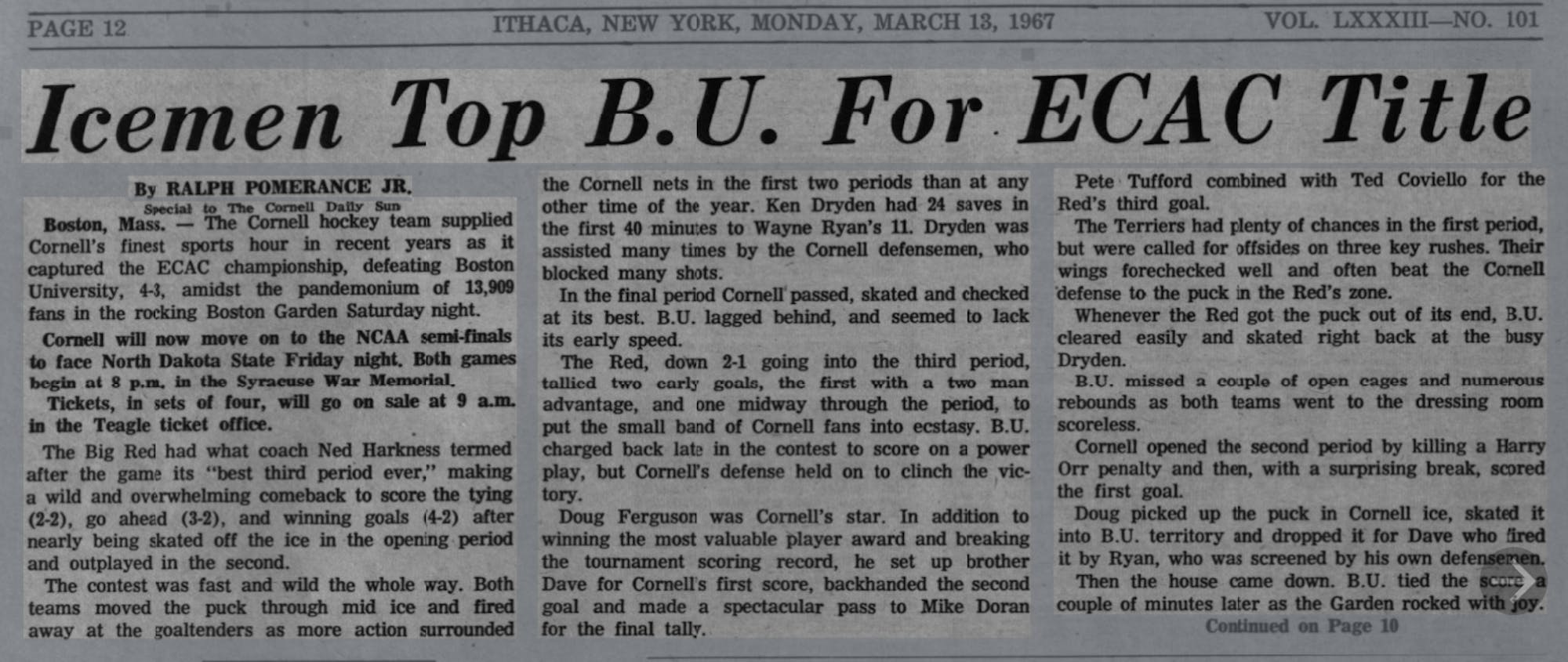
Dubbed the Red’s “finest sports hour in recent years” by The Sun on March 11, 1967, Cornell won its first of four straight titles by topping then-ECAC rival Boston University, 4-3, in the old Boston Garden.
The jam-packed arena “rocked” as the Red came from behind in the third period to cement the title in legendary coach Ned Harkness’ fourth season at the helm in Ithaca. Harkness did not take losing lightly, and would win “in no fashion but the finest,” The Sun wrote, using “depth and forechecking” to emerge victorious.
Sounds a lot like the modern-day version of Cornell hockey.
"Ned hated to lose and did whatever it took to win. He'd make up any kind of story. If we beat a team a month ago by five goals, he'd come up with some story about they played somebody, and then they played somebody else and they only lost by two. That was his way of getting us going," said Pete Tufford '69, who as a Cornell skater won ECAC titles in 1967, 1968 and 1969. "He was a fierce competitor. During practices, he would get a little feisty. He knew how to get the players who were not producing to produce. He knew who to pat on the back and who to get feisty with. That was his thing."
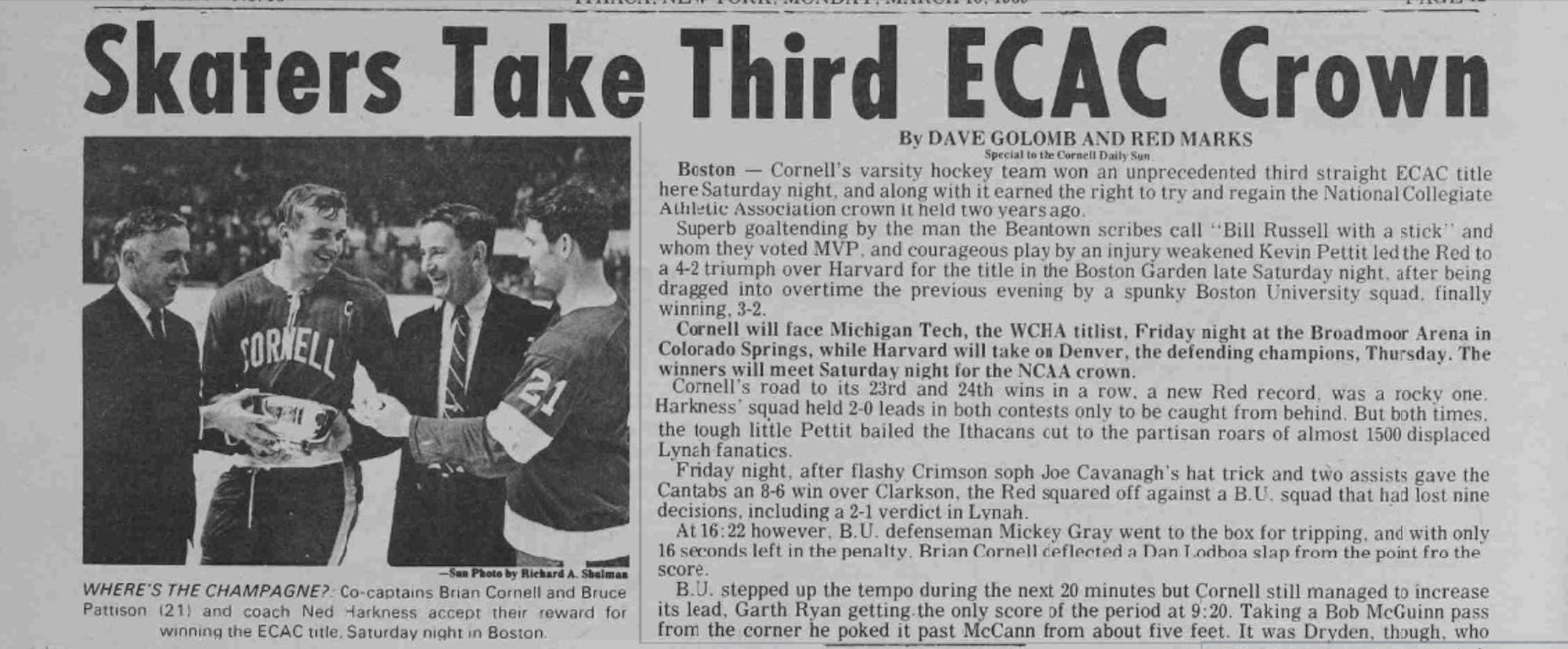
That intolerance for winning is a common thread woven throughout the teams that have achieved greatness in the ECAC tournament. It is a state of mind that stuck with Harkness, who led Cornell to its first-ever national championship during that 1966-1967 season, as he went on to win the ECAC title the following year.
And the year after that. And the year after that.
Many are still in awe of those Cornell teams of the late 1960s.
“Being part of that legacy, and that club — it would mean everything,” said current junior forward Jonathan Castagna. “Because the reason why we play the game is to be champions.”
“You talk about a golden age,” said longtime Boston University broadcaster Bernie Corbett. “I mean, there were great Harvard teams, great [New Hampshire] teams that just couldn't win the big one despite how talented they were, great Cornell teams.”
The 1969-1970 season is forever etched in hockey history — as if the 1968-1969 season’s 27-2-0 record couldn’t be topped, the following year delivered a perfect 29-0-0 record, with an ECAC championship victory over Clarkson, 3-2, in the title game.
But as senior captains Dick Bertrand and John Hughes — who scored the game-winning goal against Clarkson in the 1970 ECAC title game — soon graduated, so did the ECAC to a new era of dominance.
Enter Boston University.
Boston University: 1974-1977
THE TERRIERS WERE not to be taken lightly.
“You had some unbelievable high-end talent on those teams,” Corbett told The Sun.
How much talent? Well, in 1973-1974, the Terriers had a talented new freshman, hailing from a big family in Winthrop, Massachusetts, who played like a ball of energy, unrelenting.
His name was Mike Eruzione.
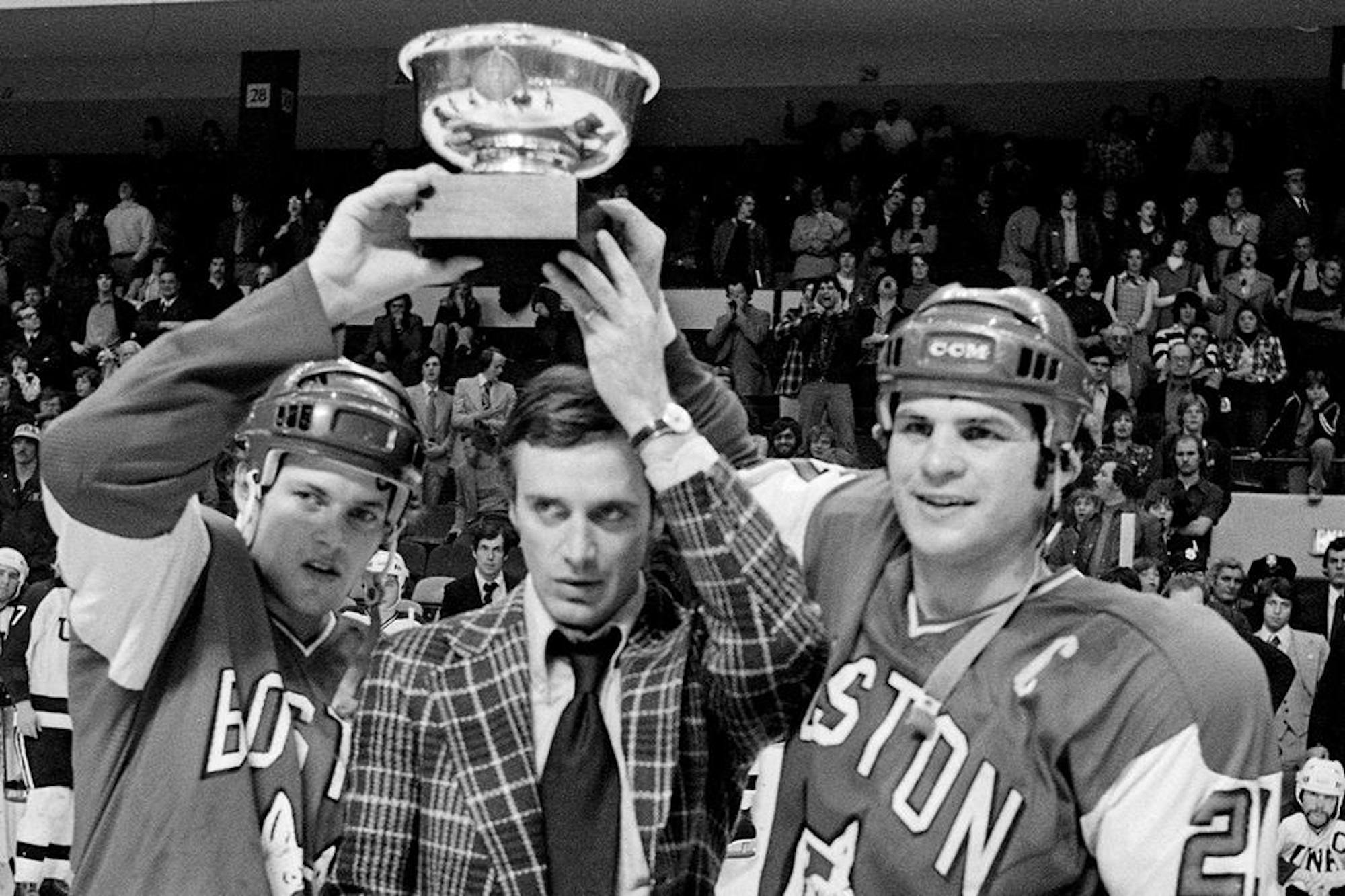
Joined by fellow freshman Rick Meagher, the two transformed the Boston University program under legendary head coach — early in his career at the time — Jack Parker.
“Eruzione and Meagher entered as freshmen, and they exited BU four-time ECAC champions, and the one and two all-time leading scorers at BU at the time,” Corbett said.
Parker took over at the helm midway through the 1973-1974 season, and by the end of the 1976-1977 season, the Terriers had amassed a 95-27-2 record and four consecutive ECAC titles.
It helped, too, that BU was boasting the likes of four future Olympians on the 1980 U.S. hockey team — goaltender Jim Craig, forwards Dave Silk and Eruzione and defenseman Jack O’Callahan.
“I just got used to being spoiled with the success of these teams that I watched,” Corbett said. “I mean, they were good or great every year. … There wasn't much of a drop off. You knew that they were going to be one of the top teams every year.”
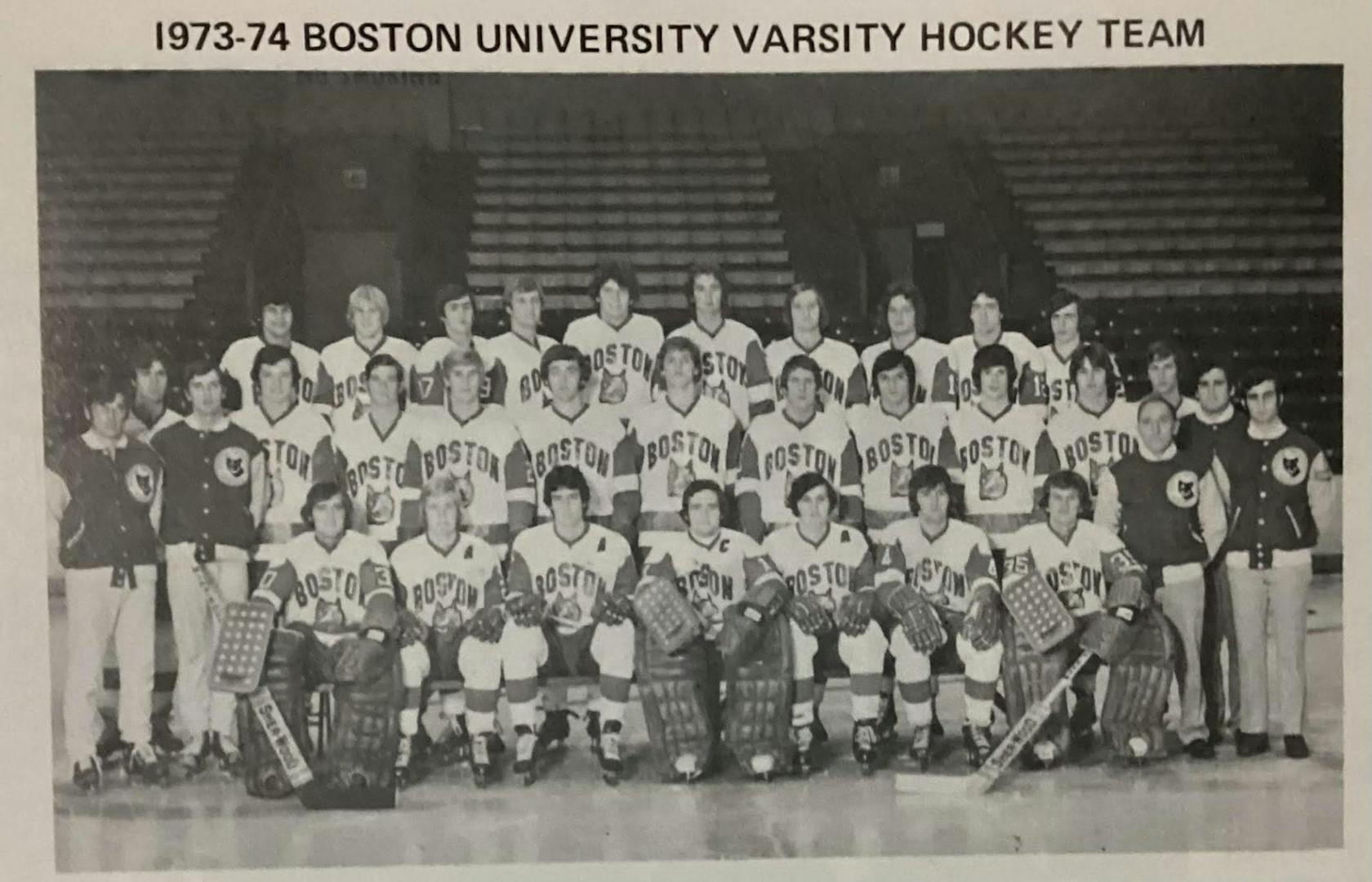
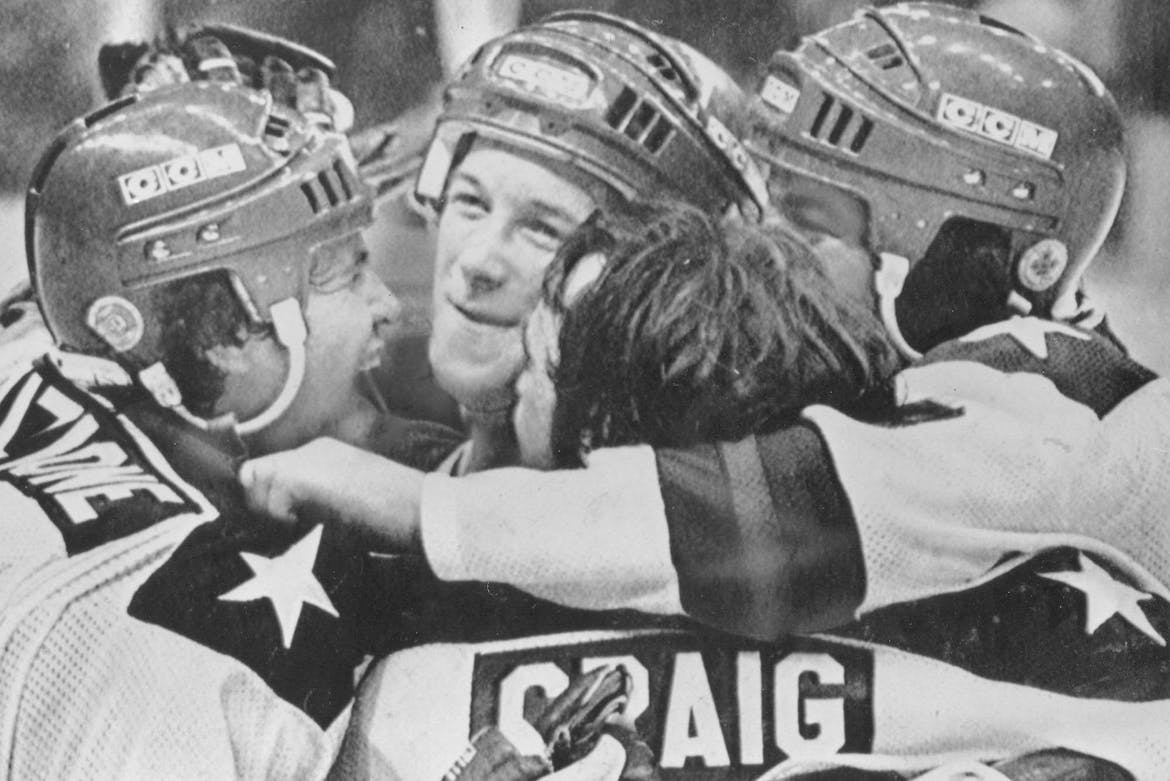
Though the Terriers are now in the limelight for their modern-day rosters, chock-full of draft picks and blue-chip talent, the BU teams of the 1970s revolutionized roster building. When you examined the makeup of NCAA teams at the time, none were very diverse.
Cornell’s dominant squads of the late ’60s were built primarily on Canadian talent — Harkness, an Ottawa, Ontario native, largely sourced his recruits from his home province. When you ventured west to Minnesota, Herb Brooks’ 1970s Gophers were composed of Minnesota natives. At Boston College, never would a Canadian don the maroon and gold — Massachusetts folk were prioritized.
BU, though, dotted all over the map — on that 1966-1967 roster, you had Eruzione, a Massachusetts kid through and through, but also Vic Stanfield (Mississauga, Ontario), Pat McMahon (Winnetka, Illinois), Scott Nieland (Edina, Minnesota), John Bethel (Montreal, Quebec) and so many others harmoniously blending together.
BU was built not with an agenda to band Boston kids together — it was built to win.
“I think it was not only great players, but I think that there was a great mix,” Corbett said. “And everybody's looking for that. All these coaches I've talked to now, because of how things are changing, [talk] about team building, bringing in the right guys. Now, you've got the [transfer] portal. But it’s about bringing the right guys in who fit your culture.”
Union College: 2012-2014
OVER 30 YEARS passed before anyone did it again.
In 2011, Rick Bennett took over as head coach at Union. Within his first three years on the job, he had achieved the three-peat.
“What really helped, I thought the most, was getting beat the previous years,” Bennett told The Sun. “And the guys realized, you know what, we really had something to shoot for here. And let's just say they weren't happy about it. So they did something about it that first year.”
Union’s rise to prominence — culminating in a national title in 2014, after winning its third straight ECAC championship a few weeks earlier — was not built on future Olympic talent like BU, nor did it achieve a perfect undefeated season like Cornell.
At Union, there was no pressure to defend a title. At the dawn of a new season or a new playoff, the mindset was simple, largely spearheaded by then-captain Mat Bodie.
“We weren't defending anything,” Bennett said. “And that was coming from our captain, Mat Bodie, who was dynamite with that. We're not defending it. We're just trying to win, just like those other teams are. And I really liked that, and that's what we kind of stayed with.”
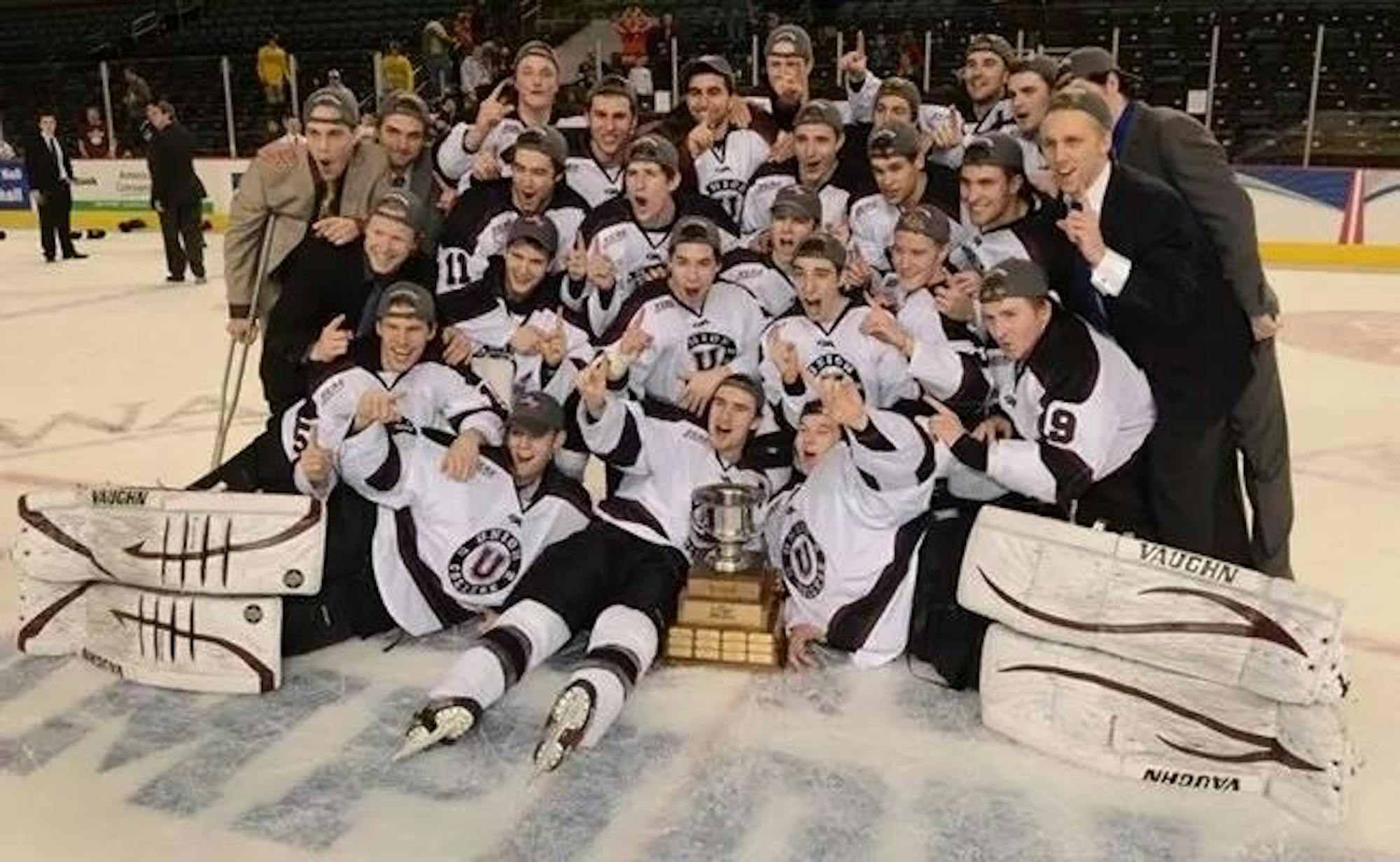
Bennett and the rest of his Union squads didn’t want to build up the playoff runs to be anything more than a few more hockey games. The first one in 2011-2012 was big — Union had never done that before.
But beyond that, it was business as usual. In 2012-2013, Union finished fourth in the ECAC, and had an uphill climb to claiming the Whitelaw Cup. In 2013-2014, the team eventually won a national title, but not before clinching its third consecutive ECAC championship.
“I don't remember talking about [winning three in a row],” Bennett said. “It was a goal of ours. But at that time, it wasn't the ultimate goal — the ultimate [goal] was to win a national championship. It was everything that we talked about at the beginning of the year in the opening meeting.
“But part of the mountain that we wanted to take a piece of was trying to win that league set us up.”
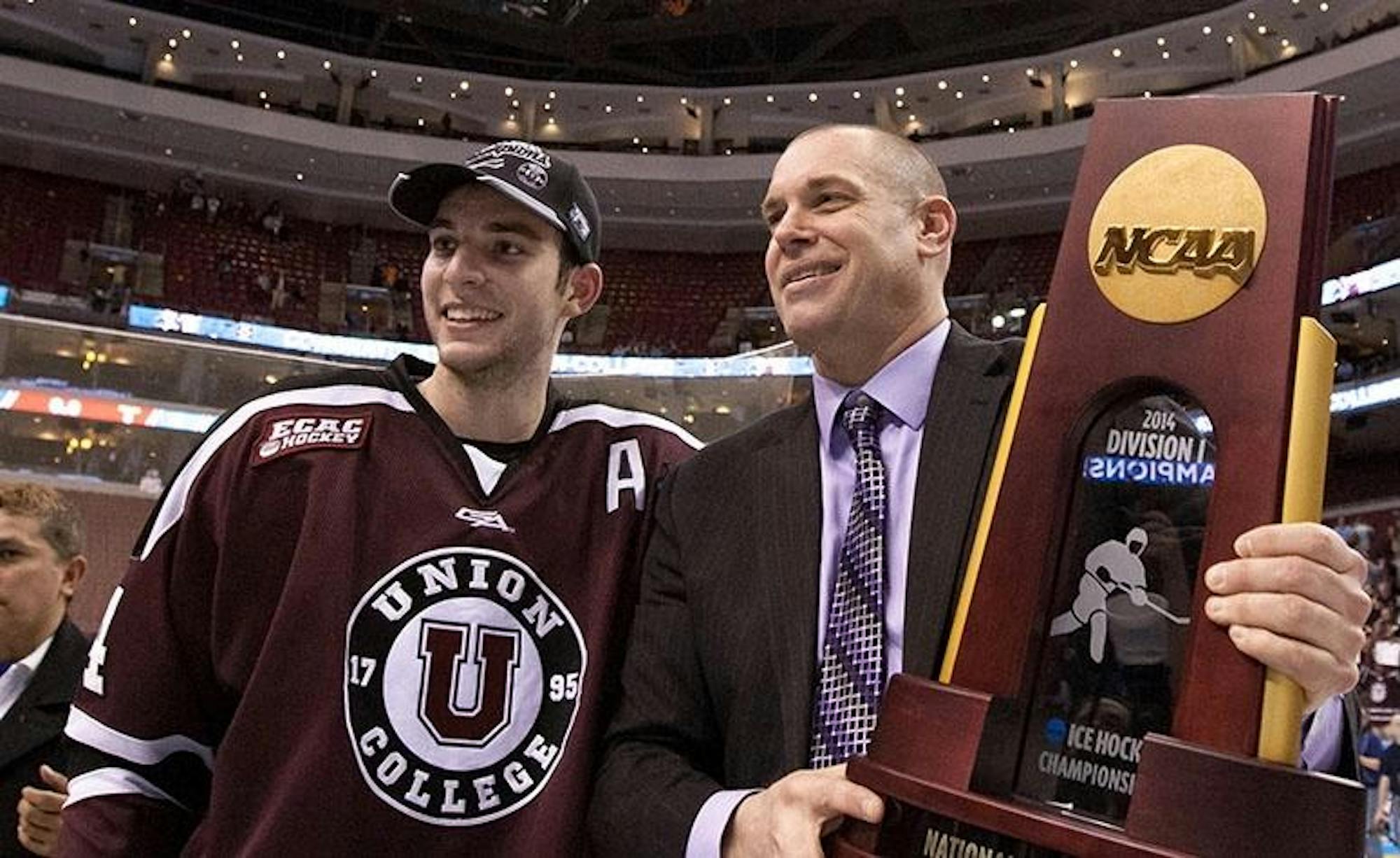
That mountain was something Bennett mentioned multiple times — as his Union squads reached the pinnacle of the ECAC, they had scaled it. But once they reached the top? Go back down and do it all again the next year.
“We were climbing the mountain,” Bennett said, “but we didn’t have to carry the mountain, so there's a big difference.”
***
ALL THREE PROGRAMS completed their three-peats (or four-peats) in different ways.
But there is one thing everyone can agree on — doing it now, in this day and age, is nearly unprecedented.
“Kudos to Cornell if they can pull it off, because it's probably harder now with everything going on outside,” Bennett said. “As I always say, there's so many channels on the TV for these players that they're long gone. So you never really have a chance to put it together for a string of a few championships.”
Now, it is common for players to leave college early to sign professional contracts. Especially since Nov. 7, 2024, when the NCAA granted major junior Canadian Hockey League players NCAA eligibility, practically doubling the player pool for college programs and opening up new pathways that hadn’t existed before.
More and more NHL draft picks are playing college hockey than ever before. But finishing college — staying with one program for four years — has become rare.
Which is why this opportunity for Cornell is so massive — by winning a third consecutive title, it proves that blue-chip talent and coveted NHL prospects are not the end-all, be-all to success in college hockey.
“You look at the teams are in the top 16, there are some so-called blue bloods [on the] outside looking in right now,” Jones said. “For us, more or less, it just shows that there's a consistency with building a program. We’re hoping that have a crack at it every year. You want your guys to have a crack at it every year, right? And to say that you're going to win it on a regular basis is tough.”
“To be able to do that three times in a row, it puts a little bit more pressure on this one,” Castagna said. “But pressure is a privilege, so we’re looking forward to trying to do that again.”
Jane McNally is a senior editor on the 143rd editorial board and was the sports editor on the 142nd editorial board. She is a member of the Class of 2026 in the College of Agriculture and Life Sciences. You can follow her on X @JaneMcNally_ and reach her at jmcnally@cornellsun.com.