I’ve been avoiding writing about homosexuality in Greek Life for a simple reason: discourse invites over-examination. As Michel Foucault suggests, turning something into discourse can overexpose it, thereby imposing new labels around masculinity and secrecy in fraternity life. In other words, I’m risking reinforcing the very structures of sexual exclusions I seek to eliminate. However, I believe myself capable of writing on the topic without being overly hubris or grandiose — an almost impossible task as a columnist, I know.
The first thing I’d like to establish is this: It is not groundbreaking to be gay in Greek Life, but I think you’ll find my reasoning as to why different from your presuppositions.
My experience as a gay man in a fraternity is evidently not generalizable to every gay man in a chapter or attempting to rush one. Much of the discussion I’ve seen, especially those that criticize fraternities’ close-mindedness, is the latter: the rush process.
During rush you’ll find credulous freshmen assimilating to conceptions of what fraternity men should act like: ‘Hyper-masculine’ and interested in sports, gambling, beer die — and most pressingly — women. Safe to say I’m not into any of those, yet here I find myself in a fraternity and still building some of the most meaningful relationships of my life. I won’t deny that these attributes matter in fostering belonging, yet across all facets of life we’re all in search of people who reflect who we are. The assumption that all of Greek Life considers only these homogenized interests is chiefly untrue.
This is the crux of what I argue — if you face any club or community, let alone Greek Life, with a singular defining characteristic (say your sexuality) you will be faced with the judgement of only said characteristic. Not to be holistic and all, but the reduction of your intersectional identity to one defining trait, as the topic of critique, is reinscribing the very repression you aim to challenge. You don’t see people applying to college or jobs with the sole attribute of being queer.
This argument isn’t anti-pride or anti-representation — it's pro-belonging. June will come around and you’ll find me parading the streets of D.C. with a pride flag, and September will follow with me partaking in brotherhood events at Lambda Chi Alpha. Two things can be true at once.
I prefer to integrate in places I feel like I belong, not because I’m entitled to belong but because I seek to belong. Baseless exclusivity is present in every community: some people aren’t ‘pretty’ enough, trans women aren’t ‘woman’ enough, mixed people aren’t ‘black’ enough — these types of singular limitations are based on presupposed requisites of identity that result in certain people feeling ostracized. I believe Greek Life is moving toward eliminating these preconceptions and exclusivities, even if it's not fully inclusive yet.
When asked to comment, the Cornell Interfraternity Council responded similarly, “Our goal is to help students find a sense of belonging without feeling pressure to conform to a single definition of fraternity life,” stated IFC President Harrison Fredericks. However PR-trained their response was, it shed light on growth which I agree is in motion. “We’ve seen meaningful progress in building a more inclusive culture and remain focused on continuing that momentum,” he continued. Fredericks vaguely affirmed that there are “conduct and accountability processes” to help combat discrimination. Their statement confirmed what I contend: There is no active push toward more gay men joining Greek Life, yet there is a heightened acceptance of it within Cornell chapters. That’s not great, but it's better.
I understand this may be where you begin to feel skeptical and where I may become slightly hubris, but let us explore this transformation within Cornell. When I’ve talked to the fourth-year gay guys in my house, they can recall a time when bringing another man to date night, let alone being fully out of the closet, was a huge controversy. Today, we are seeing same sex couples at date nights and formals and I can confidently say that every fraternity chapter at Cornell has at least one queer member — closeted or not. Within that, they've taken up important executive roles: presidents, treasurers, rush chairs and especially social chairs — like myself. This must be why Charli XCX is played so often at frat parties nowadays.
In all seriousness, there is a space for gay men to occupy historically straight spaces. Yet, not all gay men need to and not all gay men want to. I have both straight and gay friends, who simply don’t vibe with the concept of fraternal brotherhood. Notwithstanding, there are certain chapters at Cornell that aren’t nearly as inclusive as they should be, because they simply don’t want to be. This doesn’t alleviate them of fault, it just segregates them further into a pit of toxic masculinity. A pit dug by their own choosing. As a gay man I have no interest in joining those types of chapters, the same way they have no interest in having me try to join.
The same applies to fraternities with closeted members: the more they are forced to hide the more toxicity will be generated within a brotherhood that strives toward “respect, inclusion and accountability,” as Fredericks put it. I wouldn’t apply to work at the Republican National Convention, but that doesn’t negate its validity and necessity within a free society of dissent. Grindr will continue crashing when they meet for conventions, and internally they’ll realize that their suppression of identity is only hindering their authenticity as a cause and organization..
Until then, the Grindr locations accumulating in repressed fraternity houses will remain in the shadows, while the reformed chapters that have accepted the preeminence of human connection over sexual preference will prevail as the healthiest form of Greek Life. This is something well in the making, and something I am utterly proud to be a part of.
The Cornell Daily Sun is interested in publishing a broad and diverse set of content from the Cornell and greater Ithaca community. We want to hear what you have to say about this topic or any of our pieces. Here are some guidelines on how to submit. And here’s our email: associate-editor@cornellsun.com.

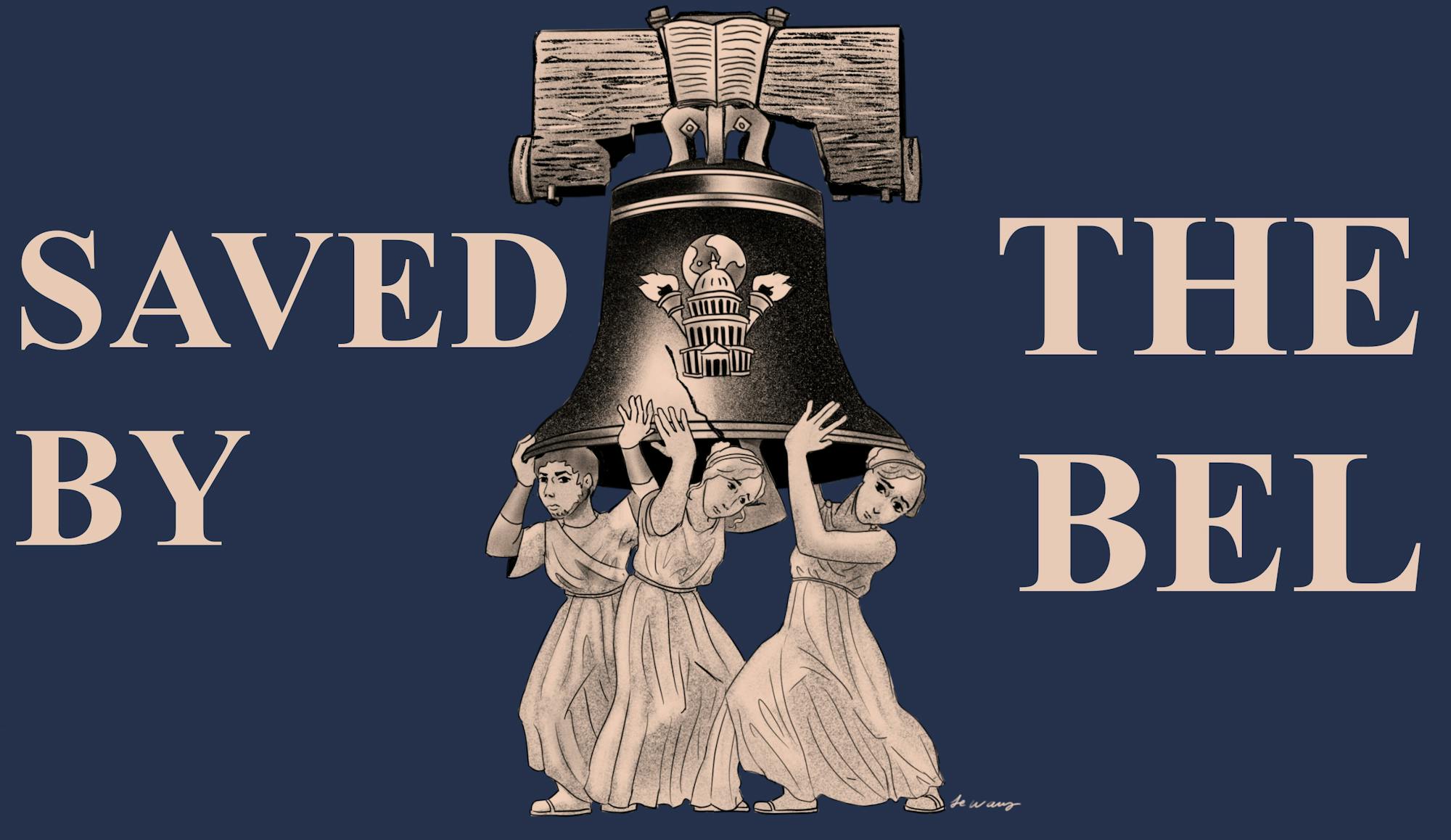
Adrian Belmonte '28 is an Opinion Columnist studying Government in the College of Arts & Sciences. Hailing from D.C. and Spain, his fortnightly column Saved By The Bel has a voice as cosmopolitan as it is candid. Belmonte takes on politics and media with clarity and a touch of wit. He can be reached at abelmonte@cornellsun.com.