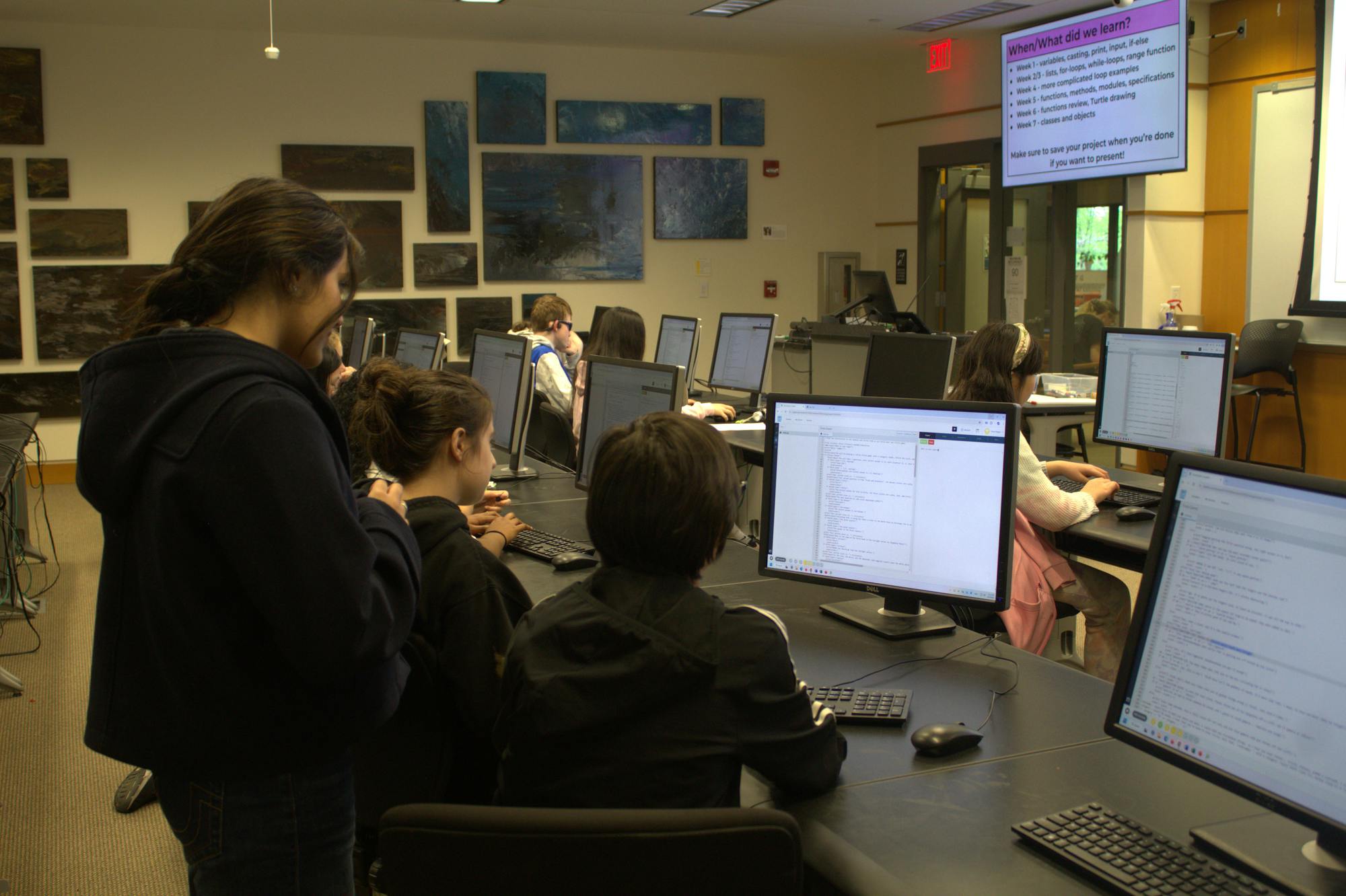
At one Women in Computing at Cornell event last year, students gathered to create vision boards, map out their career goals and talk openly about the stress of recruiting season. For WICC Co-President Douae Maarouf ’27, the moment captured what she said the organization is about: a space where students can connect, reflect and support one another.
Maarouf described the atmosphere using a phrase often repeated within the group, “warm, fuzzy, good vibes” — a place where “everybody is really animated and wants to see you succeed.”
Open to all students, WICC is a student organization focused on supporting women and gender minorities in computing by building both community and technical skills. Through workshops, coding-focused programs, industry collaborations, and hands-on projects, the organization creates opportunities to engage with computing and its applications at various levels.
Organizations like WICC highlight the importance of creating spaces where women and gender minorities in STEM can find both community and opportunity, said Maarouf. At Cornell, WICC serves more than 2,000 members and offers programs that range from social events to career development initiatives, according to Maarouf.
Diverse opportunities
At its core, WICC aims to “support women and gender minorities in computing,” Maarouf said, and provides a space where students can connect, uplift one another and build the skills needed to succeed in technical fields. But for Maarouf, the organization is also about redefining what it means to belong in STEM.
“I knew I was a storyteller,” Maarouf said of her own path into computing.
Initially intimidated by technical fields, Maarouf came to see that “numbers tell a story just as images can,” recognizing that data and technology could be used to communicate ideas, not just perform calculations. This reframed computing as a field she and others could enter without a traditional path.
“Even if you don’t come from a technical background, you can still make a mark,” Maarouf said.
That philosophy is reflected in WICC’s programming. The organization operates across multiple levels, according to Maarouf, including general body events that foster community, professional development programs and initiatives such as “Lunch Bunch,” where students meet weekly with faculty to discuss career paths and academic experiences.
WICC also runs events designed to support students academically, said faculty advisor Prof. Eva Tardos, computer science. One such initiative helps students find project or study partners by grouping them by course and encouraging collaboration across experience level.
Tardos noted that peer guidance can offer insights into coursework and academic paths that are often difficult to access elsewhere.
WICC also emphasizes hands-on experience and interdisciplinary learning, providing students with opportunities ranging from social events and workshops to company collaborations and semester-long projects, according to Maarouf.
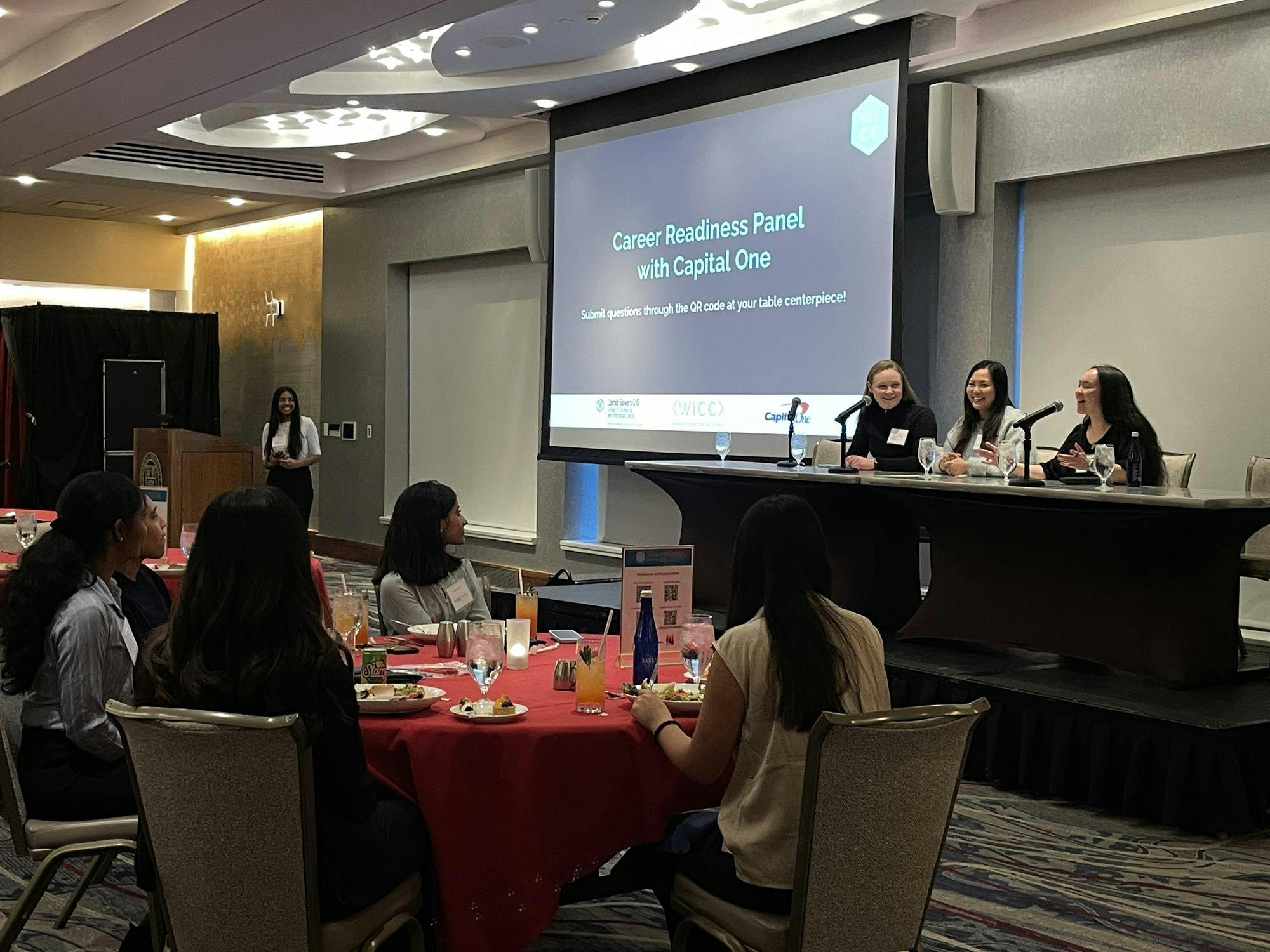
Additionally, WICC connects students directly with industry, frequently partnering with companies who host workshops and professional development sessions. The organization prioritizes working with representatives who can speak to the experiences of women and gender minorities in tech, helping students see themselves reflected in the field, Maarouf said.
Increasing representation
When WICC was founded, computer science was “much more male dominated,” Tardos said. “To be honest, the field is still very male dominated,” she added.
Although progress has been made, Tardos emphasized the importance of organizations that provide support and community.
“It’s not just that [women] are a minority, but that they are often disadvantaged,” Tardos said. “They’re not often treated the best, and so it’s useful to have a community for them.”
Despite growing representation, Maarouf said that challenges remain.
“[Women and gender minorities] will feel as though they might have to work harder to get noticed or get their ideas across,” Marrouf said. “They might feel as if their counterparts are heard more, have to work harder to prove themselves, and be more assertive.”
In some cases, students find themselves as the only woman on the team, which can be both isolating and intimidating, Maarouf said. This lack of representation can have a lasting impact, according to Maarouf. When students don’t see themselves being represented in spaces, they tend to try to remove themselves.
“WICC wants to make sure things like this don’t happen, that women are empowered to stand their ground and belong in those spaces,” Maarouf said.
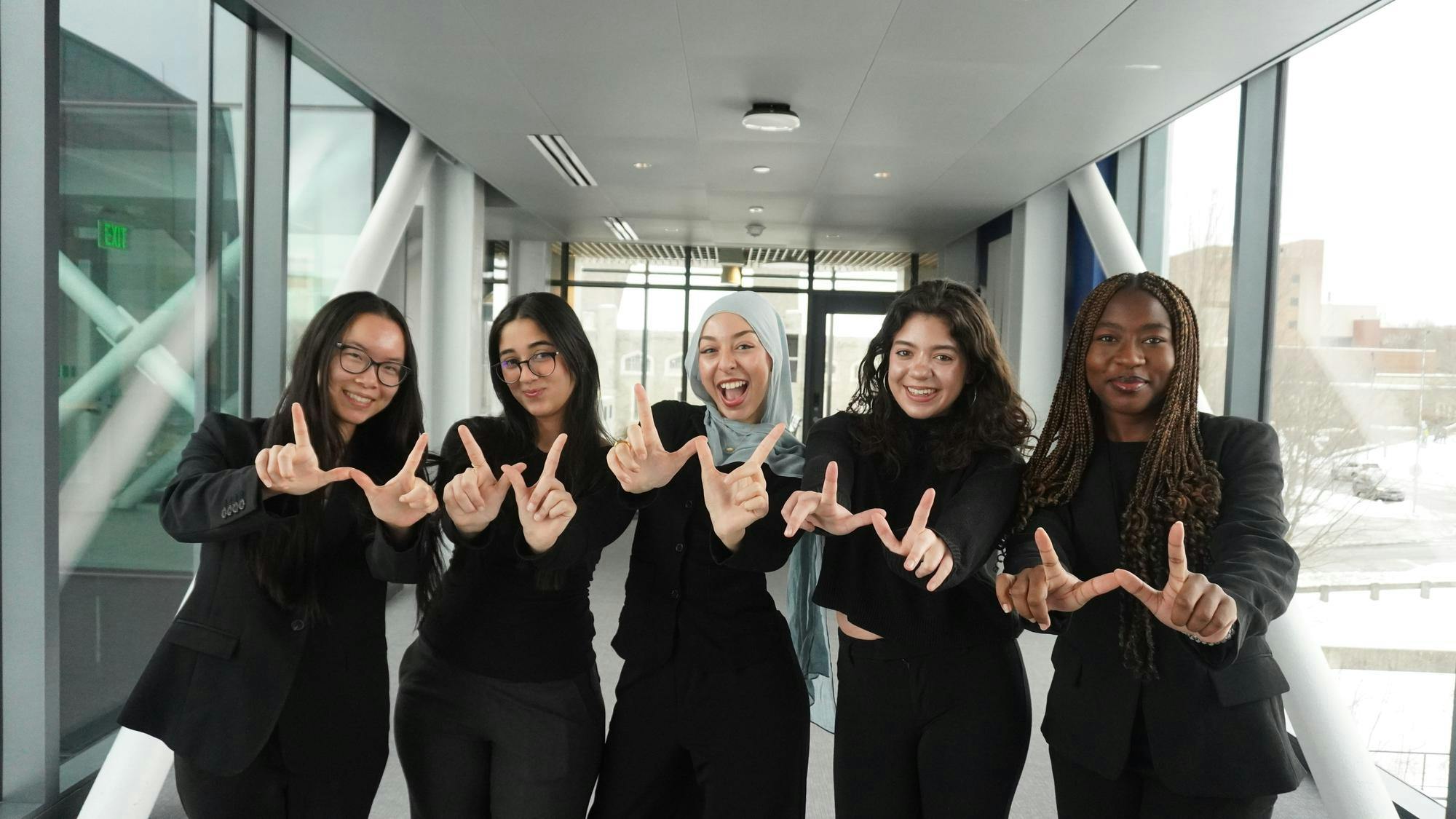
Members of WICC pose for the camera. Courtesy of WICC
For Maarouf, one event in particular captured what makes WICC unique. In collaboration with Cornell Minds Matter, WICC hosted a program focused on navigating anxiety during job recruiting season. The event combined educational aspects, such as breathing exercises for stress management, with more social activities, like sharing goals.
Students stayed long after the event officially ended, continuing conversations and building connections. The experience, Maarouf said, revealed the intimacy of sharing aspirations and ultimately inspired.
A shifting field
As the field of computing evolves, so does WICC’s approach. Maarouf noted that there is increasing recognition that careers in technology are not limited to software engineering and interdisciplinary perspectives, and that ethics, design and policy are becoming more important.
Within WICC, this shift is reflected in a culture that prioritizes collaboration over competition, through cross-team initiatives and partnerships with other organizations, according to Maarouf.
“Good things don’t happen in silos,” Maarouf said.
Looking ahead, Maarouf said the organization anticipates to continue providing a supportive and empowering environment for future students. Beyond professional development, WICC aims to create lasting connections and a sense of belonging that extends beyond college.
“You’ll never regret trying, but you can regret not trying,” Maarouf said.