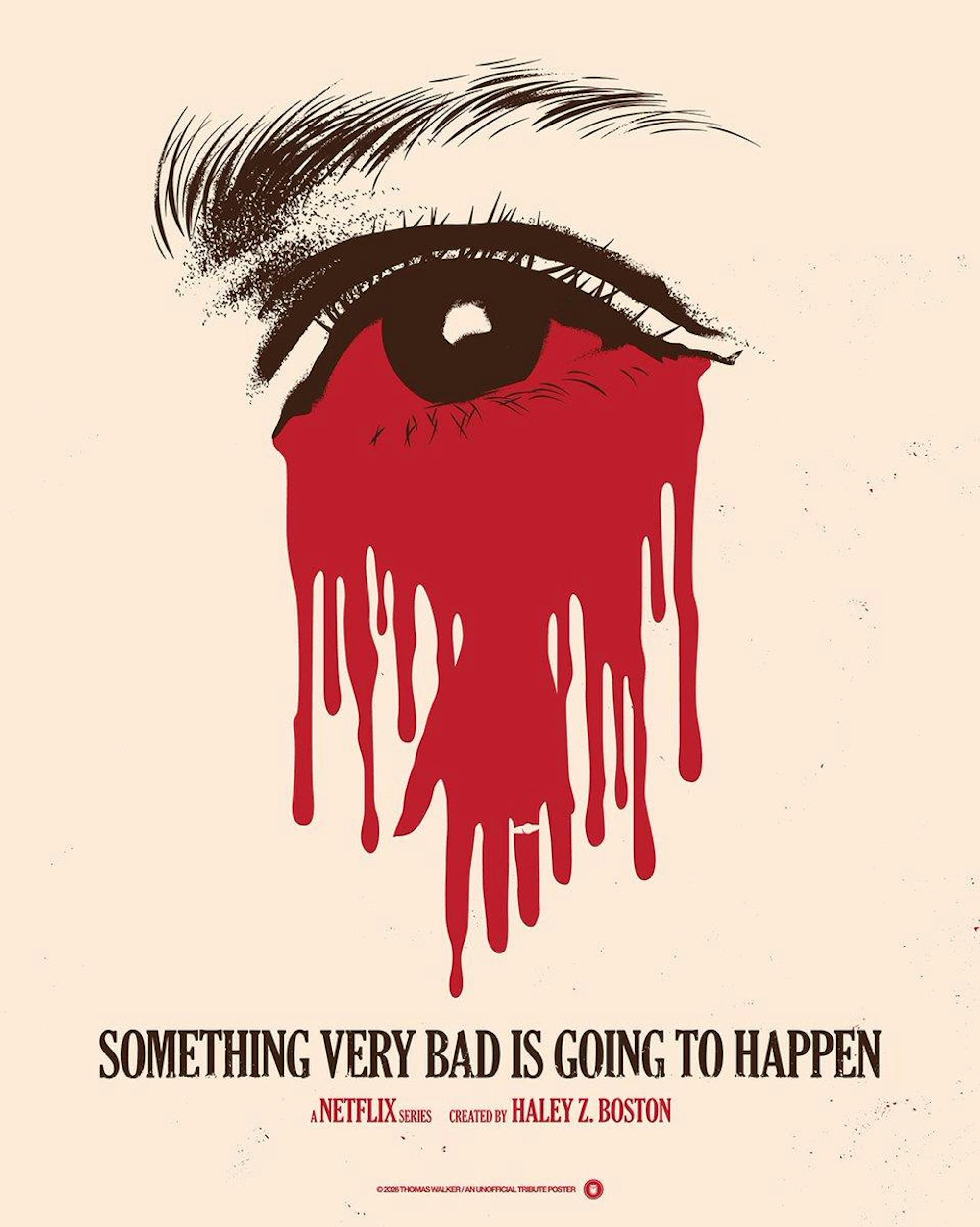
“That’s it, I’m never getting married.” That was quite literally my only thought after finishing the final episode of Netflix’s newest horror saga, Something Very Bad is Going to Happen. Trailers and edits of the eight-part miniseries first graced my feed a couple weeks ago, and I was immediately pulled in by visuals of lead actress Camila Morrone in a blood-soaked wedding gown. If you were as big of a fan of Daisy Jones and the Six as I was in 2023, then you’ll know and love Morrone for her supporting role as Camila Alvarez in the show. This time, however, Morrone took the spotlight as the final girl Rachel Harkin in Something Very Bad is Going to Happen, and she certainly did not disappoint.
Something Very Bad is Going to Happen falls into the “female” subgenre of horror that mainly examines sexuality and the gendered loss of autonomy through film. Alongside the likes of Jennifer’s Body, Midsommar and Rosemary’s Baby, the show primarily focuses on social institutions like marriage and motherhood through the conduit of psychological and body horror, rich with symbolism all throughout. Something Very Bad is Going to Happen opens with happy couple Rachel Harkin (Camila Morrone) and Nicky Cunningham (Adam DiMarco) road tripping to Nicky’s family cabin in upstate New York. We soon find out that Rachel and Nicky aren’t just dating, they’re engaged and planning to get married at the cabin within a week’s time.
The first episode of the show is the outright scariest one, filled with minor jump scares and side characters that made me question where exactly the plot was going. Strange noises in the woods, unsettling encounters with Nicky’s family members, and the chilling tale of a local serial killer and custard business owner named Jerry Poole quickly establish that something deeply wrong is brewing beneath the surface. Not to mention, Rachel’s inclinations of impending doom and obsession with superstitions remain at the forefront of the first episode, almost exaggerating the drama of the events swirling around her arrival at the cabin.
As for that cabin, which actually ends up being a mansion-like compound in the middle of the woods, its residents come with their own unsettling stories of childhood trauma, divorce and terminal illness. The Cunninghams, comprised of Nicky’s brother Jules, his wife Nell, their son Jude, sister Portia and parents Boris and Victoria, are so off-putting, in fact, that for a good portion of the first and second episodes the audience and Rachel are made to believe that the whole family is plotting to murder her.
As the episodes progress and the wedding draws closer, the show deliberately shifts away from traditional pacing. The jumpscares of the initial episodes are replaced with a slower, more psychological unraveling of what exactly it is that’s been making Rachel feel so uneasy since she arrived at the cabin. After being kidnapped by her estranged father, Rachel learns that her mother’s early demise was caused by a family curse that guarantees death if its carriers are unable to marry their soulmate by sundown on their wedding day. Because she has entered a proposal with Nicky, Rachel unknowingly condemns herself to certain death with two devastating exceptions: if she and Nicky truly believe they are soulmates, then they will both survive, but if Rachel leaves him on their wedding day, the curse will pass on to his family instead.
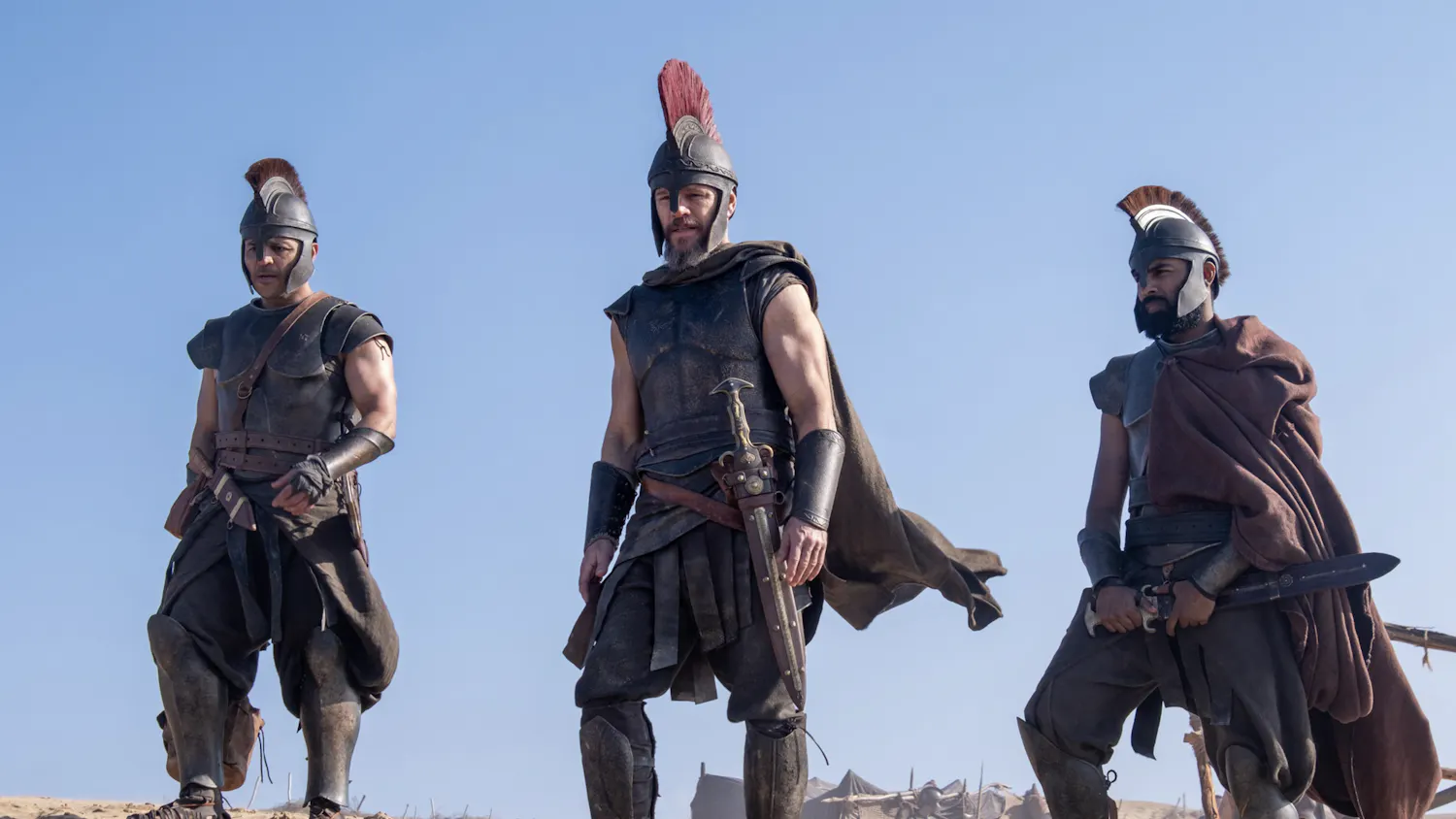
Interestingly enough, the tale of the curse is delivered to Rachel via a mysterious and unlikeable character referred to as the Witness. The show, playing on the traditional role of a witness in customary wedding ceremonies, creates an immortal character whose responsibility is to attend every single wedding in the Harkin family. Once a carrier of the curse himself, the roughly 200-year-old Witness cheated death by leaving his own wife at the altar, thereby condemning her bloodline instead of his own.
After finally discovering the true plot of Something Very Bad is Going to Happen in the fourth episode, Rachel’s story becomes less about whether something terrible will occur and more about what she is willing to sacrifice to survive her wedding. What I most enjoyed about the show was creator Haley Z. Boston’s choice to guarantee survival from the curse if newlyweds truly believe that they are soulmates. After all, it seems rather farfetched for the entire plot to hinge on Rachel somehow meeting and falling in love with the sole person in the world that she is destined to be with. The concept of belief and trust in a romantic relationship is therefore able to come to the fore of the show’s commentary. Rachel’s quest to change herself into Nicky’s perfect soulmate while he does absolutely nothing is all the more effective with this dynamic, exposing the deeply uneven expectations placed on her to fix the curse. The burden of survival, and of proving true love, falls almost entirely on Rachel for the remainder of the series. And despite all her efforts and faith in Nicky, it is ultimately he who leaves her at the altar on their fateful wedding day.
While it might seem strange and ineffective to draw out the plot’s reveal over more than half of the show’s duration, I found the ambiguity of Something Very Bad is Going to Happen to be its greatest strength. While amorphous, threatening characters like Jerry Poole and the Witness seem like they’ll end up being the main antagonists of the show, their importance quickly fades by the end of the eighth episode. Rather, the true horror of Something Very Bad is Going to Happen lies in Nicky and Rachel’s relationship itself, and the quiet, insidious expectations that shape it. In the end, the show leaves viewers with a far more unsettling question than any supernatural curse: is the supposed love of your life truly worth the cost of your autonomy?

Charlotte Feehan is a member of the Class of 2028 in the College of Arts and Sciences. She is a staff writer for the Arts & Culture department and can be reached at cgf47@cornell.edu.