Star Wars turns 50 next year. The timeless flagship of one of the most successful media franchises of all time, George Lucas’s 1977 masterpiece A New Hope has inspired hundreds of books, films, shows and video games that prosper a half-century later. All of these stories build on that first hero’s journey: Luke Skywalker and his triumph over the Galactic Empire. Lightsabers and the Force; Jedi and Sith; X-Wings and TIE fighters. These are the underpinnings of the Star Wars iconography that has endured since the franchise’s debut, capturing the imagination of millions for nearly a half-century. These images are not, however, what constitutes the true cultural significance or essence of Star Wars.
Imagine a very different picture: A thief disastrously crosses the law and, in evading the consequences, is recruited into a nascent galactic resistance network that opposes the Empire, currently dissolving what remains of its democratic institutions and conducting a false-flag campaign to justify resource-driven genocide. Astonishingly, this too is Star Wars.
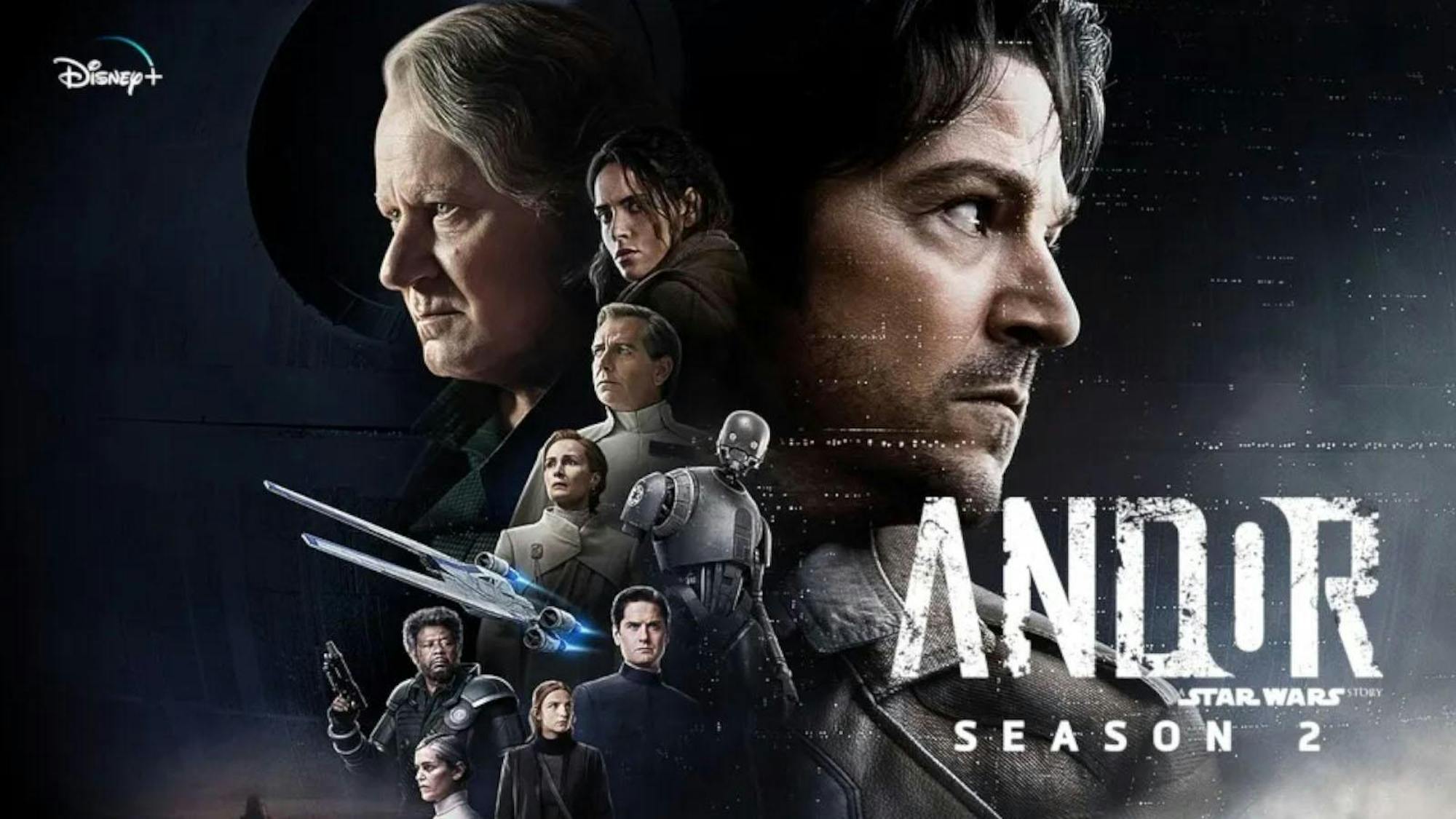
The two-season series Andor (a prequel to the 2016 film Rogue One that first introduced viewers to the character of Andor) follows an ensemble cast, including rebel-sympathizing imperial aristocrat Mon Mothma (Genevieve O’Reilly) and Gestapo-esque administrator Dedra Meero (Denise Gough), to the common thief Cassian Andor (Diego Luna). Andor does not start out as a hero, but is progressively radicalized by the pain the Empire inflicts on him and those closest to him, ultimately joining the veteran Luthen Rael (Stellan Skarsgård)’s quietly growing galactic resistance.
Watching the show, however, belies little evidence that it takes place within the stereotypical Star Wars universe, let alone acting as a prequel to the first installment of the entire franchise. There is functionally zero fantasy and hardly any science fiction present in the series whatsoever. The series is a political thriller, and yet it is a flagship installment in the Star Wars canon.
What is it that makes Andor the most faithful Star Wars media since A New Hope?
Politics.
There will invariably be those who clamor against the ‘politicization’ of their favored media, but to insist that these stories are somehow wholly apolitical works and must be preserved in a vacuum of societal irrelevance beyond shallow appreciation of sound and visual effects is to miss the entirety of the exigence behind the works themselves. What unites A New Hope and Andor in particular is exactly their painfully similar sociopolitical contexts.
In 1971, The New York Times published the first excerpts of the Pentagon Papers, revealing the Johnson administration’s deception of Congress and the American people in its prosecution of the Vietnam War. Trust in government was fundamentally undermined, worsening in 1974 as former President Richard Nixon resigned amid the Watergate scandal. In 2025, the U.S. Department of Justice conducted the incremental release of the Epstein Files, publishing hundreds of thousands of documents pertaining to the child sex offender’s myriad connections to wealthy elites, American and foreign. President Donald Trump’s reversal against his own party’s demands for transparency in the matter outraged Americans seeking the truth on both sides of the aisle.
In 1975 and 2021, America abandoned two disastrous, fruitless military entanglements in Vietnam and Afghanistan, respectively, collectively spanning 40 years and spawning domestic unrest nationwide.
In 1973, Nixon requested $2.2 billion in emergency aid from Congress for Israel’s war effort against longtime enemies Egypt and Syria in the Yom Kippur War, and between Oct. 7, 2023, and May 25, 2025, the United States has given $174 billion to Israel during the course of its war against Hamas as well as its attacks on surrounding Arab states. In 1973, that aid resulted in an Arab oil embargo that devastated the global fuel economy, and in February 2026, the U.S. and Israel launched a war against Iran that resulted in an oil shock more damaging than that of 1973, 1979 and 2022 (following the Russian invasion of Ukraine) combined. I will spare readers both the exhaustive list of similarities between these eras and the overused saying about history and repetition, and instead apply these contexts to understanding the significance of both A New Hope and Andor.
George Lucas began writing Star Wars (later A New Hope) in 1973, and it debuted in American theaters on May 25, 1977. Despite its setting, Star Wars is more a work of fantasy than science fiction, principally concerned with the battle between light and darkness. The main characters are space wizards; Obi-Wan and Darth Vader more closely resemble Tolkien’s Gandalf and Saruman than Captain Kirk.
What mattered more than conformity to genre was the story of anti-colonial, anti-authoritarian rebellion, as Lucas described in an interview with James Cameron. Despite the moral message it offered Americans, Lucas always believed “[the Rebels] were Viet Cong.” Aesthetically, the Empire appears Nazi German, though to Lucas, the villain was always “the highly technical empire — the American empire” to be defeated by an underdog insurgency. Cameron noted that rebels appear in modern American perception quite differently: “we call them terrorists … Mujahideen … Al-Qaeda.”
Andor reiterates the tale of rebellion, but moves past the superhuman, mystical Jedi to instead tell a story of everyday individuals’ small acts of resistance in the face of abject tyranny. Such a tale could not have come at a better time. The United States is grappling with a massively corrupt president who wields misinformation as his primary rhetoric, whose agents kill American citizens in brazen intimidation operations aimed at controlling voters’ information and who seeks control over foreign land for natural resources.
In an era painfully similar to 1977, we once again have the opportunity to learn from Star Wars. As everyday Americans are once again faced with imperious conceit, then the lessons of Andor must be heeded. The young rebel Nemik puts it best: “There will be times when the struggle seems impossible. Remember this. The day will come when all … these moments of defiance will have flooded the banks of the Empire's authority … one single thing will break the siege. Remember this. Try.”
We must try.
Matthew Carolan is a member of the Class of 2028 in the College of Arts and Sciences. He is a contributor for the Arts & Culture department and can be reached at mfc89@cornell.edu.