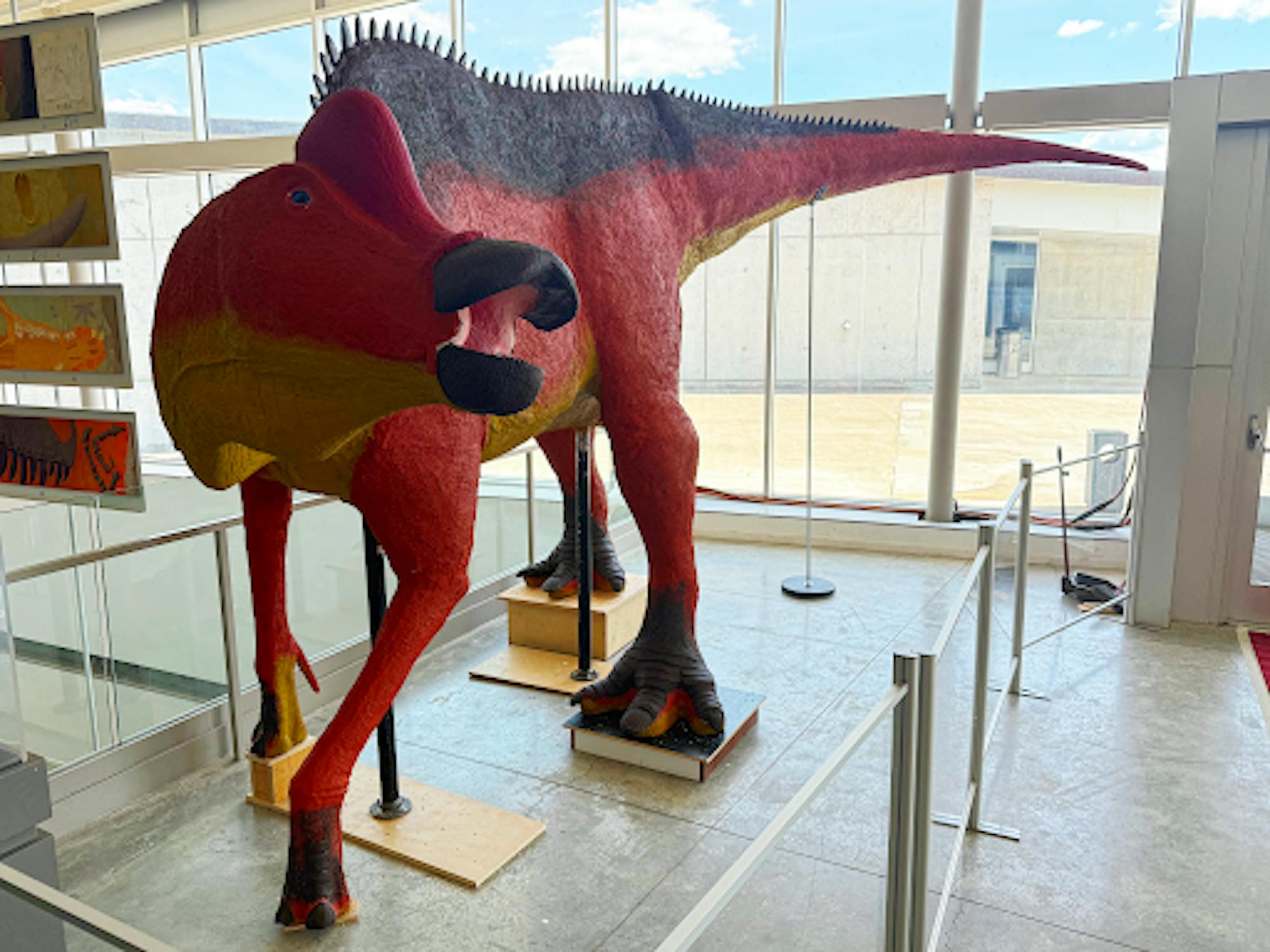
When visitors enter the Museum of the Earth, they will no longer see the museum’s old Earth-toned introduction banners. Instead, as of May 2026, they will be greeted by a 19-foot-long, red-and-yellow Hadrosaur, built by a recent college graduate who used to mold dinosaurs out of Babybel cheese wax.
The artist is Andrew Bovenzi, a recent graduate of the Rochester Institute of Technology. Three months ago, he cold-emailed the museum director with an unusual offer: a life-sized dinosaur he had spent his entire senior year building.
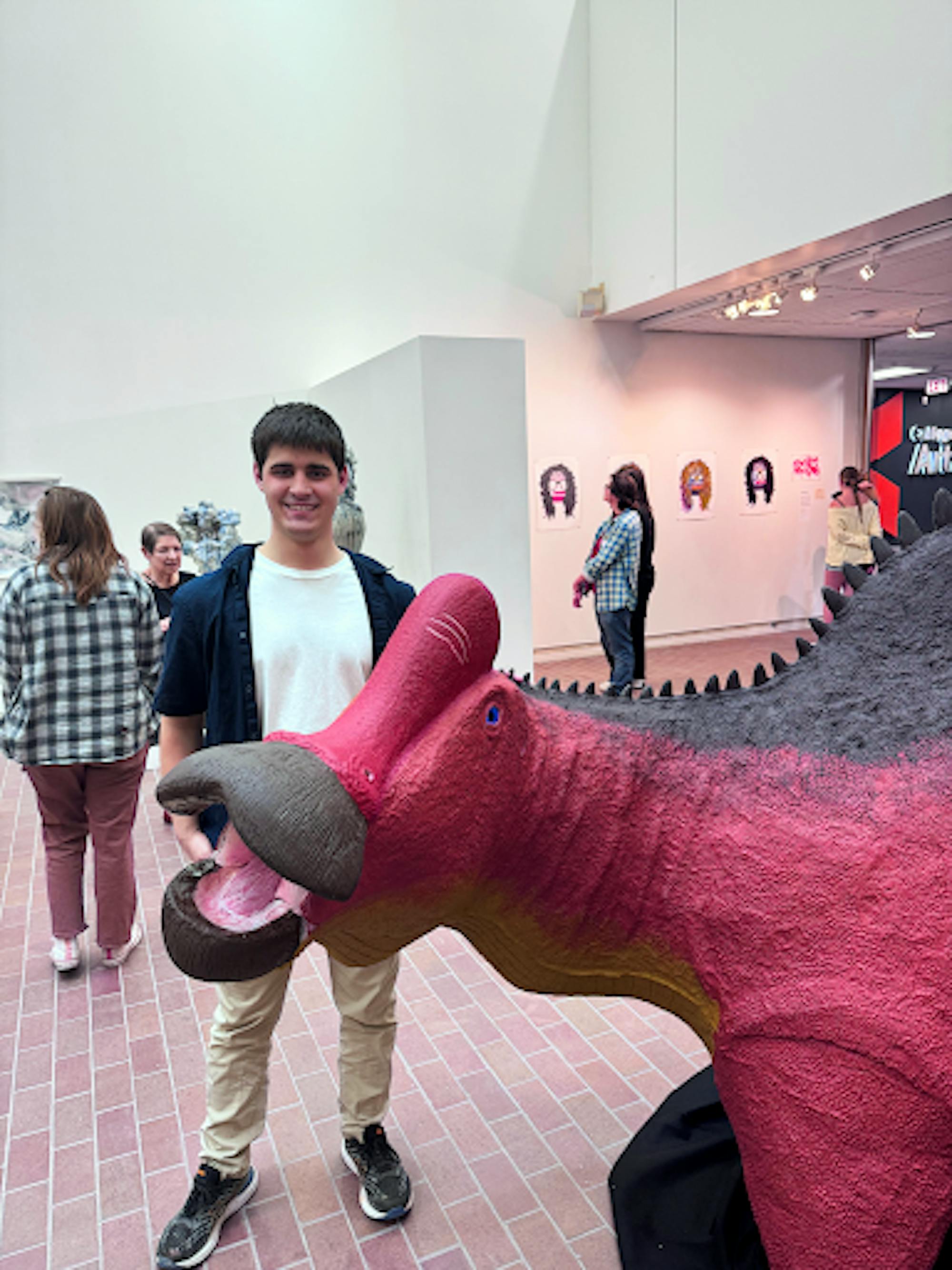
“This senior at RIT sent me an email and said that he’s a senior art student and he was building a life-sized dinosaur … and he wanted to donate [the Hadrosaur] to a museum and asked if we would be interested,” said Prof. Warren Allmon, earth and atmospheric sciences, the director of the Museum of the Earth. “‘Well, of course!’”
The sculpture now stands just inside the entrance, its neck angled slightly inward and mouth agape — as if the Hadrosaur was startled by arriving visitors during its quiet afternoon roaming in search of the dinosaur’s preferred meal of rotten wood around 70 million years ago.
Originally built for Bovenzi’s senior capstone exhibition for RIT’s studio art department, the Hadrosaur also reflects the fruition of his lifelong fascination with dinosaurs.
“What got me started was the amount of media I consumed … a bunch of documentaries, books, and scientific research,” Bovenzi said. “All of that post-Jurassic Park dinosaur craze seeped into my mindset, and I just thought ‘Wow, these animals are so cool.’”
But what hooked him wasn’t just the cinematic dinosaur moments on screen — it was the possibility of constructing something that no humans have ever seen alive through the juxtaposition of art and science.
“We can never truly understand these animals, but the creative ability provided by both scientists and artists could give us a good picture of [dinosaurs],” Bovenzi said. “And not everything is 100% for sure, like you have with modern animals, so seeing how much creativity you can put into one animal is just insane.”
Unlike traditional artists who can reference living subjects directly, Bovenzi draws his references from published research findings, classical Renaissance sculptures, color palettes from other paleoartists and his own intuition to balance scientific accuracy with artistic expression.
For example, the Hadrosaur’s proportions, anatomy and toe structure were all grounded in scientific literature. The statue’s vibrant sunset hues were “a combination of some of my favorite colors” and also a reference to the environment — the orange and red rock layers — where some Hadrosaur fossils have been uncovered, Bovenzi explained.
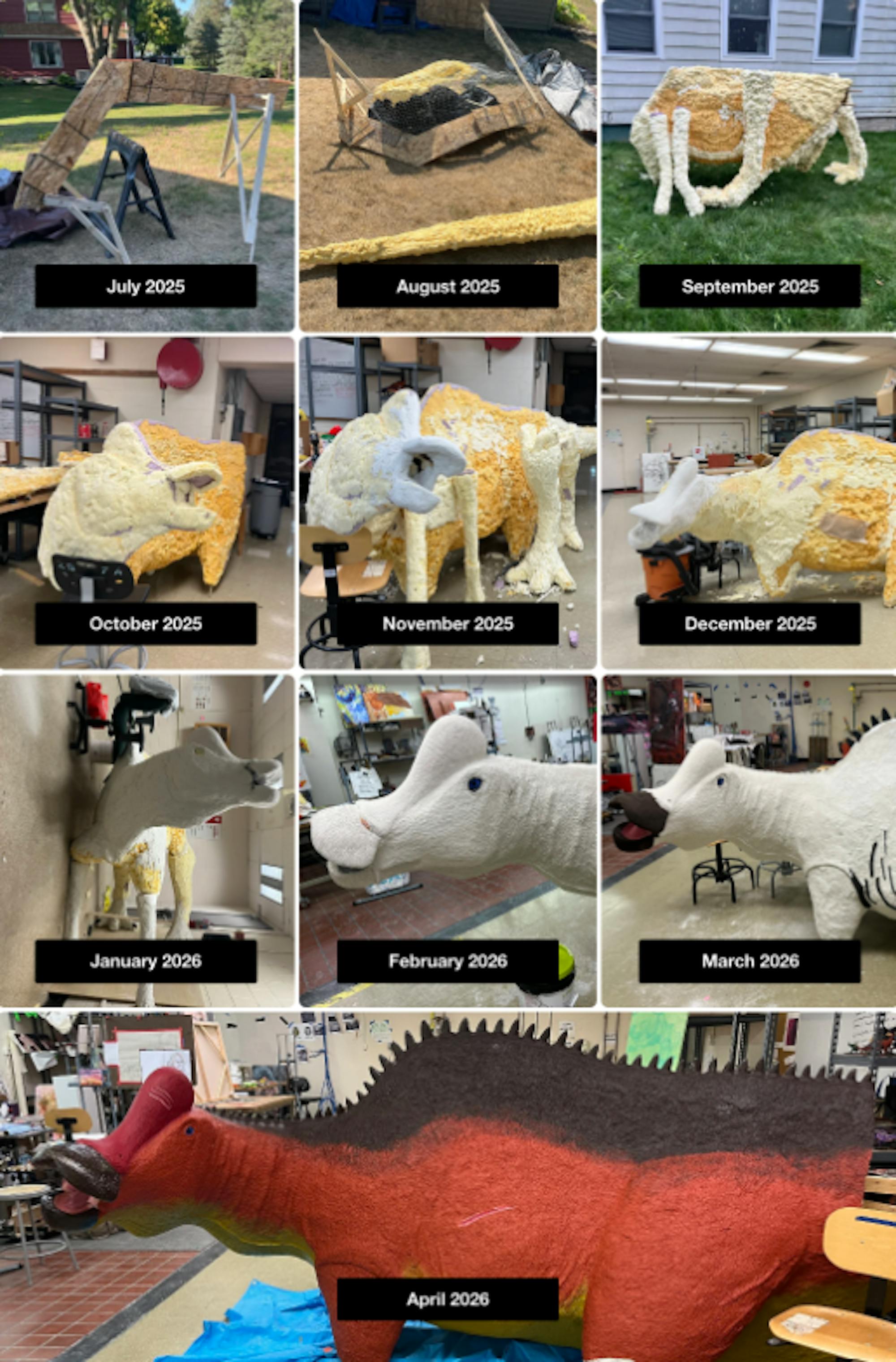
Allmon praised both the scientific accuracy and craftsmanship of the piece, especially given Bovenzi’s “unexpected” toolkit: chicken wire, insulation foam, plywood and drywall saw, which resembles a shopping list one would use to build a barn.
What Allmon admired most — Bovenzi’s attention to detail — comes from years of iteration. Long before constructing a life-sized dinosaur, as a child, Bovenzi was making miniature dinosaur figures out of whatever materials he could find, including the trademark red wax found on the outside of Babybel-brand cheese. Over time, his practice expanded into 3D printing and other mixed-media forms, with each new skill set refining how he thinks about texture and structure.
For example, instead of painting the eyes directly onto the Hadrosaur sculpture, Bovenzi painted the iris pattern onto the back of a glass lens. When installed, it allows visitors to see a reflective, glossy sheen and the depth of patterned eyes from all sides.
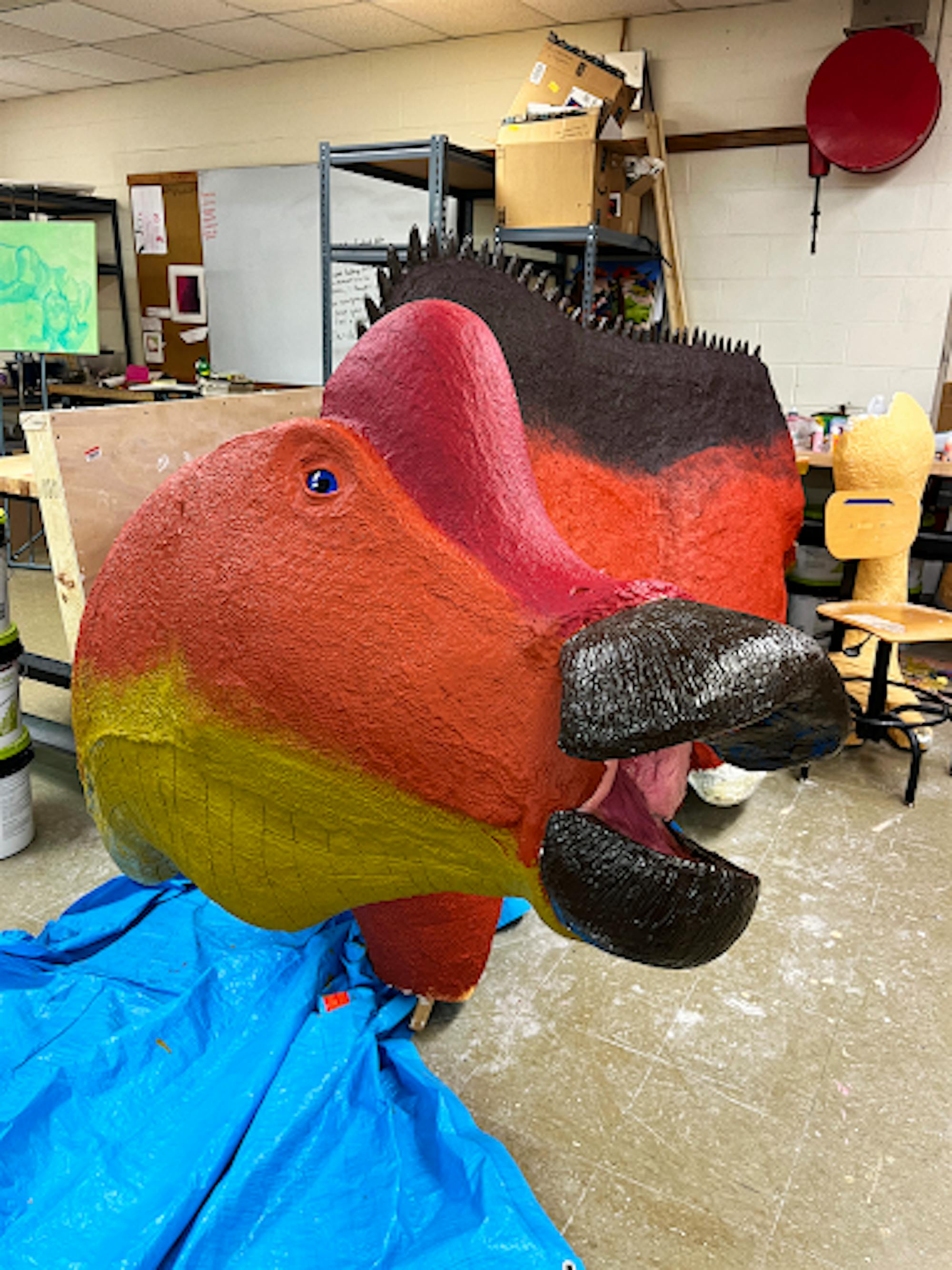
Bovenzi also dipped the 3D-printed spikes in resin to achieve a smooth, glossy finish that heightens the contrast with the grainy, textured skin.
For Bovenzi, what he loves about creating paleoart is its freedom — unbound by rigid expectations, open to exploration across all styles and its ability to invite others to question the present and imagine the impossible.
“I want my art to work as a drive[r] to get people to research more about the world around them, so that we can have a more educated and independent world,” Bovenzi said. “A lot of the information we get told is presented to us by someone else. And not that there’s anything wrong with that, but sometimes we’re given the wrong information. I think we should be able to [get] our own information and come to our own conclusions.”
Now, as Bovenzi enters a new chapter after graduating from RIT, he is exploring exhibition-related career opportunities that combine his interests in art, model making and paleontology. He is also currently working on two new personal pieces: a Tyrannosaurus rex and a small Stegosaur.
“Any passion is worth investing in as long as you’re willing to go the extra mile to really go deeper into it,” Bovenzi said. “Just keep on going and, no matter what, if you see a future where you make it, you will make it.”