

The top weather-related cause of death in the United States is not the devastating hurricanes or tornadoes seen on the television, but something more silent — extreme heat.
“Extreme heat is actually the deadliest weather-related hazard,” said Isabelle Olaes, first-year Master of Public Administration student in the Cornell Jeb E. Brooks School of Public Policy’s State Policy Advocacy Clinic. “In New York City alone, more than 500 people die each year due to heat-related causes.”
And yet, data shows that the impacts of extreme heat are not felt equally. In New York City, the heat-related death rate for Black residents is twice that of white residents. Low-income and elderly populations also face significantly higher risks.
The State Policy Advocacy Clinic seeks to address these public health and equity challenges by engaging students across Cornell in state-level policy initiatives through research, advocacy and legislative drafting.
The clinic's environmental justice team focuses on issues that pose public health and equity challenges for low-income, minority and elderly populations in New York State.
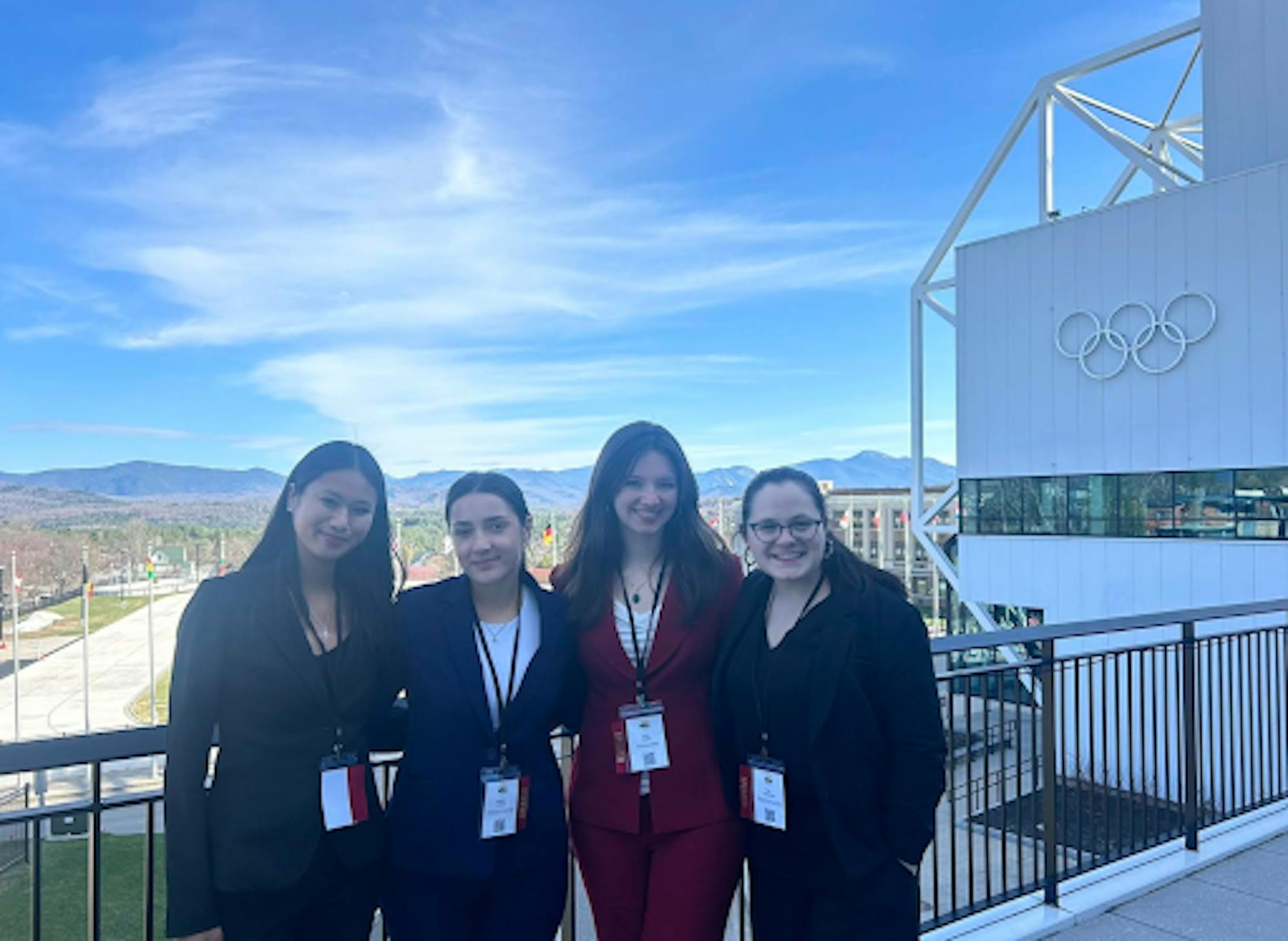
The team, composed of students across disciplines, brings together diverse perspectives. Olaes works alongside Madeleine Cierski ’26, who studies industrial and labor relations, Paige Peters ’27, who studies plant science and Pilar Seielstad ’26, who studies biology.
The team is currently focused on two environmental projects, Cierski said.
“One [project is] targeting extreme heat, especially for unhoused populations, and another [project is focused] on harmful algal blooms, which can make drinking water toxic and harm both animals and humans.”
Both issues, the team emphasized, are not only environmental concerns but also public health and equity challenges. As temperatures rise and water systems face increasing strain, the impacts are felt most acutely by vulnerable populations.
“It’s our minority, low-income and elderly populations that are experiencing this public health crisis most severely,” Peters noted.
The team’s primary project this semester is “Code Red,” a proposed statewide emergency response system for extreme heat. Modeled after New York’s “Code Blue” cold-weather policy, the initiative would require counties to provide cooling centers, transportation and outreach during dangerous heat events.
“It would create a mandatory framework that ensures consistent access to cooling centers and protections for vulnerable populations,” Seielstad explained.
Code Red would be enforceable statewide and would address disparities in how different counties respond to extreme heat. The students are currently drafting legislative language while conducting interviews with cooling centers across the state to identify gaps and best practices.
“Getting to a cooling center in New York City is very different than in rural New York,” Olaes explained.
In New York City, cooling centers are densely concentrated, with most residents having several options within a block and many located within a 15-minute walk of a subway or bus stop, making them accessible to those without cars.
In contrast, rural New York communities face limited public transit and more scattered facilities, forcing residents to travel longer distances to reach the same resources. A National Institute of Health study found that in rural heat-vulnerable areas, driving distances to cooling centers averaged around 18 miles.
These disparities complicate policy design, especially in a state as diverse as New York. Students must consider how solutions differ between urban centers like New York City and rural communities upstate, where access to resources such as transportation can vary widely.
The other area the team has worked on this year is addressing harmful algal blooms, particularly in regions like the Finger Lakes, where water quality directly affects public health and local economies. The environmental policy team traveled to Albany for Finger Lakes Advocacy Day, where they urged state lawmakers to address harmful algal blooms threatening the Finger Lakes region.
Through partnerships with organizations such as the Community Science Institute and the Cayuga Lake Watershed Network, students have engaged directly with stakeholders and policymakers.
“Getting to work with community partners has been such an asset,” Cierski said. “They bring local expertise and help us understand why these issues matter on the ground.”
The clinic’s work operates at the state level, where policy changes are often more immediate and accessible than federal action.
“States are responsible for implementation and enforcement on the ground,” Seielstad said. “It allows us to respond more quickly to local issues and work directly with communities.”
Still, advancing environmental policy presents challenges. Students emphasized that successful policy requires more than strong ideas.
“It’s not enough for a policy to just be a good idea,” Olaes said. “People have to believe in it, and the timing has to be right.”
Despite these obstacles, the students expressed optimism about the growing awareness of environmental issues and the potential for meaningful change, feeling empowered that the work that they are doing may have real policy implications.
“What we’re doing is real,” Cierski said. “We’re drafting a policy that could actually be implemented. There’s a responsibility to make sure it’s a good policy that helps people.”
Cierski has also found that working in the policy clinic has shifted her outlook on politics entirely. “Being in the clinic has completely changed my perspective,” she said, “and has given me back optimism about what we can do to make meaningful change with legislation and advocacy.”
Beyond the policy work itself, the experience has shaped each student personally.
Seielstad was struck by how accessible the process turned out to be. "It felt like a very scary thing, and it's so wonderful when you go and meet state lawmakers and their staff, or you go and talk to them, and they are real people, and they are so ready to fight and help you," she said.
For Olaes, the clinic’s greatest strength lies in the people it brings together. “Everyone comes into the clinic with different strengths,” she said, “and that's what makes the work so powerful.”
Peters, meanwhile, reflected on the weight of the work itself. “There’s a responsibility, but also a privilege, to be a student and spend time working on something that could actually help people,” she said.


