

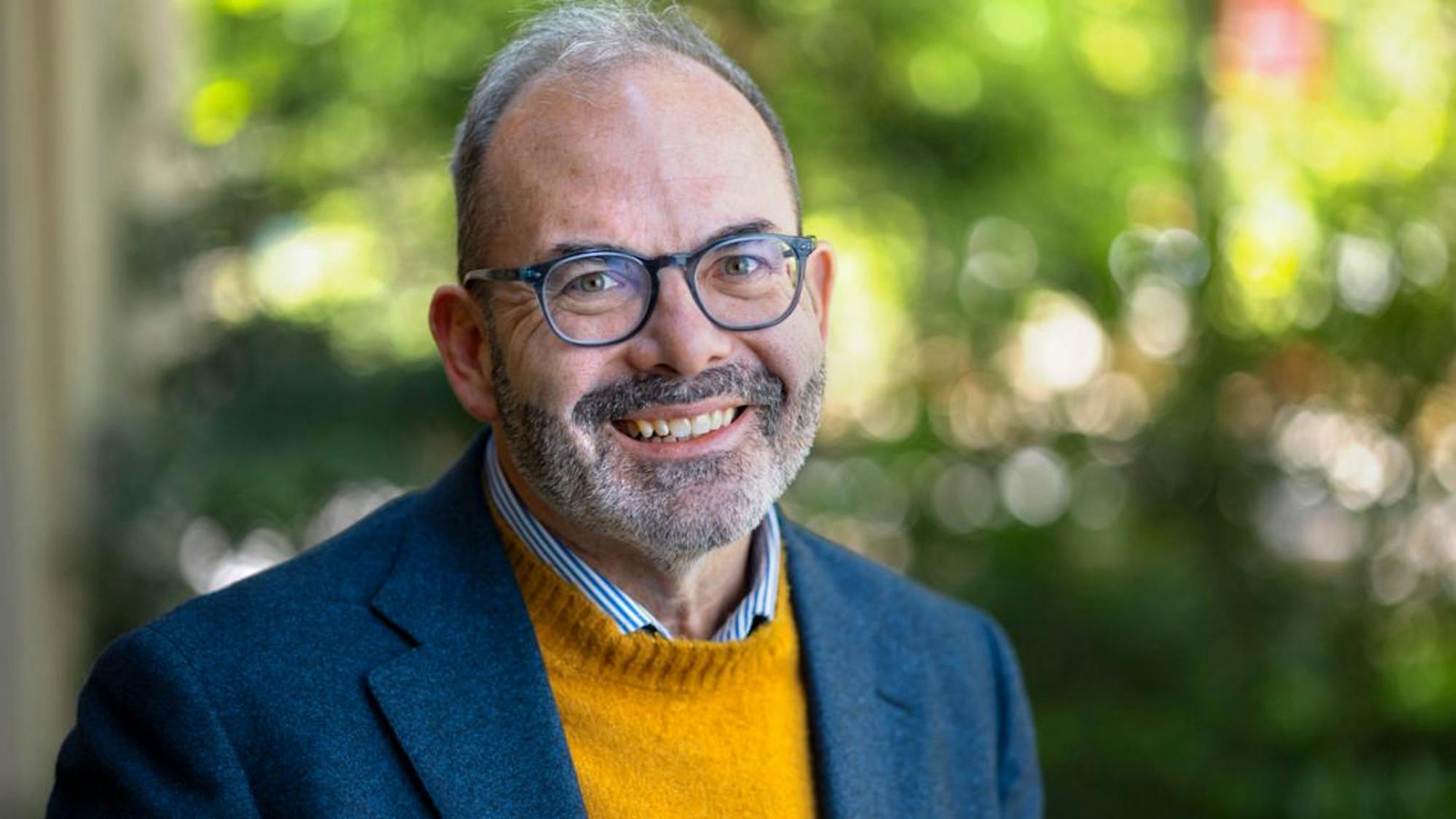
Prof. Matt Marx, entrepreneurship and innovation, was appointed to the “newly reimagined position” of vice provost for entrepreneurship, innovation and external engagement effective July 1, according to the Cornell Chronicle.
Marx will replace Prof. Krystyn Van Vliet, materials science and engineering, and former vice president for innovation and external engagement strategy. Van Vliet served in the role since August 2022.
As vice provost of entrepreneurship, innovation and external engagement, Marx will help establish the new Cornell Center for Entrepreneurship and Innovation, a collaborative effort to bring together related programs in the division.
He will oversee Entrepreneurship at Cornell, the Center for Regional Economic Advancement, the Praxis Center for Venture Development, the Center for Life Science Ventures and the Center for Technology Licensing offices at Ithaca, Cornell Tech and Weill Cornell Medicine campuses, according to the Chronicle.
Marx is a research associate at the National Bureau of Economic Research, where he is the principal investigator for the Innovative Information Initiative. He works as department editor for entrepreneurship & innovation at Cornell’s management science program, according to the SC Johnson College of Business.
“Matt’s extensive experience, research and leadership in entrepreneurship demonstrate he is the right person to help us expand on our existing work,” Provost Kavita Bala wrote to the Chronicle.
From 2017 to 2020, Marx worked as an associate professor at the Boston University Questrom School of Business, and was an associate professor at the MIT Sloan School of Management from 2015-2017 and an assistant professor from 2009-2014.
Marx graduated with a bachelor’s degree from Stanford University in 1993, and a master’s degree from MIT in 1995. He then earned a master’s degree from Harvard University in 2005 and a doctorate in business administration in 2009.
Marx holds six patents, 18 peer-reviewed publications and has received over $2.5 million in grants from Alfred P. Sloan Foundation, the National Science Foundation and other organizations.
Marx’s research involves “reducing the barriers to the commercialization of science and technology,” according to the SC Johnson School of Business. He put this concept into application at two speech recognition companies, firstly as an engineer at SpeechWorks International from 1994 to 1999 and secondly as vice president of solutions delivery at Tellme Networks, which was bought by Microsoft in 2007.
“I’m especially excited to collaborate with Cornell Tech, whose Runway Startups Postdoc Program serves as a model for the entire university in commercializing research,” Marx told the Chronicle.
He also plans to use AI and machine learning to assist with commercialization and business development at Cornell, citing its ability to help entrepreneurs connect with relevant people in their field to create new opportunities.
Marx also hoped to measure which initiatives at Cornell are making a difference and which ones require more funding, he told the Chronicle.
In total, he reflected on Cornell’s potential to help change the world.
“I’m excited by the enormous potential from our amazing faculty and students, who publish more than 10,000 articles per year containing technological advances and inventions that can positively impact society through new ventures,” Marx told the Chronicle.
Everett Chambala is an assistant news editor for the 144th board. He is working as the primary summer reporter for The Cornell Daily Sun through The Sun’s summer fellowship program.

Everett Chambala is a member of the Class of 2027 in the School of Industrial and Labor Relations. He is an assistant news editor for the 144th Editorial Board and can be reached at echambala@cornellsun.com.


