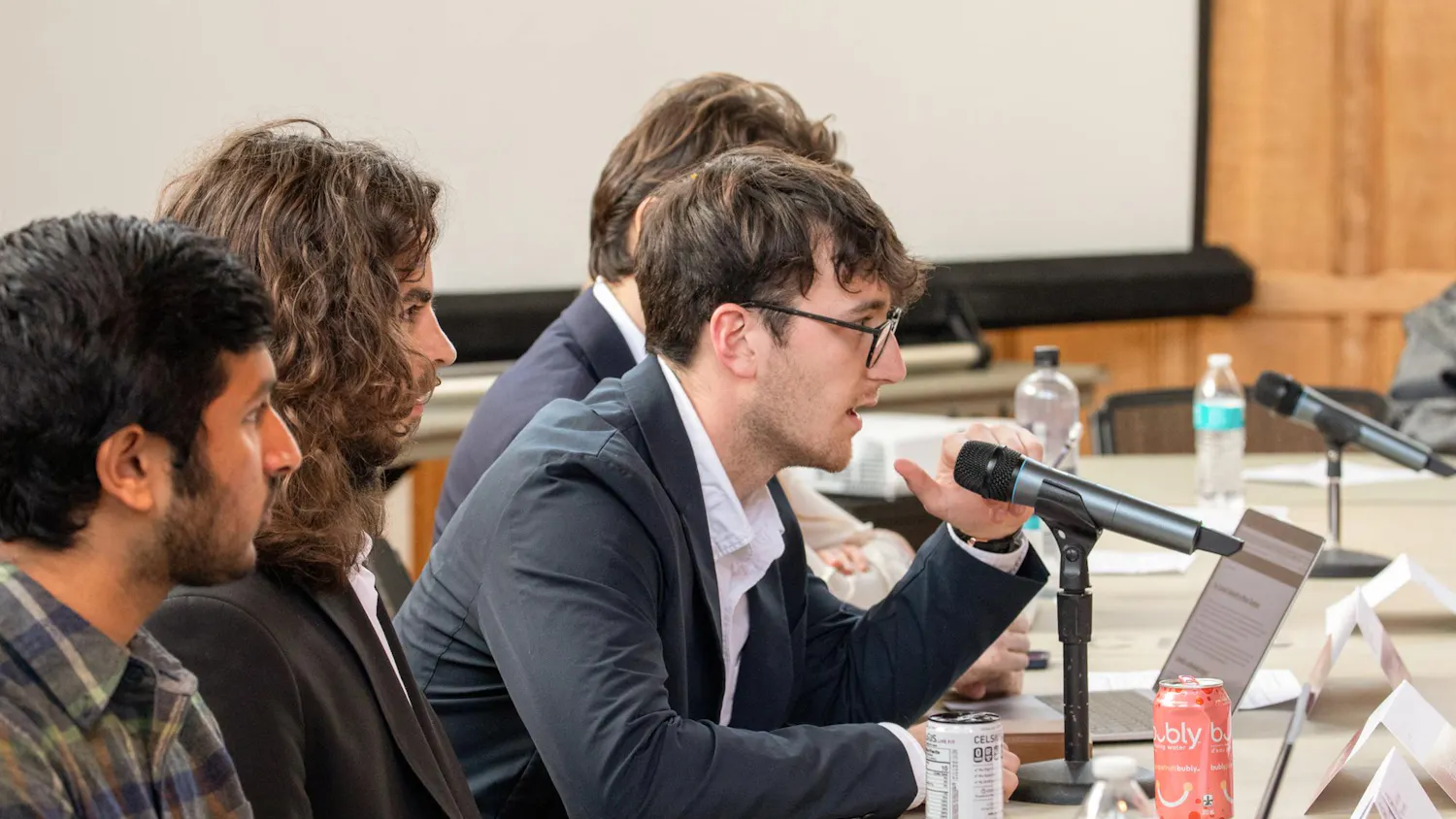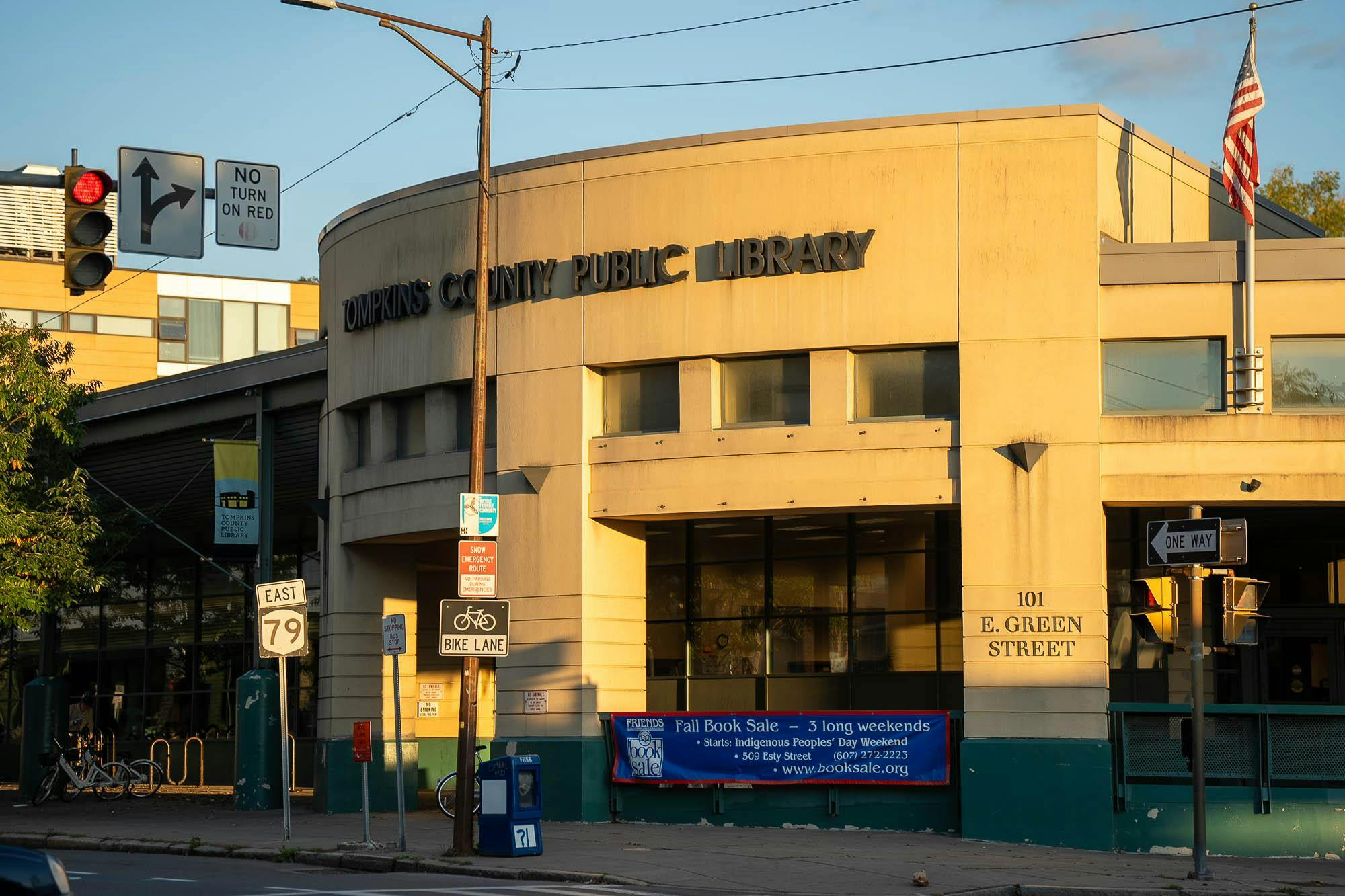
Prof. David Bateman, government, and Prof. Ian Greer M.S. ’03 Ph.D. ’05, global labor and work presented their final report of the Tompkins County Minimum Wage Study on Thursday to an audience of community members and Tompkins County legislators at the Tompkins County Public Library. At the presentation, they explored the landscape of minimum wage workers in the county, and discussed the potential impacts of increasing the county’s minimum wage.
The report found that Tompkins County faces a much higher cost of living compared to surrounding counties. Much of the county’s working population earns less than the living wage, with the county encountering a high level of income inequality.
The study was conducted by the ILR Ithaca Co-Lab, which utilizes students and researchers from Cornell’s School of Industrial and Labor Relations to serve the local area of Ithaca on employment, living wage and other worker issues.
Thursday’s presentation was the team’s ninth public meeting since the study launched on March 24 after Tompkins County voted in 2024 to allocate $50,000 to the ILR Ithaca Co-Lab to study the potential effects of raising the county’s minimum wage.
Bateman explained how the study’s intention was “to explore possible impacts of having a countywide minimum wage higher than the state.”
To do this, the team reached out to “as many stakeholder communities as possible” which included business owners, workers, focus groups from the Tompkins County Workers’ Center, Southside Community Center and other community members, in addition to requesting public comments.
In the collection of testimonies from the community members, Bateman said the high cost of living persisted as a common issue.
“One broad source of agreement that we heard in multiple convenings was that the cost of living in Tompkins County is quite high,” Bateman said. “This places a burden on nearly everyone…it is certainly felt by low wage workers, it’s felt by local businesses, it’s felt by small nonprofits.”
The team found that about half of wage earners in the county earn less than the county’s living wage, the income required to afford basic living expenses. The county’s living wage is estimated at $25.08 an hour, according to a 2026 study by Greer, who directs the ILR Ithaca Co-Lab, and Russell Weaver, director of the ILR Buffalo Co-Lab..
Alongside this, Greer noted that Tompkins County had “above average” income inequality across the entire United States and was affected by “extreme disparities” by race in wages.
The 2026 Tompkins County Living Wage Study found that a disproportionate number of Black and Hispanic wage earners earn less than the living wage. The study found that about 67% of Black employees and about 59% of Hispanic employees earn less than the living wage. Meanwhile, only about 47% of white employees earn less than the living wage.
Greer also explained that the state minimum wage is struggling to keep up with the increase in the cost of living in Tompkins County, driven primarily by costs of rent and transportation. The current New York State minimum wage is set at $16.00 per hour, though New York City, all Long Island counties and Westchester County have higher minimum wages at $17.00.
Greer said it is difficult to compare Tompkins County to other municipalities that have raised their minimum wages because each community is unique.
“The problem here is that most of the places with city and county minimum wages are quite different from Tompkins County because they are big cities, or they are suburbs,” Greer said. “There’s not a clear story or a clear pattern about these laws leading to economic growth or economic decline.”
Greer also explained the potential costs of raising the minimum wage.
According to Greer, businesses could pass on additional payroll costs to their customers. He also said that some minimum wage earners may face a benefits cliff, or a sudden loss in public benefits following wage increases.
Christopher Sponn, executive director of Tompkins County Workforce Development, explained that he sees how a minimum wage increase could both help low-wage workers and potentially harm local businesses.
“It’s really hard to make ends meet in this community,” Sponn said. “Transportation is expensive, rent is expensive, finding a house is expensive, so it’s really hard for someone to lift themselves out of poverty…but on the other side, I do know businesses would also be significantly impacted by this.”
The ILR Ithaca Co-Lab will present their report on Sept. 2 to the Tompkins County Legislature’s Housing and Economic Development Committee. On Sept. 15, the consultants will deliver their findings to the entire Tompkins County Legislature to discuss “next steps,” according to the study’s website.
David Ogden, a county employee who attended the event, emphasized the importance of local communities working together to alleviate the high cost of living.
“The reality is the cost of living is going up everywhere,” Ogden said. “If the local communities don’t work together to make it better, who else will?”

Dalton Mullins is a member of the Class of 2027 in the College of Agriculture and Life Sciences. He is a senior writer for the news department and can be reached at dmullins@cornellsun.com.