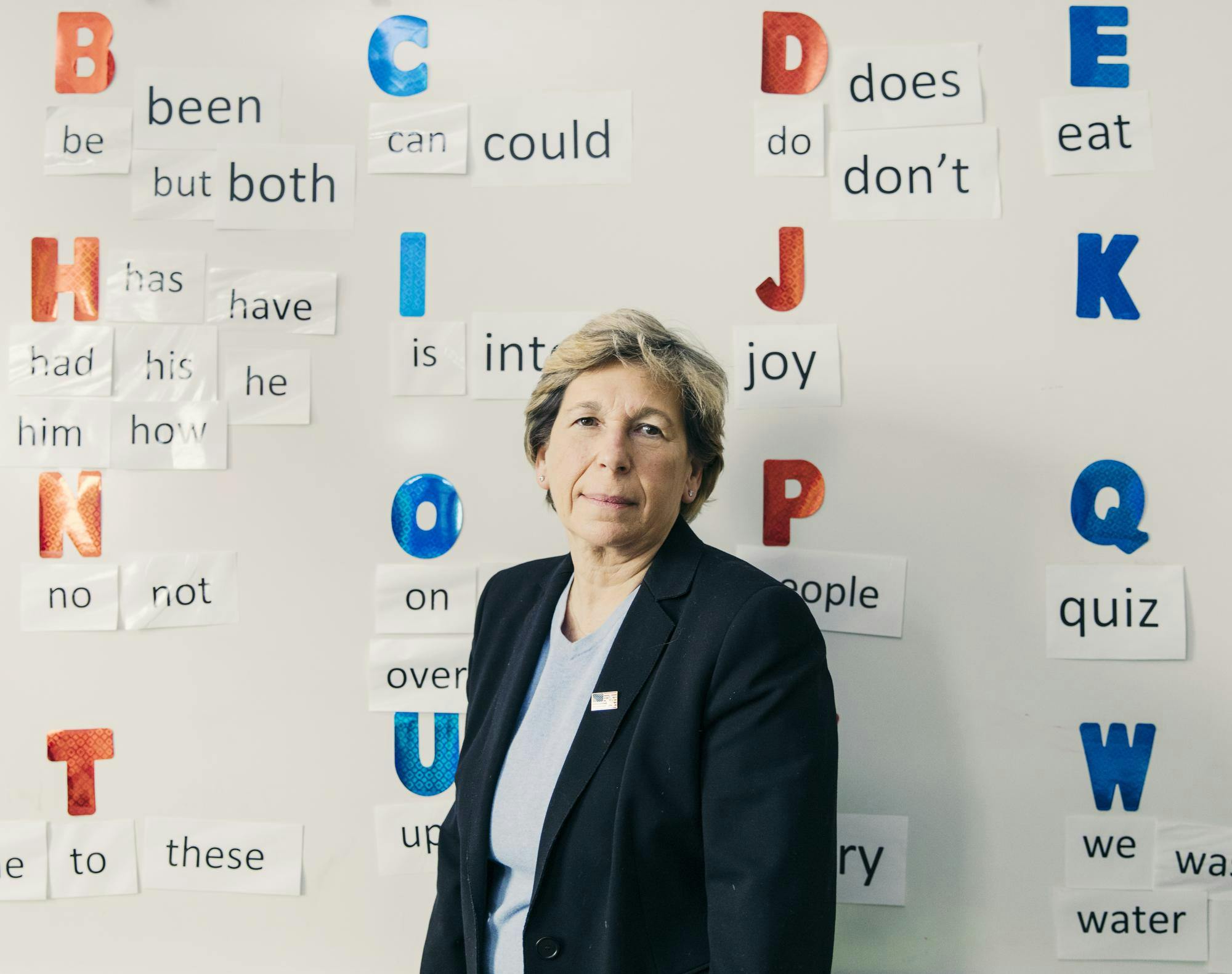
Randi Weingarten ’80, president of the American Federation of Teachers, returned to Ives Hall, her old stomping grounds, this month to teach students about labor organization and her experience as the leader of one of America’s largest teachers unions.
The nighttime class spanned Aug. 31 through Sept. 3 and covered a wide range of issues, including democracy and its intersection with labor organization, how to effectively organize and the future of education. She taught dynamically, raising her voice while speaking about topics like federal standards of literacy, COVID shutting down schools and government investment in education.
“What I’ve learned, and I can teach, is not how to study a problem, not how to analyze a problem, but both how to think about solving a problem and how you get there,” Weingarten told The Sun. “[This is] a place where I can actually teach something that I’ve learned over all these years — that’s the reason I’m here.”
Hearing Weingarten teach and tell stories about leading AFT made Raquel Diaz ’28, a student in the class, consider working for a teachers union in the future.
“She speaks with such passion and such confidence about the issues that she's so knowledgeable about,” Diaz said. “I learned just so much on how unions actually influence education.”
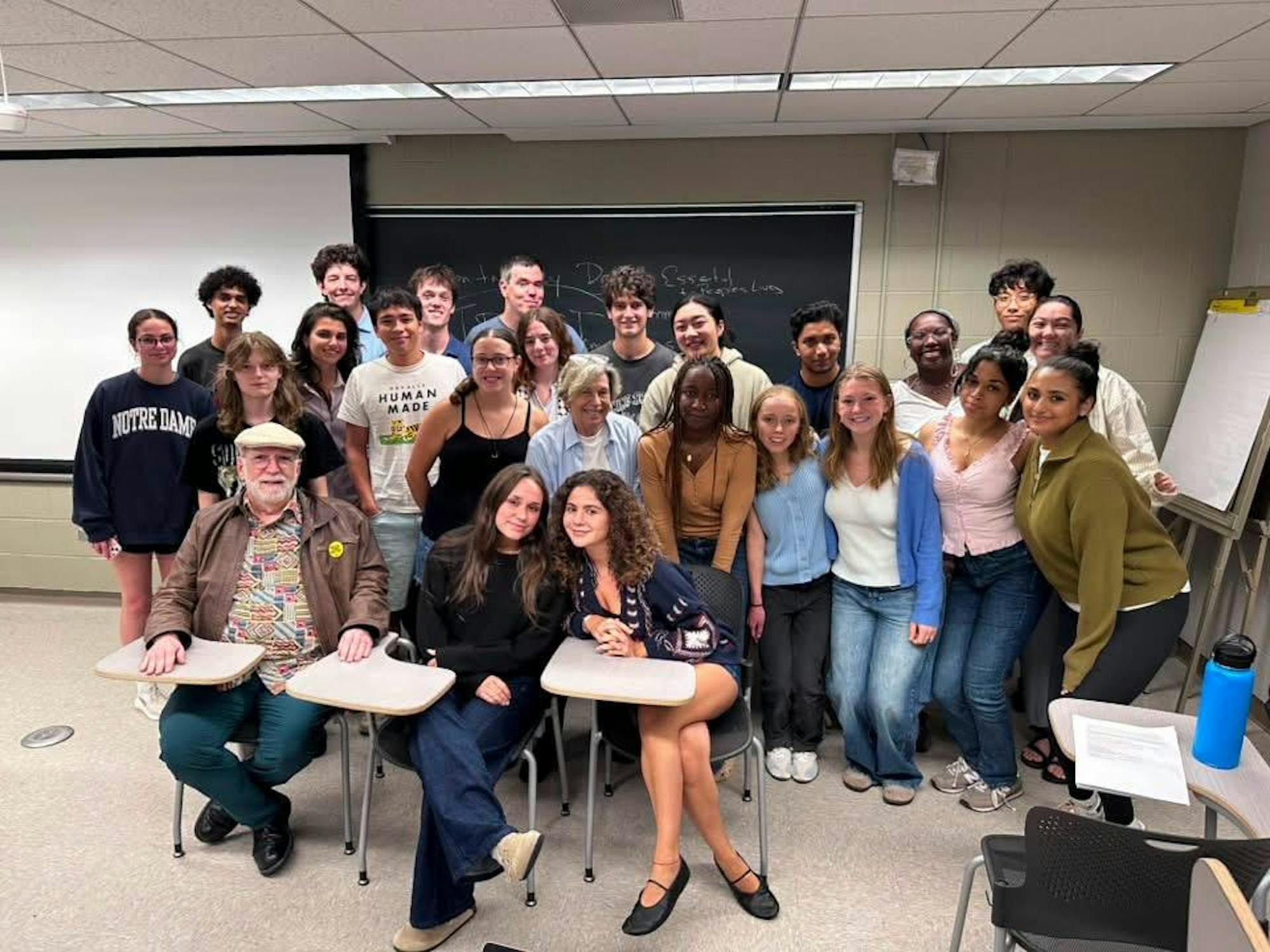
Weingarten '80 with the students of ILRID 4550/6550: “People Power: Education, Labor and Democracy."
In an interview with The Sun, Weingarten reflected on why she originally began teaching the class in March 2024.
“I think it’s really important to give back,” Weingarten said. “I’m the president of a union that represents teachers, higher ed and K-12 … you have to find ways through the course of your career to not only talk the talk of your members, but to walk that walk.”
The course, ILRID 4550/6550: “People Power: Education, Labor and Democracy,” aims to teach students about how to wield power in the context of labor organizations and politics, Weingarten said.
Her class centered around round-table style discussions, and many students shared personal anecdotes about their experiences with and perspectives on the labor movement. Weingarten also brought in guest speakers from around the labor movement to talk to students.
Guest speakers included Mary Cathryn Ricker, former Minnesota commissioner of education, Sarina Roher, president of the Oregon Federation of Nurses and Health Professionals AFT Local 5017 and Todd Wolfson, president of the American Association of University Professors and part of leadership at Rutgers AAUP-AFT.
Wolfson’s presentation especially stood out to Diaz. In the AAUP leader’s speech, he discussed a strike at Rutgers University. The presentation was influential for Diaz’s final paper because it “brought into play the different political powers that unions need and are able to cultivate.”
Weingarten is no stranger to teaching. She proudly told The Sun that she is still on unpaid leave from the New York City Public Schools system after a stint teaching there in the 1990s. She explained she stayed on unpaid leave because she “wanted to be connected to” the union and occupation where her career began.
Although she first taught her class at Cornell in 2024, this year’s class felt like it was taking place in a “different era.”
According to Weingarten, AI’s influence in the classroom has grown, alongside other issues such as democracy and attacks on public education that have arisen following Trump’s re-election.
“The difference between two years ago and now is that there's a real cabal of some of the rich and powerful in the country, including the people around Donald Trump, that want to destroy public education,” Weingarten said. “They really want to destroy public schooling and the pluralism that comes with it.”
Aaron Gorman ’27, a student in the class, applauded Weingarten’s honesty and willingness to discuss political issues starting from the first day of class.
“She got going about the importance of having a quality education, and it was clear that it wasn’t bullsh*t for her, it was clear that it was genuine,” Gorman said. “It’s no secret what her political views are … and I appreciated, honestly, that she didn’t try to make it a secret.”
Some of the class’ required readings were from Weingarten’s 2025 book, Why Fascists Fear Teachers: Public Education and the Future of Democracy. She was also a prominent organizer and supporter of the No Kings movement, a series of protests beginning in 2025 across the country in opposition to President Trump.
The class concluded with a final paper where students were tasked with coming up with a solution to a problem of their choosing by thinking like an organizer and creating a campaign.
Following the last day of class, Weingarten reflected on seeing her students’ “aha moments” and how the students gave her hope for the future.
“I'm exhausted, but it's really exhilarating,” Weingarten said. ”We need working people. We need students. We need young adults to understand their personal power, and the power of education, and the power of unions and the power of politics, to actually get to effectuate a better life for people.”

Everett Chambala is a member of the Class of 2027 in the School of Industrial and Labor Relations. He is an assistant news editor for the 144th Editorial Board and can be reached at echambala@cornellsun.com.