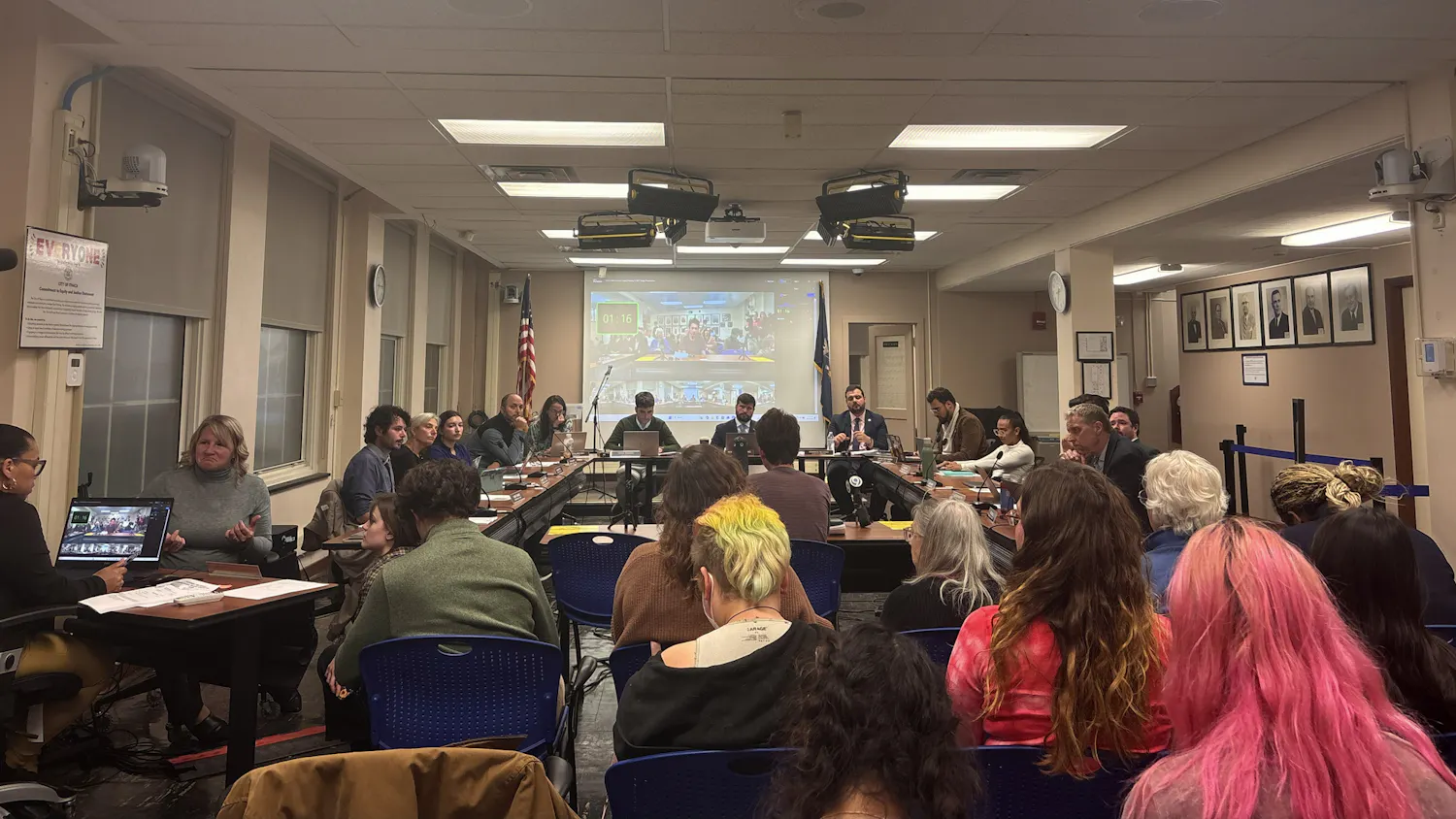
“I'm here because sitting in Morrison for seven hours is easier than what Jane Doe actually had to go through,” said demonstrator Myshay Causey ’29.
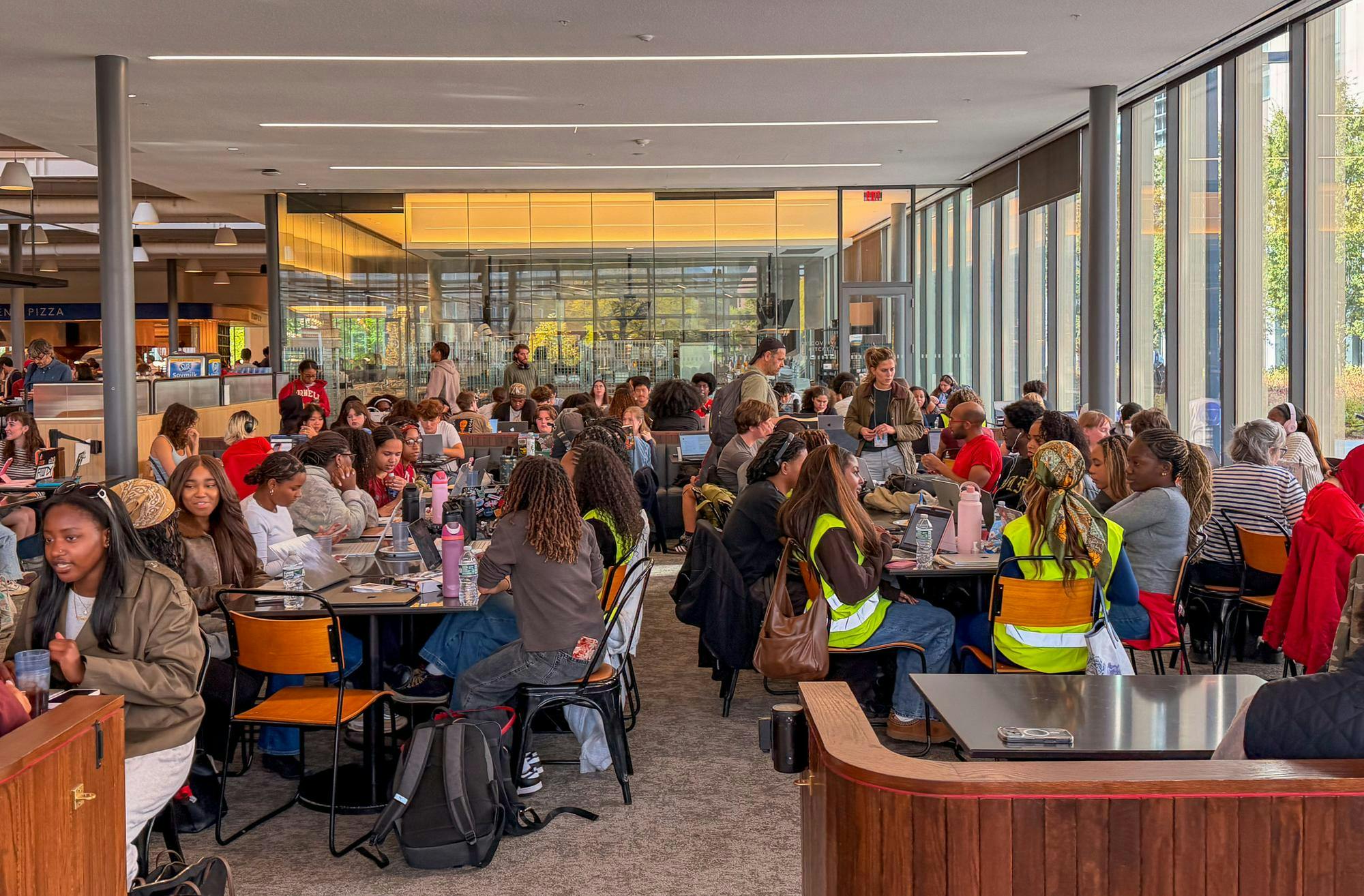
Over the course of seven hours, more than 100 students settled down in Toni Morrison Dining Hall to participate in a sit-in for Jane Doe, the plaintiff in a lawsuit alleging she was gang raped at Cornell’s Chi Phi fraternity house in 2024, on Wednesday.
Students also engaged in a campuswide economic blackout throughout the day, opting to halt all spending on campus in solidarity with Jane Doe and survivors of sexual violence, according to the organizers’ announcement post.
Both initiatives, jointly called “Zero Day,” were spearheaded by Cornell BSU and Cornell NAACP. They were co-sponsored by Mecha de Cornell and Students for a Democratic Cornell.
The sit-in was seven hours long “for the seven hours she endured,” the Instagram post announcing the sit-in stated.
In the Sept. 14 lawsuit, Jane Doe alleged that she left for the Chi Phi house at 11 p.m. After arriving at the house, she alleged that the defendants engaged in sexual acts with her “all without her consent.” At 1:42 a.m., a defendant was alleged to have sent a message about “free pussy” to a Snapchat group entitled “Chi Phi Actives.” Jane Doe alleged she was then sexually assaulted by multiple defendants until around 5:45 a.m., when she claims the alleged assault ended.
Four hours into the sit-in, which spanned 1:30 to 8:30 p.m., organizers with BSU and SDC hosted “teach-ins” about the intersectionality between sexual violence and identity and the history of student demonstrations on campus.
“I hope the sit-in shows Cornell and other people from other universities and other Jane Does that not only do we support them, but that we will be here and show up in support, and that we won't just be willing to let the situation go,” Causey said.
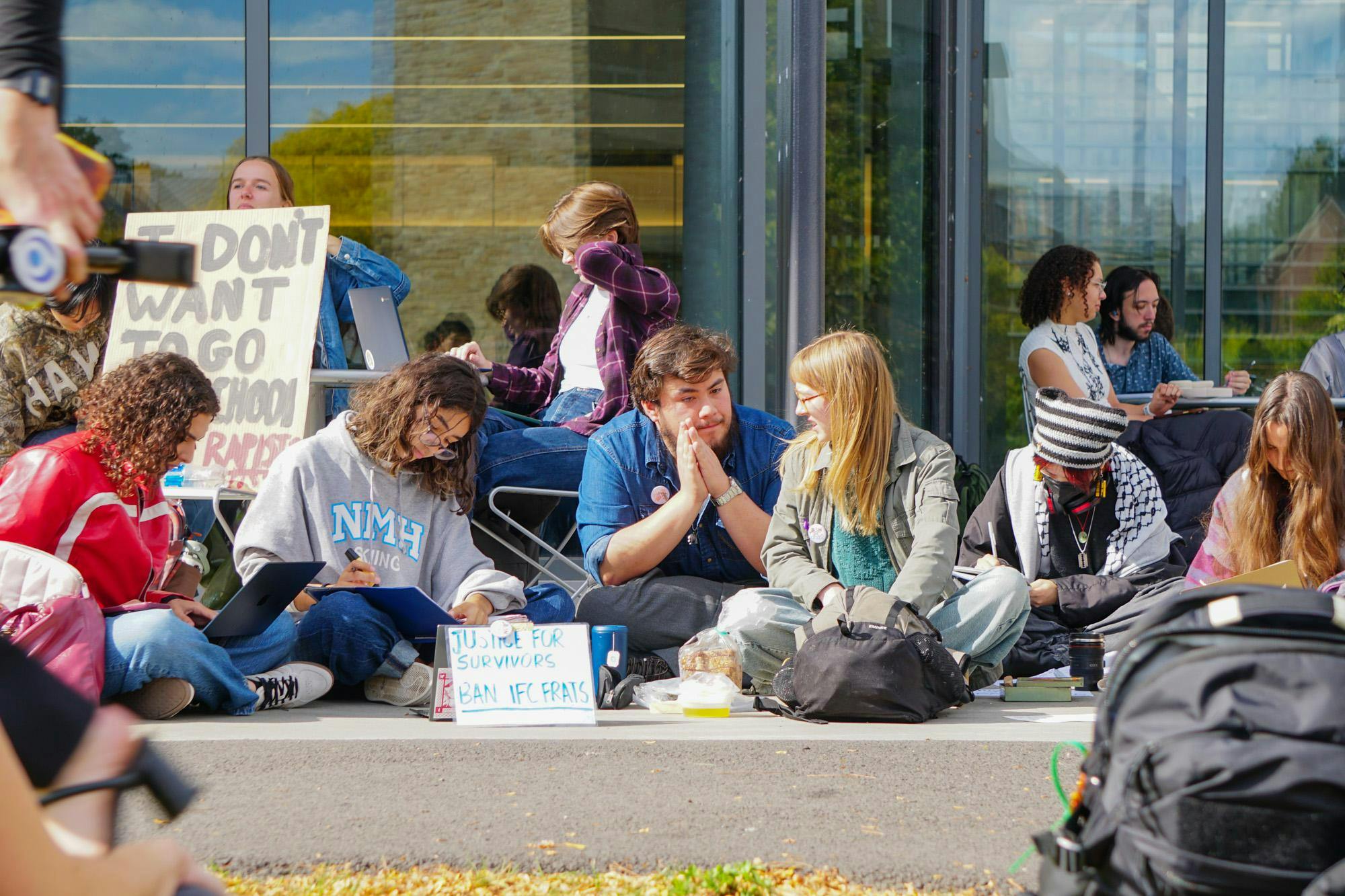
The organizers led three chants during the sit-in. In one chant, they shouted, “No justice,” to which the audience replied, “No peace.” In the other two chants, shared in call-and-response style, attendees chanted, “Seven hours, we can’t stand it, justice now, we demand it” and, “One in three, it could be me, let’s be clear, it ends here.”
The World Health Organization estimates that approximately one in three women experience sexual violence in their lifetime.
A sense of “powerlessness” motivated Max Troiano ’28, a Sun opinion columnist, to attend the sit-in for six out of the seven hours.
“It felt important to me to take some small degree of action today,” Troiano said. “My worst fear would be a return to business as usual,”
Purchases at the Cornell Store, at campus eateries, on printing services and on vending machines, along with using meal swipes and Big Red Bucks were all included in the blackout’s encouraged restrictions.
“Ultimately, as a private institution or semi-private institution, … money is somewhat central to what can really count against the administration,” said Marianne Levitova ’28, community co-chair in SDC and participant in the blackout.
For Cole Tao ’28, the blackout was a way to make a meaningful impact since, “being a Cornell student in such a big school, you kind of feel powerless at times.”
Many students who attended the sit-in emphasized the importance of community organizing in addressing sexual violence and the alleged Chi Phi gang rape.
Both initiatives echoed the demands of a sprawling “Justice for Survivors” rally, organized by over 20 student groups, that flooded Ho Plaza with thousands of protestors on Monday.
“If we're taking arms with an administration that is acting very undemocratically, it is the best for us to try and incorporate as many voices as possible,” said Felix Jones-Rounds ’29, an SDC member. “There has to be a lot of people willing to do the right thing, even if it’s uncomfortable.”
The organizers of Zero Day emphasized that their efforts are directed toward placing “pressure” on the University, not the dining workers. They told participants not to harass, block or intimidate any dining workers during the protest.
Dustin Cutler, assistant vice president for Student and Campus Life Enterprises, described how the organizers worked with Cornell Dining to coordinate the sit-in, in a statement to The Sun.
“I’m exceptionally proud of both the student organizers of this event and the Cornell Dining team for their collaboration and partnership in ensuring this evening could happen safely and in a meaningful way,” Cutler wrote.
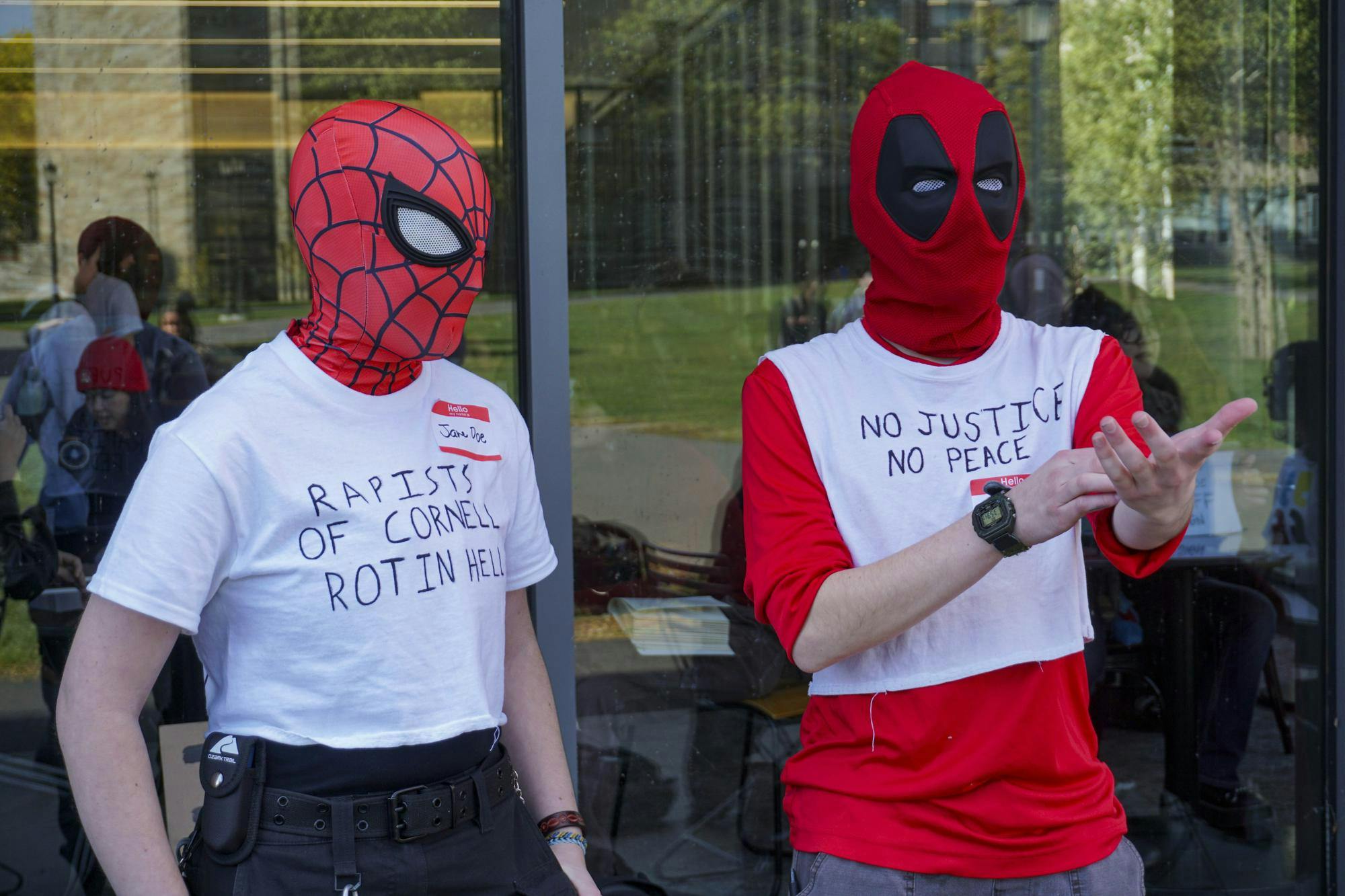
Troiano said that although “there’s going to be a time when the converstion shrinks and fades on an international scale,” he hopes that the Cornell community will continue to speak out about sexual violence.
Causey described the student activism in response to the alleged Chi Phi gang rape as a source of pride.
“Seeing students so passionately against everything that happened gives me more hope for the future and reminds me of why I'm proud to be a Cornellian,” Causey said. “It’s the fact that people here are really standing up for what they believe in.”
Sophia Xie Gong ’30, a member of SDC who participated in the sit-in, echoed Causey, and said she saw the student demonstrations as part of an opportunity for change related to sexual assault beyond of Cornell.
“We're at the center of a worldwide movement against rape culture,” Xie Gong said. “As students at Cornell, we are given a unique position to dictate the worldwide conversation around how universities police rape culture and how we can have a cultural shift against rape culture."

Coral Platt is a member of the Class of 2029 in the College of Arts and Sciences. She is a news editor for the 144th Editorial Board and can be reached at cplatt@cornellsun.com.

Varsha Bhargava is a member of the Class of 2027 in the College of Agriculture and Life Sciences. She is the managing editor of the 144th Editorial Board and was a news editor for the 143rd Editorial Board. She can be reached at vbhargava@cornellsun.com.